
Key takeaways
- 26.0MP APS-C format Exmor R back-illuminated CMOS sensor
- BIONZ XR processing power for exceptional image quality
- Dedicated AI Processor and Real-time Recognition for accurate…
Best APS-C Mirrorless Cameras for Every Budget
The best APS-C mirrorless camera for most people is the Fujifilm X-S20: it combines a 26.1-megapixel sensor, effective in-body stabilization, capable autofocus, and strong video features in a travel-friendly body. If you want a lower-cost stills camera, consider the Canon EOS R50; for wildlife reach and subject tracking, the Sony a6700 is a stronger fit.
Quick comparison
| Camera | Sensor | Approx. body weight | In-body stabilization | Best suited to |
|---|---|---|---|---|
| Canon EOS R50 | 24.2 MP APS-C | 375 g (with battery and card) | No | Beginners and budget-conscious stills shooters |
| Fujifilm X-S20 | 26.1 MP APS-C | 491 g (with battery and card) | Yes, up to 7 stops (rated) | Travel, hybrid photo and video, and handheld shooting |
| Sony a6700 | 26 MP APS-C | 493 g (with battery and card) | Yes, up to 5 stops (rated) | Wildlife, action, and dependable subject recognition |
| Nikon Z50II | 20.9 MP APS-C | 550 g (with battery and card) | No | General-purpose photography and Nikon Z system growth |
Weights include battery and memory card where manufacturers specify that convention; exact figures can vary slightly by region and configuration. Stabilization ratings are manufacturer figures, not a guarantee of sharp results at every shutter speed. Prices vary with sales and kit lenses: expect entry-level bodies to sit below midrange hybrid models, with premium bodies and lens bundles costing more.
Our top picks
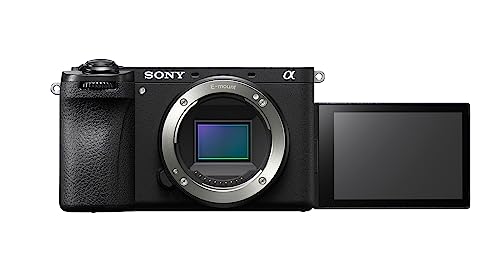 Sony Alpha a6700 APS-C Mirrorless Camera Body
- 26.0MP APS-C format Exmor R back-illuminated CMOS sensor
- BIONZ XR processing power for exceptional image quality
- Dedicated AI Processor and Real-time Recognition for accurate…
 Canon EOS R100 Mirrorless Camera RF-S18-45mm F4.5-6.3
- Stellar Image Quality: Canon EOS R100 4K digital…
- Compact Design: Compact, lightweight EOS R series 4K…
- Powerful Image Processor: DIGIC 8 image processor allows…
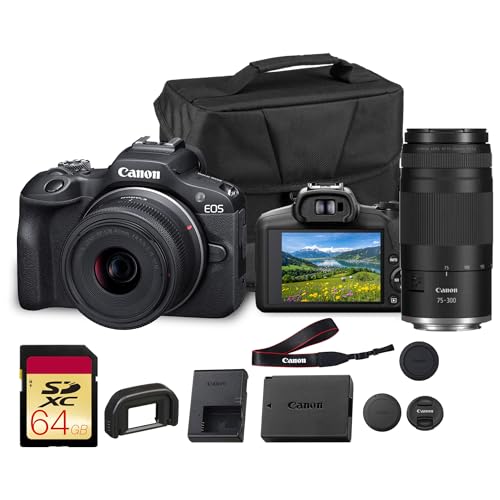 Canon EOS R100 Mirrorless Camera with 18-45mm
- Capture every perspective with the Canon EOS R100…
- High-Resolution Imaging with APS-C Sensor - Equipped with…
- Canon’s renowned Dual Pixel CMOS AF ensures accurate…
| Product | Key specs | |
|---|---|---|
| Sony Alpha a6700 APS-C Mirrorless Camera Body | 26.0MP APS-C format Exmor R back-illuminated CMOS sensor BIONZ XR processing power for exceptional image quality Dedicated AI Processor and Real-time Recognition for accurate… | Check price |
| Canon EOS R100 Mirrorless Camera RF-S18-45mm F4.5-6.3 | Stellar Image Quality: Canon EOS R100 4K digital… Compact Design: Compact, lightweight EOS R series 4K… Powerful Image Processor: DIGIC 8 image processor allows… | Check price |
| Canon EOS R100 Mirrorless Camera with 18-45mm | Capture every perspective with the Canon EOS R100… High-Resolution Imaging with APS-C Sensor - Equipped with… Canon’s renowned Dual Pixel CMOS AF ensures accurate… | Check price |
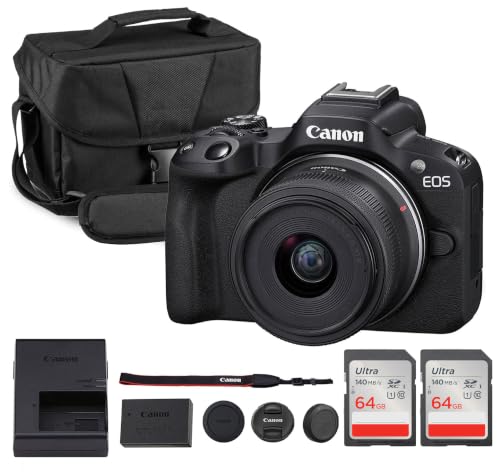 Canon EOS R50 Mirrorless Camera Kit | Beginner-Friendly for Vlogging & Content Creation: Lightweight and… Versatile 18–45mm Zoom Lens: The included 18–45mm lens… Oversampled 4K Video with Dual Pixel Autofocus: Capture… | Check price |
As an Amazon Associate we earn from qualifying purchases at no extra cost to you.
Choose by what you actually shoot
| Your situation | Best starting point | Why |
|---|---|---|
| Tight budget, first interchangeable-lens camera | Canon EOS R50 | Simple controls, compact build, and reliable autofocus make it approachable. |
| Frequent travel, mixed photos and video | Fujifilm X-S20 | Stabilization and a substantial video toolkit reduce the need for extra gear. |
| Birds, sports, or unpredictable subjects | Sony a6700 | Subject-recognition autofocus and a broad APS-C lens selection suit fast-moving subjects. |
| Already invested in Nikon Z lenses or controls | Nikon Z50II | It offers a familiar route into Nikon’s Z system, though the body lacks sensor-shift stabilization. |
Best picks, with the trade-offs
Best value for beginners: Canon EOS R50
The R50’s 24.2 MP sensor is enough for detailed travel photos, family pictures, and moderate cropping. Its autofocus can recognize people, animals, and vehicles, and the small body is easy to pack. Its main limitation is system cost over time: Canon’s RF-S APS-C lens range is more limited than Sony’s E-mount APS-C selection, so check that the lenses you want are available at a price you can accept.
There is no in-body stabilization. For still photos, choose a stabilized lens when available, raise shutter speed for moving subjects, or support the camera against a steady surface. Digital video stabilization can crop the frame, so leave room around your subject if you plan to use it.
Best travel hybrid: Fujifilm X-S20
The X-S20 balances a 26.1 MP sensor with five-axis in-body stabilization, a deep grip, and a compact body. Its rated stabilization is useful for still scenes in dim light, though it cannot freeze a walking person or moving wildlife; those subjects still need a faster shutter. For video, it supports high-resolution recording options, subject detection, and a headphone connection, making it more adaptable for creators than a basic entry-level body.
Fujifilm’s X-mount has a substantial selection of compact primes and zooms, including options from third-party makers. That matters for travel: a small camera with a large, heavy lens is no longer a particularly portable kit. Compare complete lens-and-body weight, not just the camera body.
Best for action and wildlife: Sony a6700
The a6700 pairs a 26 MP sensor with advanced subject recognition and tracking for people, animals, birds, and other subjects. That makes it a compelling choice when a camera must maintain focus as a subject moves across the frame. Its 4K video features also suit hybrid shooters, although demanding recording modes can create more heat and storage demands than casual clips.
Sony’s E mount is a major advantage if you want choices across budgets and sizes. There are compact lenses for everyday carry and longer telephoto options for wildlife. The body has stabilization, but it is not a substitute for a stabilized telephoto lens or a sufficiently fast shutter when photographing fast action.
Best Nikon-system entry: Nikon Z50II
The Z50II offers a 20.9 MP sensor and improved subject detection in a body with a comfortable grip. Its resolution is lower than the other picks, but it remains ample for common prints and online use. Nikon’s Z DX lens selection is comparatively modest, so research your intended wide, portrait, and telephoto lenses before committing. The camera has no in-body stabilization; look for optical stabilization in a lens if handheld video or low-light shooting is important.
What matters more than megapixels
All four cameras use APS-C sensors, which are considerably larger than the sensors in most phones. At this size, autofocus, lens choice, and shooting technique often affect keeper rate more than a small difference in resolution. A higher pixel count can help with cropping, but it also makes a sharp lens and good focus more important.
- Autofocus: For portraits and everyday scenes, any of these can be capable. For birds or sports, prioritize subject recognition, tracking behavior, and access to suitable telephoto lenses.
- Stabilization: In-body stabilization helps with camera shake in still scenes and handheld video. It does not stop subject movement. A stabilized lens can help too, but check whether a particular lens includes it.
- Video: Check the specific resolution, frame rate, recording limits, microphone input, and whether stabilization crops the image. A camera’s headline 4K capability does not tell the whole story.
- Lens ecosystem: Budget for the lenses you will use, not just the body. A kit zoom is convenient, but a lightweight wide-angle or telephoto lens may be more important for your trips.
Keep the travel kit small—and the sensor clean
A practical travel setup is a camera body, one standard zoom, and—if you know you will use it—one compact prime or telephoto. Before buying, compare the combined weight and packed length of the camera and lens. For example, saving roughly 100 g on a body matters less if your chosen zoom adds several hundred grams and needs a larger bag.
Interchangeable-lens cameras expose the sensor whenever a lens is removed. Change lenses indoors or out of the wind when possible, point the mount downward, and avoid touching the sensor. Use the camera’s built-in cleaning routine first; for persistent dust, use a blower designed for camera sensors or have a camera shop clean it. Don’t use canned air or wipe the sensor with ordinary cloth—damage can be costly.
Batteries are another travel constraint. Video, wireless connections, cold weather, and frequent screen use can reduce real-world runtime below a manufacturer’s test figure. Carry a spare battery for long days, and check whether your camera can charge over USB-C while you travel.
Bottom line
Pick the Canon EOS R50 for a lighter, lower-cost start; the Fujifilm X-S20 for the most balanced travel photo-and-video package; the Sony a6700 for demanding autofocus and lens choice; or the Nikon Z50II if you want to build around Nikon Z. Before buying, price the lenses you need and check the full kit’s weight. Those two decisions will shape your everyday experience more than a small sensor-resolution difference.





