
Best Dual-Zone Wine Refrigerators
The best dual zone wine refrigerator for most homes is a freestanding compressor model with independently adjustable zones, a clear temperature display, and enough capacity for your usual bottles plus room for larger shapes. Choose a compact unit for a small collection, a 30–40-bottle cabinet for regular entertaining, or a built-in model only when its installation instructions explicitly allow under-counter use.
Dual-zone fridges let you keep two sections at different temperatures—for example, white wine ready to serve and red wine at a somewhat warmer setting. The right choice depends less on the biggest advertised bottle count than on the actual shelf layout, room around the unit, and whether its temperature range suits your intended use.
Our top picks
 Honeywell 24 Inch Dual Zone Compressor Wine
- The double-paned glass door keeps the interior insulated…
- Temperature setting are from 40°F-65°F
- 6 Slide out wooden wine rack shelving making…
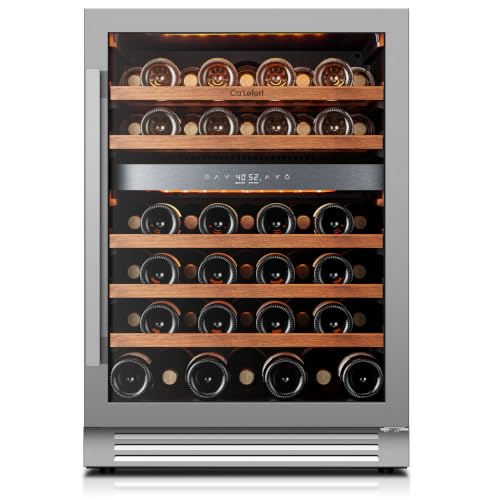 Ca'Lefort 24 Inch Wine Fridge
- 【Massive 52-Bottle Storage Capacity】Spacious 5.7 cu.ft design holds…
- 【Dual Temperature Zone 】Advanced compressor with fan-assisted air…
- 【Premium Adjustable Shelves】Sapele wood shelves reduce vibration, are…
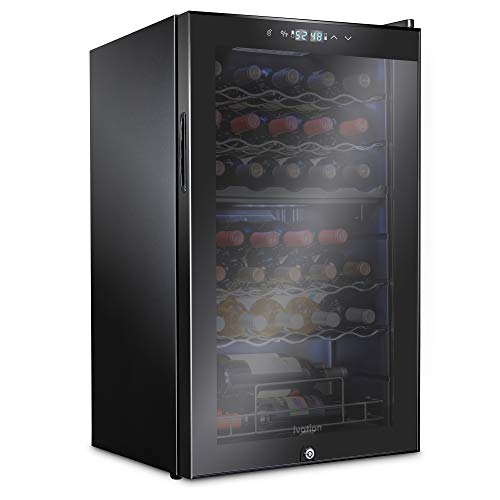 Ivation 33 Bottle Dual Zone Wine Cooler
- Ivation wine coolers’ compressor technology ensures temperature is…
- PRESERVE WINE’S FULLEST FLAVOR & AROMA - Set…
- A double-paned glass door not only keeps the…
| Product | Key specs | |
|---|---|---|
| Honeywell 24 Inch Dual Zone Compressor Wine | The double-paned glass door keeps the interior insulated… Temperature setting are from 40°F-65°F 6 Slide out wooden wine rack shelving making… | Check price |
| Ca'Lefort 24 Inch Wine Fridge | 【Massive 52-Bottle Storage Capacity】Spacious 5.7 cu.ft design holds… 【Dual Temperature Zone 】Advanced compressor with fan-assisted air… 【Premium Adjustable Shelves】Sapele wood shelves reduce vibration, are… | Check price |
| Ivation 33 Bottle Dual Zone Wine Cooler | Ivation wine coolers’ compressor technology ensures temperature is… PRESERVE WINE’S FULLEST FLAVOR & AROMA - Set… A double-paned glass door not only keeps the… | Check price |
 Velieta Wine and Beverage Refrigerator | [ Independent Cooling Zone for Wine and Beverage… 【Quiet and Powerful Compressor & Air Circulation 】The… 【Large Capacity for Beverage and Wine & Removable… | Check price |
As an Amazon Associate we earn from qualifying purchases at no extra cost to you.
Shortlist by situation
- Small kitchen or apartment: A compact freestanding compressor fridge, typically advertised for about 12–18 standard bottles. Check its width and door swing before buying; a small capacity does not necessarily mean a shallow cabinet.
- Regular entertaining: A 30–40-bottle model is a useful middle ground if you keep a mix of red and white wine. Look for adjustable shelves and verify the capacity with mixed bottle shapes.
- Existing cabinetry: Choose a purpose-built front-venting under-counter model. A freestanding unit placed in a tight cabinet can overheat because it may need open space around its sides or back.
- Very quiet living space: Prioritize a compressor model with a published noise figure, if available, and place it away from beds and seating. Thermoelectric models can be quiet, but often suit smaller collections and rooms with stable temperatures better than warm, demanding environments.
Compare capacity, footprint, and operating details
The figures below are representative ranges for common home-fridge categories, not specifications for one particular model. Exact dimensions, weight, capacity, and clearance requirements vary by manufacturer. Treat the manual for the model you are considering as authoritative.
| Type | Typical advertised capacity | Typical width | Cooling and noise considerations | Installation fit |
|---|---|---|---|---|
| Compact freestanding | 12–18 standard bottles | About 10–16 in. | Often compressor-cooled; expect cycling sounds, with noise varying by model and placement | Usually needs ventilation space; do not enclose unless approved |
| Mid-size freestanding | 30–40 standard bottles | About 19–24 in. | Compressor cooling is common; check published noise data and vibration-control details | Allow the specified side, rear, and top clearance |
| Under-counter, front-venting | About 30–50 standard bottles | Often around 24 in. | Compressor operation is normal; cabinetry can make sound more noticeable | Designed for built-in installation, but still requires the stated cutout and ventilation |
“Standard bottle” capacity is usually based on a Bordeaux-style bottle. Champagne bottles, broad-shouldered bottles, and some Burgundy shapes can reduce usable space, especially on fixed shelves. If you store varied bottles, assume the practical capacity may be lower than the headline figure. A removable shelf helps, but taking one out also reduces total storage.
Match temperature range to how you serve wine
Before comparing displays, confirm that both zones have independent controls and find each zone’s minimum and maximum setting in the specifications. Many home dual-zone models cover roughly the low-to-mid 40s through the mid-to-upper 60s °F, but the exact range differs. Some divide the cabinet into an upper and lower zone; others use side-by-side compartments. Either layout can work if the controls and usable space fit your collection.
For serving, many people keep whites cooler than reds, so a split-zone cabinet is convenient. The zones are not necessarily equally sized or equally adjustable: inspect the shelf diagram, control range, and stated temperature difference between sections. A dual-zone fridge is also not a substitute for a cellar designed for long-term aging. If you plan to store valuable bottles for years, assess temperature stability, vibration, light protection, and humidity rather than relying on the zone count alone.
Measure the room before the cabinet
Measure the opening’s width, height, and depth, then check the refrigerator’s full dimensions—including handle and door—and the clearance needed to open the door far enough to remove shelves. Add the manufacturer’s required ventilation space. A unit that fits the opening but cannot release heat or open fully is not a good fit.
For a built-in location, confirm that the model is explicitly rated for under-counter installation and that its vent is at the front. A rear-venting or side-venting freestanding fridge may need open-air clearance and can run poorly if boxed in. Also check whether the floor is level and strong enough for the loaded cabinet. Wine adds substantial weight: a rough planning estimate is about 2.5–3 lb per full bottle, before counting the appliance.
Noise, shelves, and everyday ownership
Compressor fridges make sound as the compressor and fans cycle; the pitch and frequency matter as much as a single decibel number. If the maker publishes a noise level, compare models on the same measurement basis, and remember that cabinetry, hard floors, and contact with a wall can amplify vibration. Leave the specified clearance and avoid pushing the cabinet against objects that can rattle.
Check whether shelves slide out when loaded, whether they are wood or metal, and whether shelf spacing can accommodate taller bottles. Wooden fronts may soften the appearance and reduce bottle-to-metal contact, while metal racks can make capacity easier to adjust. Neither material guarantees better cooling. Look for a door that seals evenly, a reversible hinge if needed, and controls that are easy to read without opening the door.
Routine upkeep is simple but affects performance. Keep vents clear, dust accessible condenser areas as directed, wipe spills promptly, and clean the interior with the manufacturer-approved method. Door seals are a common wear point: clean them gently and replace them if cracked or no longer sealing. Frequent door opening, blocked ventilation, direct sunlight, and a hot room make the cabinet work harder. If the refrigerator has been transported on its side, follow the manual’s instructions for how long to let it stand upright before plugging it in.
A practical capacity check
Suppose you typically keep 18 bottles on hand: 10 reds and 8 whites. Adding a 25% reserve for guests and replenishment gives 18 × 1.25 = 22.5, so plan for at least 23 usable bottle positions. Because mixed shapes often displace some bottles, a nominal 24-bottle cabinet may be tight; a model advertised around 30 bottles, with adjustable shelves and a layout that supports your bottle shapes, is a safer target. If the collection is mostly large-format bottles, size up further.
What to prioritize before buying
- Choose capacity by real use: Count the bottles you store, then add a reserve; do not treat the advertised maximum as guaranteed mixed-bottle capacity.
- Verify both temperature ranges: Make sure each zone can reach the settings you want, and check whether one zone must be set warmer than the other.
- Fit the installation: Match front-venting built-in designs to cabinetry; use freestanding models where their required airflow can be maintained.
- Place for sound and heat: Avoid a sunny, hot location or a bedroom wall if compressor cycling would be disruptive.
- Compare total ownership cost: Home dual-zone models range from a few hundred dollars for basic compact units to well over $1,000 for larger or built-in designs. Include delivery, installation, and any cabinetry work in the budget.
For most buyers, the strongest choice is not the refrigerator with the largest capacity claim. It is the one that fits the room with proper ventilation, keeps both zones within the needed temperature range, and has shelves that suit the bottles you actually own.





