
Best Ergonomic Mesh Chairs for Hot Climates
The best ergonomic mesh chairs for hot climates are the Herman Miller Aeron for maximum airflow, the Steelcase Series 2 for a slimmer long-session design, and a well-adjusted mid-range chair with breathable mesh and a sliding seat if your budget is limited.
Heat management is not just a question of whether a chair has mesh. Mesh density, the amount of foam beneath your body, lumbar-adjustment range, recline geometry, and the materials used in the frame all affect how comfortable the chair feels after several hours. A chair can look ventilated while still trapping heat through a thick cushion or rigid back shell.
Our top picks
 naspaluro Ergonomic Mesh Office Chair Breathable Desk
- Support your head, back, hips, and hands with…
- Customize your computer chair with 3D armrests that…
- Stay cool with this breathable mesh office chair…
 Ergonomic Office Chair
- 【Adjustable Lumbar Support】- The lumbar support of MOLENTS…
- 【Adjustable 3D Armrests】- MOLENTS ergonomic office chair with…
- 【Breathable and Comfortable Mesh Office Chair】- This computer…
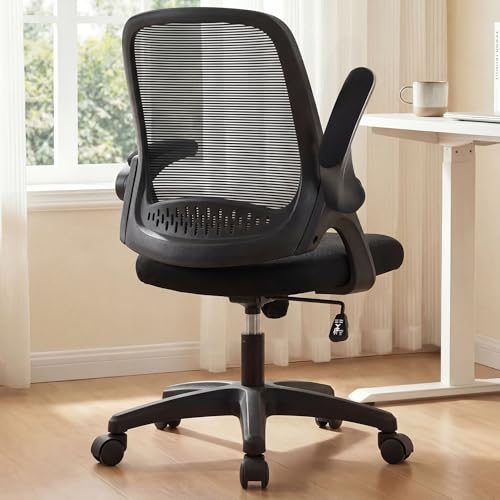 NEO CHAIR Office Desk Chair
- Breathable Mesh & Back Support
- Flip-up Arms for Space Saving
- Adjustable Comfort
| Product | Key specs | |
|---|---|---|
| naspaluro Ergonomic Mesh Office Chair Breathable Desk | Support your head, back, hips, and hands with… Customize your computer chair with 3D armrests that… Stay cool with this breathable mesh office chair… | Check price |
| Ergonomic Office Chair | 【Adjustable Lumbar Support】- The lumbar support of MOLENTS… 【Adjustable 3D Armrests】- MOLENTS ergonomic office chair with… 【Breathable and Comfortable Mesh Office Chair】- This computer… | Check price |
| NEO CHAIR Office Desk Chair | Breathable Mesh & Back Support Flip-up Arms for Space Saving Adjustable Comfort | Check price |
 GABRYLLY Ergonomic Office Chair | 【ERGONOMIC OFFICE CHAIR】- The ergonomic chair provides 4… 【COMFORTABLE MESH SEAT】- The office chair is larger… 【ADJUSTABLE FLIP-UP ARMREST】- Folding the armrests up 45°,… | Check price |
As an Amazon Associate we earn from qualifying purchases at no extra cost to you.
Quick picks by situation
| Situation | Best fit | Why it suits hot conditions | Typical market range |
|---|---|---|---|
| Maximum breathability and daily use | Herman Miller Aeron | Pellicle suspension seat and back, minimal foam, adjustable posture support | $1,300–$2,200 |
| Small room or compact desk | Steelcase Series 2 | Narrower visual profile, breathable back, adjustable seat and recline controls | $800–$1,400 |
| More back movement and a softer feel | Haworth Fern with digital-knit back | Flexible back structure and broad recline movement; less conventional than dense mesh | $1,000–$1,800 |
| Budget-conscious home office | Mid-range mesh chair with seat slider and adjustable lumbar | Can provide useful airflow without premium pricing if foam is thin and controls are genuine | $250–$700 |
What makes a mesh chair suitable for a hot climate?
Breathable mesh density
Open mesh is not automatically cooler. Very loose mesh may ventilate well but can create pressure points, stretch unevenly, or allow the frame to be felt through the seat. Dense, tightly woven mesh usually supports weight more evenly and lasts longer, but it may pass less air. The useful middle ground is a tensioned suspension material that supports the pelvis without a thick fabric pad underneath it.
Look for separate seat and back tension, smooth edges, and a frame that does not press into the backs of your thighs. In a showroom or during a return period, sit for at least 30 minutes. Short trials often favor softness; longer sessions reveal heat buildup and pressure at the seat edge.
Seat foam is often the hidden heat source
Many “mesh” office chairs have a mesh back but a substantial foam seat. That arrangement can still work well, especially for people who dislike a firm suspension seat, but foam retains more body heat than a ventilated seat pan. High-density foam generally holds its shape better, while softer low-density foam can compress and form a warm hollow over time.
For a hot room, prioritize a thin, supportive cushion over a deep plush seat. A waterfall front edge is valuable because it reduces pressure beneath the thighs without requiring extra padding. If you prefer a cushioned seat, choose breathable upholstery and avoid bonded vinyl, which can feel noticeably warmer against the skin.
Head-to-head: the leading breathable designs
Herman Miller Aeron: best for sustained airflow
The Aeron remains one of the clearest choices when heat is your primary concern. Its Pellicle suspension material covers both the seat and back, so there is no thick foam seat acting as a thermal blanket. It is available in three size ranges, and correct sizing matters: a chair that is too small can create thigh pressure, while one that is too large may fail to support the pelvis and upper back properly.
Its PostureFit SL support and recline controls can be configured for upright work and relaxed reading. The frame and tilt mechanism are built for intensive office use, but the chair’s firm, suspended feel is not ideal for everyone. People who prefer a soft, deeply padded seat may need an adjustment period.
Steelcase Series 2: best balance of airflow and adjustability
The Series 2 uses a breathable back with a separate upholstered seat. That means it is not as thermally open as a full suspension chair, but its seat slider, height adjustment, recline control, and optional lumbar settings make it easier to fit a wider range of users. The back is relatively slim, which helps in a small workspace and reduces the visual bulk of a large executive chair.
Choose it over a full-mesh model if you want more cushioning or frequently change sitting positions. In a hot climate, select the most breathable available upholstery and keep the seat depth short enough that the front edge does not press against your legs.
Haworth Fern: best for flexible back movement
The Fern is not a traditional mesh chair, but its flexible digital-knit back option deserves consideration when “cool” also means moving freely rather than sitting against a rigid panel. Its back structure follows changes in posture and offers a generous recline experience. The upholstered seat can retain more heat than the Aeron’s suspension seat, so it is a better choice for users who value back flexibility and cushioning over maximum ventilation.
Features that matter during long sessions
- Lumbar adjustment: Look for height adjustment of roughly 2–4 inches, or a support system that can be positioned across the lower-back area. Fixed lumbar pads may suit some bodies but cannot compensate for different torso lengths.
- Recline range: A useful office chair should allow upright work plus a reclined position of approximately 20–30 degrees from vertical. Reclining briefly reduces the need to hold the torso rigidly and can improve comfort during reading or calls.
- Seat depth: A typical adjustable range of about 16–19 inches covers many adults. Leave roughly two to three fingers of space between the seat edge and the back of your knees.
- Armrest movement: Height, width, depth, and pivot adjustment are more useful than oversized padded arm caps, which can retain heat.
- Frame durability: Reinforced polymer, aluminum, or steel components generally age better than thin decorative plastic around the tilt mechanism. Check the warranty length and whether casters, arm pads, and gas lifts are replaceable.
- Base and casters: A five-star base is standard. Soft casters are preferable for hard floors; hard casters or a floor mat are usually better for carpet.
Decision matrix for choosing the right chair
| Your situation | Prioritize | Acceptable compromise | Best direction |
|---|---|---|---|
| Eight or more hours daily | Adjustable lumbar, seat depth, recline tension, replaceable parts | Higher initial cost | Premium suspension or high-adjustability task chair |
| Occasional use, under four hours | Seat comfort, basic height and recline adjustment | Fewer armrest settings | Mid-range mesh-back chair |
| Very hot, poorly air-conditioned room | Mesh seat, open back, minimal foam | Firmer initial feel | Full suspension design such as the Aeron |
| Small desk or shared workspace | Compact footprint, adjustable arms, manageable seat depth | Less expansive back support | Steelcase Series 2 or a compact task chair |
| Limited budget | Real seat-height, lumbar, and recline controls | Less refined mesh and shorter warranty | Well-reviewed mid-range chair rather than a feature-heavy bargain model |
How to set up a mesh chair for a cooler, more comfortable session
- Set seat height first. Keep both feet supported and aim for thighs that are roughly level or slightly downward toward the knees.
- Adjust seat depth. Slide the seat so the front edge does not press into the backs of your knees. This also helps prevent leaning forward and losing lumbar support.
- Position lumbar support. Move it to the natural inward curve of your lower back, not necessarily to the lowest point of the chair.
- Set recline tension. The chair should recline without a forceful push but should not fall backward when you relax.
- Lower the armrests enough to keep your shoulders relaxed. High armrests encourage shoulder elevation and can make a warm room feel even less comfortable.
- Use short posture changes. Alternate upright work with brief reclined periods and stand or walk periodically. No chair compensates for remaining in one position all day.
Durability and maintenance realities
Mesh seats usually show wear first at the front edge and where clothing repeatedly contacts the material. Foam seats tend to soften before the frame fails. Arm pads can become shiny or develop surface cracks, while casters collect hair and dust. These are normal wear points, so check whether replacement parts are sold before buying.
Vacuum mesh with a soft brush attachment and wipe it with a lightly damp microfiber cloth. Avoid soaking the fabric, using bleach, or applying oily cleaners, because residue can attract dust and alter the tension of some materials. Inspect the screws and tilt mechanism every few months, especially if the chair creaks or develops side-to-side movement. Keep the chair out of direct, intense sunlight where possible; heat and ultraviolet exposure can accelerate fading and plastic degradation.
The most common mistake is choosing a chair for its back mesh alone. For a hot climate, evaluate the entire contact area: seat material, foam thickness, front-edge pressure, lumbar fit, recline range, and the space around your body. If you want the coolest long-session option, start with a full suspension seat. If you need more cushioning, a breathable mesh-back chair with a thin, supportive seat is often the more comfortable compromise.





