
Key takeaways
- Measure your trunk. Folding carts reduce depth but still need a flat space. Tabletop grills often fit in a standard storage bin with room for utensils.
- Check the weight. If you carry the grill from the car to a walk-in site, a smaller model is easier. Wheeled carts help on paved pads but not on soft ground.
- Plan the fuel. Many compact propane grills use small disposable cylinders; some can connect to a larger tank with an adapter hose sold separately. Follow the maker’s manual for approved connections.
- Look at wind protection. Gusty sites reduce burner efficiency. Grills with a lid and a protected burner area handle wind better than open stoves.
- Consider the table. Tabletop grills need a stable, heat-tolerant surface. Do not place a grill on a plastic or wooden picnic table that is not rated for heat.
For most campers, a compact propane grill such as the Weber Traveler or the Coleman RoadTrip line is the easiest fit, a small charcoal kettle like the Weber Jumbo Joe suits people who want smoky flavor and do not mind the cleanup, and a tabletop gas grill like the Weber Q1200 suits couples and solo travelers who value a small footprint. The right choice depends on how many people you feed, how far you carry the grill, and whether the campground allows open flames or charcoal at all.
Our top picks



As an Amazon Associate we earn from qualifying purchases at no extra cost to you.
Camping Grills at a Glance
| Grill | Fuel | Best for | Stated or reported specs | Main limit |
|---|---|---|---|---|
| Weber Traveler | Propane | Families and car campers who want a full-size feel | Reviewers list about 320 square inches of cooking area, a folding frame and wheels | Bulkier and heavier than tabletop models; a premium-tier purchase |
| Coleman RoadTrip 225 and 285 | Propane | Groups and tailgates, flexible cooking | Reviewers list roughly 225 or 285 square inches, wheeled stand, swappable grate, griddle and stove tops | Sources disagree on burner counts by model, so read the maker’s current listing |
| Weber Q1200 | Propane | One to three people, small cars | Compact cast-aluminum body; the maker lists a cooking area in the range of 189 square inches | Small surface, limited for large groups |
| Weber Jumbo Joe 18-inch | Charcoal | Smoky flavor on a lean budget | Kettle-style, 18-inch grate, lid with vents | Needs charcoal handling and ash disposal |
| Coleman 2-in-1 style grill and stove | Propane | Cooks who want one box for breakfast and dinner | Grill plus burner combination, as described by reviewers | Smaller grill area than dedicated grills |
| BioLite FirePit+ | Wood | Campfire-style cooking where fires are allowed | Portable fire pit that accepts a grill accessory, per roundup coverage | Depends on local fire rules and dry fuel |
Rankings in the roundups from OutdoorGearLab and several smaller outlets agree on a few points. The Weber Traveler is the most frequent top pick, the Coleman RoadTrip line is the value and group choice, and the Weber Q1200 is the compact all-rounder. Prices and exact rankings vary between outlets, so treat the tier descriptions below as a guide rather than a final verdict.
Gas or Charcoal for Camping?
Propane grills light with a knob and an igniter, heat quickly, and let you turn the temperature down. That is the main reason reviewers favor them for camping, where you often cook after a long drive or a hike and want dinner on the table fast. They also leave no ash, which matters at campgrounds that ask you to pack out waste.
Charcoal grills reward patience. They take longer to light and need a safe place to dump or extinguish coals, but they produce the smoky flavor many people associate with outdoor cooking. A small kettle such as the Jumbo Joe is cheap to own and has no regulator, hose or cylinder to worry about. The trade-off is that you must carry fuel, a chimney or starter, and a metal container for spent coals.
Wood-fueled portable fire pits with grill accessories sit in a third group. They deliver the campfire experience, but they depend on dry wood and on whether the campsite allows open fires. In dry seasons many parks restrict wood fires while still allowing stoves with a shut-off valve, so a gas grill is often the safer plan.
Pick by Group Size and Cooking Style
Solo travelers and couples
A tabletop gas grill such as the Weber Q1200 keeps the load small. Reviewers praise this style for packing easily and heating quickly, though the cooking area limits you to a few burgers or a couple of steaks at once. If you mostly cook sausages, vegetables and chicken pieces for two, it is usually enough.
Families of four or more
The Weber Traveler and the Coleman RoadTrip 285 offer more surface area and an included stand or cart. OutdoorGearLab reportedly rates the Traveler above the Coleman for cooking performance, while the Coleman earns credit for flexible tops and a more approachable cost tier. If you feed six or more people regularly, a larger surface cuts down on cooking in batches.
Cooks who want variety
Swappable cooktops let you move from burgers to pancakes without a second appliance. The RoadTrip family is built around that idea, with a standard grate, a griddle and a stove-style grate available. If breakfast matters to your group, that flexibility can outweigh a slightly lower searing performance.
Features and Trade-offs by Budget Tier
Budget tier
Small charcoal kettles and simple tabletop gas grills fall here. Expect thinner metal, fewer controls and less even heat. They are fine for occasional weekend trips but may show wear sooner if they are transported often. Look for a tight-fitting lid, sturdy latches and a grate that is easy to clean.
Mid-range tier
This is where the Coleman RoadTrip models and the Weber Q1200 sit in most coverage. You gain better burners, a stand with folding legs and more consistent temperature control. For most campers who go several times a year, this tier balances capability and carrying weight.
Premium tier
The Weber Traveler is the usual example. You pay for larger cooking space, a more stable folding cart and the sense of cooking on something close to a backyard grill. The trade-off is size: it takes real trunk space and is a heavier lift than a tabletop model.
Fit, Size and Transport Notes
- Measure your trunk. Folding carts reduce depth but still need a flat space. Tabletop grills often fit in a standard storage bin with room for utensils.
- Check the weight. If you carry the grill from the car to a walk-in site, a smaller model is easier. Wheeled carts help on paved pads but not on soft ground.
- Plan the fuel. Many compact propane grills use small disposable cylinders; some can connect to a larger tank with an adapter hose sold separately. Follow the maker’s manual for approved connections.
- Look at wind protection. Gusty sites reduce burner efficiency. Grills with a lid and a protected burner area handle wind better than open stoves.
- Consider the table. Tabletop grills need a stable, heat-tolerant surface. Do not place a grill on a plastic or wooden picnic table that is not rated for heat.
Safety and Care
Use any grill outdoors only, in an open area, and well away from tents, awnings, vehicles and overhanging branches. Never cook inside a tent or camper. Gas and charcoal both produce carbon monoxide, and a sleeping area is not a safe place for either. Keep children and pets back from the cooking zone, and keep a bucket of water or a fire extinguisher nearby where rules recommend it.
For propane grills, inspect hoses and connections before each trip. A common check described in maker manuals is to brush on a soapy water solution and look for bubbles, but follow the exact steps in your grill’s instructions. Turn the cylinder valve off when you finish. For charcoal, let coals burn out fully and cool before disposal, and use a metal container rather than a bag or a trash can.
For care, scrape the grate while it is warm, wipe grease from catch pans, and dry the lid before packing. Grease build-up is both a flavor problem and a flare-up risk. If a grill shows rust on structural parts or damaged hoses, replace the parts or the grill rather than improvising.
Pick X If … Decision Table
| Pick this | If you … |
|---|---|
| Weber Traveler | cook for a family, want a stable cart and have trunk space |
| Coleman RoadTrip 285 | want swappable cooktops and a mid-range tier for groups |
| Coleman RoadTrip 225 | want the same family of accessories in a slightly smaller footprint |
| Weber Q1200 | camp as a pair or solo and want a compact gas grill |
| Weber Jumbo Joe 18-inch | prefer charcoal flavor and accept the extra cleanup |
| Grill and stove combo | want one appliance for coffee, breakfast and dinner |
| BioLite FirePit+ or similar | camp where wood fires are permitted and want a campfire feel |
Alternatives to a Dedicated Camping Grill
- Two-burner camp stove with a griddle. It cooks eggs, pancakes and stir-fries well and doubles as your main stove, but it will not give you grill marks.
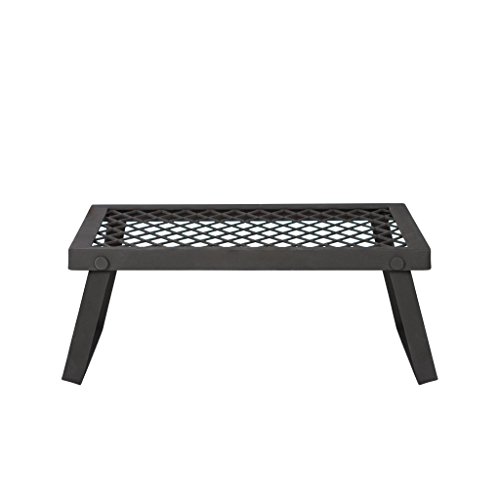
- Folding campfire grate. A light steel grate over an existing fire ring costs little and packs flat. It only works where fires are allowed and the campsite provides a ring.
- Cast iron over coals. A skillet or Dutch oven gives deep flavor, though it is heavy and slower to manage.
Frequently Asked Questions
Is a gas or charcoal grill better for camping?
Gas is easier for most campers because it lights fast, adjusts heat and leaves no ash. Charcoal gives stronger smoky flavor and a lower upfront tier, but it needs more cleanup and more careful disposal. If you are unsure, pick gas for convenience and charcoal for flavor.
How big should a camping grill be?
Plan on roughly one hundred square inches for every two people if you cook mostly burgers and sausages. A solo traveler or couple can use a tabletop model, while a family of four or more benefits from a cart-style grill with a larger surface. Check the maker’s stated cooking area rather than the outer dimensions.
Can I use a camping grill on a picnic table?
Only if the grill’s manual allows it and the table is stable and heat tolerant. Many tabletop grills are designed for a firm, non-flammable surface, and wooden or plastic tables can scorch or melt. A cart-style grill avoids the problem by bringing its own stand.
Is it safe to cook with a grill inside a tent or camper?
No. Gas and charcoal grills release carbon monoxide and must only be used outdoors in an open space. Keep the grill well away from tent walls, awnings and vehicles, and never use one to heat a sleeping area.
Can I refill disposable propane cylinders?
Makers generally design small disposable cylinders for single use, and refilling them is not recommended. Some grills accept an adapter hose to connect a larger refillable tank, which can reduce waste. Follow the manual and use only parts approved for your grill.
How do I clean a grill while camping?
Scrape the grate while it is still warm, wipe off the surface with a paper towel or brush, and empty the grease tray after it cools. Pack out used towels and grease, and avoid rinsing food residue into the campground’s drains or soil. A quick clean after each meal makes the final cleanup at home much easier.





