
The best heat press machines for custom projects are a 15-by-15-inch clamshell for affordable everyday apparel work, a swing-away press when alignment and thick items matter, and a compact handheld press only when storage space is the deciding factor.
For most makers, the best all-round starting point is a 15-by-15-inch heat press with digital temperature and time controls, adjustable pressure, a replaceable silicone pad, and a published temperature accuracy of approximately ±5°F. It provides enough platen area for adult T-shirts without taking up the floor space or cost of a commercial 16-by-20-inch machine.
Our top picks
 HTVRONT Auto Heat Press Machine for T
- 【Auto Heat Press & Free Hands】- HTVRONT auto…
- 【Heat-up Fast & Evenly】- Our heat press 15x15…
- 【Making More in Less Time】- If you're looking…
 HTVRONT Auto Heat Press 2
- 【Pressure Customization】HTVRONT Auto Heat Press 2 can effectively…
- 【Higher Heat Press Height & Widely Used】HTVRONT 15x15…
- 【Heat Up Fast & Evenly】Our heat press machine…
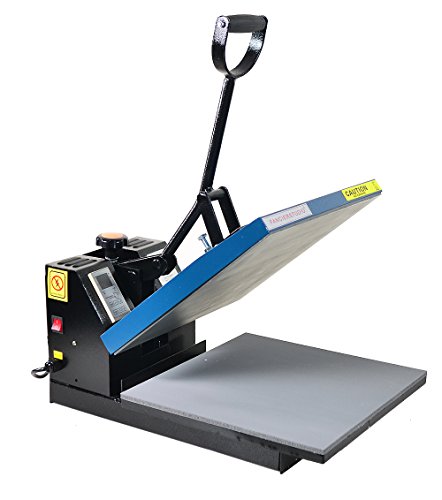 Fancierstudio Digital Heat Press 15 x 15
- Brand new 15-by-15-inch heat press sheet included
- Voltage: 110 volts
- Temperature Range: 0-699 degrees F
| Product | Key specs | |
|---|---|---|
| HTVRONT Auto Heat Press Machine for T | 【Auto Heat Press & Free Hands】- HTVRONT auto… 【Heat-up Fast & Evenly】- Our heat press 15x15… 【Making More in Less Time】- If you're looking… | Check price |
| HTVRONT Auto Heat Press 2 | 【Pressure Customization】HTVRONT Auto Heat Press 2 can effectively… 【Higher Heat Press Height & Widely Used】HTVRONT 15x15… 【Heat Up Fast & Evenly】Our heat press machine… | Check price |
| Fancierstudio Digital Heat Press 15 x 15 | Brand new 15-by-15-inch heat press sheet included Voltage: 110 volts Temperature Range: 0-699 degrees F | Check price |
 HTVRONT Heat Press Machine for Tshirts | 【Auto Heat Press & Release - Free Hands】HTVRONT… 【Heating-up Quickly & Evenly】Heat press 15x15 machine combined… 【Safety Use & Auto-Off Feature】Our t-shirt heat press… | Check price |
As an Amazon Associate we earn from qualifying purchases at no extra cost to you.
Quick comparison: which press fits your project?
| Press type | Typical platen size | Typical heat-up time | Best for | Main compromise |
|---|---|---|---|---|
| Handheld compact press | 6 x 7 to 9 x 9 inches | 2 to 5 minutes | Small logos, sleeves, bags, limited storage | Uneven pressure on large designs |
| 12 x 10-inch portable press | 12 x 10 inches | 2 to 4 minutes | Small shirts, tote bags, craft rooms | Limited coverage for adult garments |
| 15 x 15-inch clamshell | 15 x 15 inches | 5 to 10 minutes | Most T-shirts, transfers, occasional batches | Needs overhead clearance and careful garment placement |
| 16 x 20-inch commercial press | 16 x 20 inches | 8 to 15 minutes | Frequent production and oversized graphics | Heavy, expensive, and demanding on workspace |
Heat-up times vary with wattage, room temperature, and electrical supply. Treat these figures as practical ranges rather than guarantees; the important point is whether a machine reaches its target temperature evenly and holds it during pressing.
Our picks by situation
Best for most home users: a 15 x 15-inch clamshell
A standard 15-by-15-inch clamshell offers the most useful balance of platen coverage, price, and simplicity. It accommodates the central decoration area of most adult shirts, hoodies, tote bags, and pillow covers. Models from brands such as Cricut, HTVRONT, VEVOR, and Fancierstudio occupy different points in this category, so compare the controls and frame quality rather than choosing by brand name alone.
Choose one with a pressure-adjustment knob, a timer that can be set in at least one-second increments, and a temperature range reaching at least 400°F. A clamshell is usually easier to learn because the upper platen moves along a fixed hinge and requires less clearance than a swing-away press.
Best for small spaces: a compact portable press
Cricut EasyPress models are representative of the portable category: they combine a relatively small heated plate with a household-friendly footprint and straightforward controls. They are convenient for small transfers, children’s garments, labels, and craft fairs where carrying weight matters.
The limitation is pressure. Your hands supply the force, so pressure can vary across a large design. A 9-by-9-inch plate also cannot cover a typical adult front graphic in one pass. Repositioning can create a visible seam or a partially bonded edge, particularly with materials that require consistent pressure. For large designs, a full-size press is usually the better value even if it costs more initially.
Best for thick or awkward items: a swing-away press
A swing-away design moves the heated platen completely to the side, leaving the lower platen open. This makes it easier to thread a shirt onto the platen, position a design, and work around seams, zippers, buttons, and thicker blanks. It also reduces the chance of brushing your hand against the hot upper platen while arranging material.
The trade-off is workspace. A 15-by-15-inch swing-away press may need roughly 24 to 30 inches of usable side-to-side clearance once the arm is fully extended. It is a strong choice for layered garments and careful alignment, but a poor choice for a narrow desk or a shelf that cannot support the machine’s weight.
Best for frequent production: a commercial swing-away or dual-purpose press
If you press dozens of garments every week, look at commercial machines such as the Stahls’ Hotronix Fusion IQ or Geo Knight presses. Their advantages are not simply higher maximum temperature. They typically offer sturdier frames, more repeatable pressure, replaceable components, better platen options, and controls designed for repeated cycles.
A commercial press makes sense when downtime costs more than the purchase-price difference. For occasional family projects, its weight, power requirements, and price are difficult to justify.
What matters more than the advertised wattage
Platen size and usable coverage
Platen size determines how often you need to reposition a transfer. A 15-by-15-inch platen covers a 12-inch-wide adult shirt graphic in one press, provided the design is positioned correctly. A 12-by-10-inch plate may require two placements for the same design, increasing the risk of a line or inconsistent bonding.
Do not confuse platen size with garment capacity. A 15-inch plate can press the center of many adult shirts, but it may not fit the full width of a thick hoodie without folding or compressing part of the garment. Check the lower platen shape and whether the cover is removable so a shirt can slide over it instead of lying flat.
Temperature accuracy and uniformity
A display showing 320°F does not prove that every point on the platen is 320°F. Temperature variation near the edges can cause glossy patches, weak adhesion, or scorching. Prefer a machine that publishes a realistic accuracy specification and has independent over-temperature protection.
For important work, verify the platen with heat-resistant temperature strips or a suitable surface thermometer. Measure the center and four corners after the machine has fully preheated. A difference of 10°F may matter for a narrow application window, so follow the transfer manufacturer’s instructions rather than relying on a universal setting.
Pressure adjustment
Pressure should be adjustable with a knob or calibrated mechanism, not merely by forcing the handle down harder. Light pressure suits some heat-transfer vinyl applications; thicker transfers, sublimation blanks, and layered materials may need a different setting. Excessive pressure can flatten textured blanks, leave an outline from the lower pad, or make a garment shift as the platen closes.
Heat-up time and recovery
Fast heat-up is useful at the beginning of a job, but recovery after opening the press is more important during a batch. A machine with a large, well-insulated platen may take longer to preheat yet maintain temperature better between cycles. Look for a countdown timer, an audible completion signal, and a display that shows whether the machine is still heating rather than silently starting a cycle below the set temperature.
Clamshell versus swing-away: the practical decision
| Question | Choose clamshell if… | Choose swing-away if… |
|---|---|---|
| Available space | You have limited side clearance and adequate overhead room | You can leave 24–30 inches of side clearance |
| Typical blanks | T-shirts, totes, and flat garments | Hoodies, seams, zippers, patches, and thicker items |
| Learning curve | You want the simplest operating motion | You value open access for alignment |
| Safety around placement | You can position the garment before lowering the platen | You want the hot platen moved away while arranging work |
Workspace and electrical planning
Measure more than the machine’s listed footprint. Add room for the handle, the open platen, garment loading, and a heat-resistant landing area for finished items. A 15-by-15-inch press weighing 40 to 60 pounds should sit on a rigid table that does not flex when pressure is applied. Lightweight folding tables can wobble or slowly loosen at the joints.
Many home presses draw approximately 1,200 to 1,800 watts. On a 120-volt circuit, that is about 10 to 15 amps before accounting for other appliances. Avoid sharing a marginal circuit with a space heater, kettle, or high-powered printer. Follow the machine’s electrical instructions and do not use an undersized extension cord.
Ownership realities: what wears first
- Silicone lower pad: It can compress, scorch, or develop a permanent low spot. Replace it when pressure becomes uneven.
- Protective sheets: Teflon-coated sheets and parchment-style sheets collect adhesive and discolor. Replace them when residue transfers to garments.
- Hinge and pressure mechanism: A loose hinge changes pressure across the platen. Check fasteners periodically, with the machine unplugged and cool.
- Heating element: Uneven heating or an error code usually warrants manufacturer service rather than opening the housing.
- Lower platen cover: Keep it smooth and free of wrinkles. A fold can imprint every garment in a batch.
Clean cooled adhesive residue with a manufacturer-approved method. Never scrape a hot platen with a metal tool. Let the press cool before storage, keep the cord away from the heated surface, and avoid stacking heavy supplies on the lower pad.
A simple buying formula
Estimate your real workload before spending more. Suppose a compact press takes two passes for a design and each pass requires 60 seconds, while a 15-by-15-inch press completes it in one 60-second cycle. At 20 shirts per month, the compact option adds about 20 minutes of pressing time, plus extra alignment and rework risk. If you make only four small logos monthly, that time saving is unlikely to justify a larger machine.
In practice, buy a 15-by-15-inch adjustable clamshell for general apparel, a swing-away model when thick or difficult blanks dominate, and a compact press when portability outranks coverage. Prioritize even heating, controllable pressure, a replaceable lower pad, and a workspace that can safely support the machine over a faster warm-up number or a larger maximum temperature.
Frequently asked questions
Is a 15 x 15-inch press large enough for shirts?
It is large enough for most standard adult front and back transfers up to roughly 12 inches wide. Oversized designs, full-front artwork, and some hoodies may require repositioning or a 16-by-20-inch platen.
Should beginners choose a clamshell?
Usually. It takes less space, has fewer moving parts, and is easier to operate consistently. Choose a swing-away model instead if you regularly press seams, zippers, thick patches, or garments that are difficult to lay flat.
Do I need a commercial heat press for selling shirts?
Not necessarily. A well-adjusted 15-by-15-inch press can handle small orders. Upgrade when order volume, rework, or inconsistent pressure is costing more time than a sturdier commercial machine would save.





