
Best High Capacity Power Stations for Home Backup
The EcoFlow DELTA Pro 3 is the strongest all-around pick for home backup if you want a large battery, high AC output, and substantial expansion; choose the Anker SOLIX F3800 for a simpler high-capacity setup, the BLUETTI AC500 with B300K batteries for modular storage, or the Jackery Explorer 2000 Plus when portability matters more than whole-home scale.
Capacity alone does not tell you how long a station will keep a home running. Compare usable energy, continuous output, expansion, recharge methods, and fan noise—and remember that a portable power station is not automatically a safe or approved substitute for a home generator connection. The figures below are manufacturer-rated specifications; actual runtime varies with load, temperature, inverter losses, and battery age.
Our top picks
 PECRON Portable Power Station F3000LFP
- 【3600W High Power & 3072Wh Massive Capacity】 Power…
- 【1800W Ultra-Fast Charging in 2 Hours】 Recharge from…
- 【13 Ports for All Devices】 6 AC outlets…
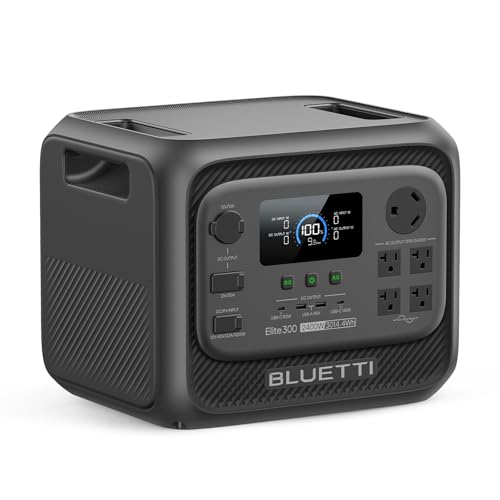 BLUETTI Elite 300 Portable Power Station for
- [Compact 3kWh Power
- [RV-Ready with TT-30 Port & 12V/30A DC Output]…
- [Reliable Home Backup Power for Outages] - Be…
As an Amazon Associate we earn from qualifying purchases at no extra cost to you.
At a glance: large power stations compared
| Model | Base capacity | Continuous AC output | Expansion potential | Approx. unit weight | Best fit |
|---|---|---|---|---|---|
| EcoFlow DELTA Pro 3 | 4,096 Wh | 4,000 W | Up to about 12 kWh with compatible expansion batteries | About 51 kg / 113 lb | High-output backup with room to grow |
| Anker SOLIX F3800 | 3,840 Wh | 6,000 W split-phase | Up to about 26.9 kWh with compatible batteries | About 60 kg / 132 lb | Large loads and expandable home backup |
| BLUETTI AC500 + B300K | 2,764.8 Wh per B300K battery | 5,000 W | Up to about 16.6 kWh with six B300K batteries | AC500 about 30 kg / 66 lb; B300K about 29.5 kg / 65 lb | Modular setups and replaceable battery modules |
| Jackery Explorer 2000 Plus | 2,042 Wh | 3,000 W | Up to about 12 kWh with compatible expansion batteries | About 28.2 kg / 62 lb | Portable, expandable backup for essential circuits |
Expansion limits depend on the exact battery, configuration, and region; check the current manufacturer manual before buying. Weight is a real constraint: these are wheeled or two-person-lift appliances, not batteries most people will want to carry up stairs.
Which one should you choose?
Choose the EcoFlow DELTA Pro 3 for balanced high-capacity backup
Its 4 kWh base capacity and 4,000 W output suit a broad mix of essentials, including a refrigerator, networking gear, lights, and selected kitchen appliances—provided their combined starting and running loads stay within limits. It supports AC, solar, and generator charging, and its expansion ecosystem makes it easier to extend runtime later. It is a sensible pick when you want one main unit rather than a stack of separate power stations.
One limitation: high-wattage appliances can drain even a large battery quickly. A space heater drawing 1,500 W would use roughly 1.6 kWh from the battery in an hour after conversion losses, so a 4 kWh station cannot run it all night alongside other loads.
Choose the Anker SOLIX F3800 for high output and substantial expansion
The F3800 stands out for 6,000 W of split-phase AC output and a large expansion ceiling. That combination is useful when the backup plan includes a properly configured home integration system or appliances requiring 240 V. It also accepts AC and solar charging, with additional charging options available through compatible equipment.
Its weight and system cost make it less attractive if you only need to keep a router, lights, and a fridge running. For those loads, a smaller station may be easier to store and move; buy the F3800 when its output, 240 V capability, or expansion potential solves a specific need.
Choose the BLUETTI AC500 if modularity matters
The AC500 is an inverter unit paired with separate B300K batteries, rather than a self-contained battery station. That modular design can be useful for scaling capacity, replacing or moving battery modules, and charging through AC, solar, or a compatible generator. With one B300K, the system begins below the capacity of the EcoFlow and Anker base units; add batteries if the outage plan requires more energy.
The trade-off is more equipment and connections to manage. Confirm the battery generation and compatibility before expanding, and leave room for safe cable routing and ventilation.
Choose the Jackery Explorer 2000 Plus for a more portable starting point
At roughly 2 kWh, the Jackery is the smallest base battery in this comparison, but its 3,000 W output and expansion support make it a capable choice for essential loads. It can recharge from AC, solar, or a compatible generator. Its lower weight is relative, not absolute: at about 62 lb, moving it regularly still calls for care.
Pick it when storage space, occasional transport, or a lower initial outlay matters more than maximum runtime. For multi-day outages, budget for expansion batteries or a disciplined load plan.
How long will a station run home essentials?
A useful estimate is: runtime in hours = usable battery energy in watt-hours ÷ load in watts. In practice, AC conversion and standby losses reduce the result. For a quick planning estimate, use about 85% of rated capacity for AC appliances, then subtract any energy used by other devices.
| Example load | Assumed use | Estimated energy per day | Approx. runtime from 4,096 Wh at 85% usable |
|---|---|---|---|
| Refrigerator | Average 60 W over 24 hours | 1,440 Wh | About 2.4 days by itself |
| Wi-Fi router | 12 W over 24 hours | 288 Wh | About 12 days by itself |
| LED lights | Four 8 W bulbs for 5 hours | 160 Wh | About 21 days by themselves |
| Medical-device-free essential bundle | Fridge, router, and four bulbs as above | About 1,888 Wh | About 1.8 days |
These are planning examples, not guaranteed runtimes. Refrigerator consumption varies sharply by model, room temperature, door openings, and compressor cycles. Measure your own appliances with a plug-in energy meter where practical. Also check startup surge: a motor may briefly demand more power than its normal running wattage, and the station must support that surge.
Recharge, noise, and everyday ownership
All four systems can recharge from wall power and compatible solar panels; several also support generator charging. Wall charging is usually the fastest way to refill before a storm, while solar can extend an outage but depends on daylight, panel placement, weather, and input limits. Verify the station’s maximum solar input and connector requirements before purchasing panels. A generator can provide dependable recharge in poor solar conditions, but it adds fuel, exhaust, and noise considerations.
None of these large inverter stations should be assumed silent. Fans may run during high output, fast charging, or warm conditions, and the sound level depends on operating mode and environment. If the unit will sit near a bedroom, look for a manufacturer-published noise figure for the exact model and charging mode; otherwise, plan to place it in a ventilated area away from sleeping spaces. Never operate a fuel generator indoors or in an enclosed garage.
- Plan for battery reserve: Avoid designing a backup plan that routinely drains the battery to zero. Keep some capacity for unexpected loads and follow the maker’s storage guidance.
- Store it sensibly: Keep the unit dry, within its specified temperature range, and periodically check charge level during long-term storage.
- Protect the battery from avoidable heat: Heat and prolonged storage at full charge can accelerate battery aging. Follow the manufacturer’s recommendations for storage charge and temperature.
- Use a safe home connection: Do not connect a power station to a household outlet with a backfeed cable. For selected home circuits, use a compatible transfer switch or approved integration equipment installed according to local code by a qualified electrician.
Bottom line
For most buyers seeking a large, expandable station, the EcoFlow DELTA Pro 3 is the best high capacity power station for home backup overall. The Anker SOLIX F3800 is the better fit when high split-phase output and a larger expansion path are priorities; the BLUETTI AC500 suits buyers who prefer a modular battery system; and the Jackery Explorer 2000 Plus is the more manageable entry point for essential loads. Choose based on measured household energy use and the appliances you actually need—not the biggest capacity figure on the box.





