
Key takeaways
- Put the tent on a level, hard floor with clearance from walls, curtains and furniture.
- Plug straight into a wall outlet if the manual says so. Avoid cheap extension cords.
- Keep the controller and cables dry.
- Never leave the tent running unattended, and keep pets and children out.
- If a cord is damaged or the unit overheats, stop using it and contact the maker. For wiring doubts, ask an electrician.
The best infrared sauna tent depends on how often you will use it: the SereneLife is the low-risk way to try one, the Radiant Saunas BSA6315 and EZLIFE tents are the mid-range step up, and the Sunlighten Solo, SaunaBox Pulse Pro and Relax FIR Solo are the premium options for people who care about build, warranty and documented low-EMF design. This guide explains how infrared tents differ from traditional saunas, what the stated specs mean and who should skip them.
Our top picks


As an Amazon Associate we earn from qualifying purchases at no extra cost to you.
How an infrared tent works
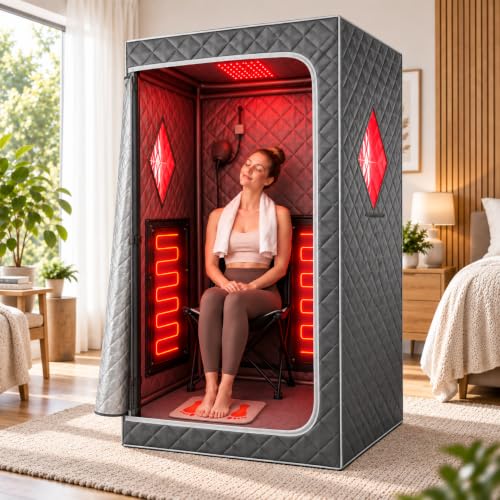
A traditional sauna heats the air to a high temperature. An infrared tent uses heater panels, typically carbon-fiber, that warm the body directly, so the air inside is cooler than a classic sauna. Makers and reviewers describe typical top temperatures of about 140 degrees Fahrenheit for entry-level tents, with premium designs listing around 150 or 160. Because the tent is small, it warms up in roughly 10 to 15 minutes, according to reviewers of the budget models.
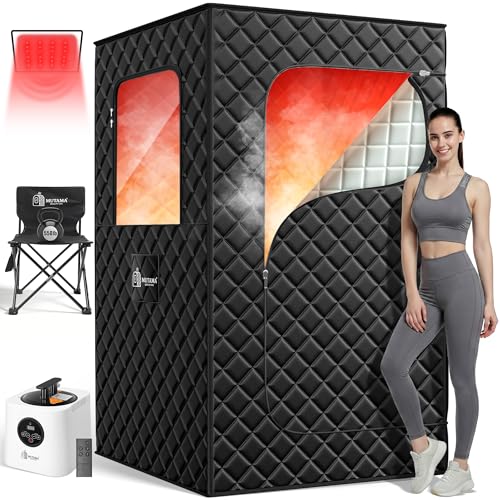
A tent is a seat, a fabric enclosure, a footpad and a controller that sits outside. Most have your head poking out or inside a hood, depending on the design. The enclosure is lightweight and folds for storage.
At a glance
| Model | Tier | Stated or reported specs | Best for | Limits |
|---|---|---|---|---|
| SereneLife Portable Infrared Sauna | Budget | About 140 degrees in 10 to 12 minutes, per reviewers | First-time buyers | Light build |
| Radiant Saunas BSA6315 | Mid-range | Carbon-fiber heaters, 140 degree ceiling | Step-up buyers | Same temperature ceiling as budget |
| EZLIFE Infrared Sauna Tent with Red Light | Mid-range | Integrated red-light panel | Shoppers wanting red light | Red-light claims unproven |
| Durasage | Mid-range | Recommended for EMF-sensitive buyers by one outlet | Low-EMF preference | Claims self-reported |
| Sunlighten Solo | Premium | Telescoping design, carbon heaters to about 150 degrees | Frequent users | High cost |
| SaunaBox Pulse Pro | Premium | Low-EMF panels, efficient heating, per HomeInDepth | Quality-first buyers | High cost |
| Relax FIR Solo System | Premium | Described as independently EMF-tested by Body Science Review | Buyers who want third-party testing | High cost |
| LIT Method InfraPod | Premium | Enclosed infrared cabin with red light, 160 degree maximum, per LIT’s own guide | Enclosed alternative | Brand’s own guide |
What to compare
Heater type and coverage
Carbon-fiber panels are the common choice in reviewed tents. More panels around the seat and legs usually means more even warming. Read the maker’s description of where the panels sit, and note whether a footpad is included.
Temperature and warm-up
If a model lists a 140 degree maximum and you want a hotter session, you will not get it by running longer. Look at the stated maximum and the warm-up time, and be cautious about marketing claims that go beyond what the controller and manual state.
EMF claims
All electrical heaters produce electromagnetic fields, and some makers advertise “low EMF” or “ultra-low EMF.” Reviewers point out that most such claims are self-reported. Body Science Review singles out the Relax FIR Solo as independently researched. If this matters to you, ask the seller for a test report and note what distance it was measured at.
Controls and safety features
Look for a timer and temperature control. Auto shut-off and overheat protection are worth having, but rely on them only if the maker states them in the manual. Check for safety listings the maker claims, such as ETL or UL, and confirm that the listing covers the specific model.
Size and comfort
Check interior height, seat width and any weight limit. A tent that is too small feels claustrophobic. Look at the chair: a chair with back support and a comfortable seat makes longer sessions more pleasant.
Red-light add-ons
The EZLIFE and the LIT InfraPod include red-light features. These are a convenience for people who like the idea, but the health benefits claimed in marketing are not settled, so do not pay a premium only for them.
The picks in more detail
SereneLife. Several roundups call it the best overall tent because it combines a low entry cost with a quick warm-up. It is where to start if you are unsure how often you will use a sauna. Expect a thinner frame and fabric.
Radiant Saunas BSA6315. One guide rates it best overall, citing carbon-fiber heaters and a 140 degree ceiling. It sits in the mid-range tier and suits people who want sturdier parts than the cheapest tents.
EZLIFE. Another outlet calls it the best value because it adds red-light panels to an infrared tent.
Sunlighten Solo. Garage Gym Reviews’ pick for best portable infrared sauna, with a telescoping design and carbon heaters reaching about 150 degrees. Sunlighten also sells a dome version, the Solo Dome.
SaunaBox Pulse Pro. HomeInDepth’s best portable infrared sauna, noted for low-EMF panels and efficient heating.
Relax FIR Solo. Described as the only independently EMF-tested portable in one roundup, which gives it appeal to buyers who want proof rather than a label.
iDOTODO. Named best two-person portable by HomeInDepth.
Who should be careful or skip
Ask a doctor before using an infrared sauna if you have heart or blood pressure problems, are pregnant, have a condition affected by heat, take medications that change heat tolerance, or use implanted devices. Do not use one after drinking alcohol. Stop if you feel dizzy, nauseated or faint. Infrared tents are not a medical treatment, and claims about detox, weight loss or healing should be treated skeptically; reviewers frame them as relaxation products.
Setup and electrical notes
- Put the tent on a level, hard floor with clearance from walls, curtains and furniture.
- Plug straight into a wall outlet if the manual says so. Avoid cheap extension cords.
- Keep the controller and cables dry.
- Never leave the tent running unattended, and keep pets and children out.
- If a cord is damaged or the unit overheats, stop using it and contact the maker. For wiring doubts, ask an electrician.
Pick X if…
| If you… | Choose |
|---|---|
| Want to test whether you will use a sauna | SereneLife |
| Want sturdier parts without a premium bill | Radiant Saunas BSA6315 |
| Like red-light panels | EZLIFE |
| Want independent EMF testing | Relax FIR Solo |
| Want premium build and warranty | Sunlighten Solo or SaunaBox Pulse Pro |
| Share sessions with a partner | iDOTODO |
| Prefer lying down | An infrared sauna blanket |
Alternatives
- Sauna blanket. LIT’s guide names the Higher Dose blanket for lying down.
- Enclosed portable cabin. More structure than a tent.
- Gym or spa sauna. No space or power requirements.
Session habits and comfort
Most makers suggest short sessions to start, and many controllers include a timer. Hydrate before and after, wear light clothing or a towel as the manual allows, and take breaks if you feel overheated. Keep a towel under you, because even a dry-heat tent can make you sweat. Phones and other electronics should stay outside unless the manual states otherwise, since heat can damage batteries.
Cleaning and long-term care
- Wipe the seat and interior fabric after each use with a mild cleaner and a soft cloth, following the maker’s guidance.
- Leave the tent open to air out before folding so moisture does not get trapped.
- Never submerge heater panels or the controller in water.
- Inspect cords and plugs periodically, and stop using the unit if you see scorching, fraying or a loose connection.
- Store the unit in a dry place and keep the original packaging if you can, as it makes any warranty claim simpler.
Warranty and support
Look at how long the warranty lasts, what it covers (heaters, controller, fabric) and whether the maker offers replacement parts. A budget tent with a short warranty can be fine for casual use, but frequent users should weigh support as heavily as the stated temperature. Read independent feedback about customer service, since reviewers’ notes often focus on performance rather than after-sales support.
Frequently Asked Questions
Is an infrared sauna tent safe?
Used according to the manual, they are designed for home use, but heat exposure is not right for everyone. Check with a doctor if you have a medical condition, and follow time limits.
How hot do infrared tents get?
Reviewers report about 140 degrees Fahrenheit for budget models and about 150 to 160 for some premium designs.
Do infrared tents emit harmful radiation?
Infrared heaters emit heat and electromagnetic fields. Makers advertise low-EMF designs, but most claims are self-reported. Ask for independent testing if it matters to you.
How long does an infrared tent take to heat up?
Reviewers of the SereneLife report about 10 to 12 minutes to reach roughly 140 degrees. Other models differ, so read the manual.
Can I use one in a small apartment?
Often yes, because tents fold away. Measure the space, keep clearance from walls and fabrics, and make sure your outlet can handle the unit.
Is a premium infrared tent worth it?
If you will use it several times a week, build quality, warranty and tested low-EMF design can justify the cost. For occasional use, a budget tent covers the basics.





