
Key takeaways
- Certifications. Toy safety standards such as ASTM F963 and flammability testing such as CPAI-84 are what to look for on the label or maker’s page. One reviewer noted that few play tents publish this much detail, so absence of information is worth weighing.
- Supervision. Most play tents are designed for supervised play, not for sleeping or for leaving a young child alone.
- Placement. Keep them away from stairs, windows, radiators and heavy furniture that could fall.
- No climbing or hanging. The frame is not rated for climbing. Follow the age and weight guidance in the manual.
- Lights. Some tents ship with string lights. Reviewers report overheating with some of them, so unplug them when nobody is watching and never place them against fabric if the manual forbids it.
- Folding. Wire frames can spring open suddenly. Adults should fold and unfold them, away from faces.
- Allergies and odors. New tents can have a plastic smell. Air them out before use, and read care labels if your child has sensitivities.
For most families, a pop-up play tent from a brand that publishes its safety certifications, such as Pacific Play Tents, is the safest all-round choice, while a fabric playhouse like the Melissa and Doug Cozy Cottage suits parents who want something sturdier for a playroom and a character tent such as the Melissa and Doug Fire Truck or the Little Tikes camper style suits imaginative play at a lower commitment.
Kids’ play tents are mostly sold for supervised indoor play, though some can go on a patio or lawn in dry weather. They differ in frame type (flexible wire, fiberglass poles or rigid fabric panels), size, theme and how easily they fold away. This guide compares the models reviewers mention most, explains the safety points that matter, and gives a decision table for age and space.
Our top picks
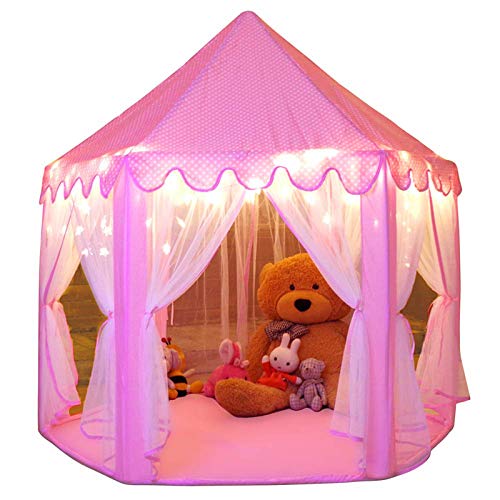


As an Amazon Associate we earn from qualifying purchases at no extra cost to you.
At a Glance: Play Tents Compared
| Model | Style | Best for | Key stated points | Limits |
|---|---|---|---|---|
| Pacific Play Tents Super Duper 4 Kid Dome | Pop-up dome with wire frame | Two to four children, ages around two and up | One outlet reports it is listed to CPAI-84 and ASTM F963 and describes it as flame retardant | Light pop-ups can slide on smooth floors |
| Pacific Play Tents Farmhouse Pop-Up | Themed pop-up playhouse | Toddlers to young children | Reviewers name it best overall for ages two to five in one roundup | Smaller interior |
| Pacific Play Tents Primary Pop-Up | Simple pop-up | Budget buyers | Named best budget in the same roundup | Plain design |
| Melissa and Doug Cozy Cottage | Fabric playhouse with storage tote | Playrooms, longer-lasting play | Reviewers found it stable and note a matching storage tote | Takes more floor space, assembly needed |
| Melissa and Doug Fire Truck tent | Themed fabric tent | Imaginative play, smaller budgets | Reviewers describe it as a low-cost themed option | Small, narrow use age range |
| Little Tikes RV Camper style tent | Pop-up playhouse | Ages three to eight as listed by a retailer | Themed camper look | Limited independent review coverage |
Frame and Fabric: What Matters
Pop-up wire frames
Pop-up tents use a flexible wire coil sewn into the fabric. They open in seconds and fold flat into a twisted disc or a carry bag. Reviewers like them for portability, but warn that folding them away has a learning curve and that light versions can tip or slide on hardwood and tile. A non-slip mat or carpet underneath helps, and so does keeping the tent away from stairs.
Pole-supported and fabric playhouses
Models like the Cozy Cottage use poles or a rigid structure with printed fabric panels. They take longer to build and need more space, but reviewers describe them as more stable and better suited to a permanent corner of a playroom. Check that pole ends are capped and that joints cannot pinch fingers, and follow the maker’s assembly guide exactly.
Fabric weight and finish
One buyer guide suggests looking for polyester of 600 denier or higher, safety-coated fiberglass poles and ASTM F963 certification. Cotton canvas is sold by some makers as more breathable and durable, but that comes largely from sellers, so treat it as a claim rather than a fact. Whatever the fabric, a removable or wipe-clean surface is practical for children.
Safety Notes
- Certifications. Toy safety standards such as ASTM F963 and flammability testing such as CPAI-84 are what to look for on the label or maker’s page. One reviewer noted that few play tents publish this much detail, so absence of information is worth weighing.
- Supervision. Most play tents are designed for supervised play, not for sleeping or for leaving a young child alone.
- Placement. Keep them away from stairs, windows, radiators and heavy furniture that could fall.
- No climbing or hanging. The frame is not rated for climbing. Follow the age and weight guidance in the manual.
- Lights. Some tents ship with string lights. Reviewers report overheating with some of them, so unplug them when nobody is watching and never place them against fabric if the manual forbids it.
- Folding. Wire frames can spring open suddenly. Adults should fold and unfold them, away from faces.
- Allergies and odors. New tents can have a plastic smell. Air them out before use, and read care labels if your child has sensitivities.
Size and Age Fit
| Child age | Suggested tent type | Why |
|---|---|---|
| Toddlers | Small pop-up or soft playhouse | Low entry, light fabric, easy supervision |
| Ages three to five | Pop-up dome or themed playhouse | Room for a couple of children and toys |
| Ages six to eight | Larger dome or camper style | Taller interior, more room for sleepovers in the living room |
| Mixed ages | Four-child dome | Space for several children to sit upright |
Measure the available floor space before buying and compare it with the footprint the maker lists. Remember that dome tents need clearance above to stand open.
Budget Tiers
- Budget: Simple pop-up tents and themed fabric tents such as the Melissa and Doug Fire Truck.
- Mid-range: Pacific Play Tents domes and playhouses, with clearer safety information, plus the Little Tikes camper style.
- Premium: Larger structured playhouses and cottage-style tents with storage, such as the Melissa and Doug Cozy Cottage.
Pick X If… Decision Table
| Pick this | If you |
|---|---|
| Pacific Super Duper 4 Kid Dome | Want published safety standards and room for several children |
| Pacific Farmhouse Pop-Up | Have a two to five year old and want a themed tent that folds away |
| Pacific Primary Pop-Up | Need the simplest, lowest-cost option |
| Melissa and Doug Cozy Cottage | Want a stable playroom fixture with a storage tote |
| Melissa and Doug Fire Truck | Want a themed tent for imaginative play without a big commitment |
| Little Tikes camper style | Have older preschoolers who like a camper theme |
Alternatives
- Tunnels and tent-tunnel sets. Add movement play and attach to a tent.
- Teepee-style tents. Cotton or canvas teepees with wooden poles are popular for reading nooks, but check pole stability and wall clearance.
- DIY blanket forts. Free and easily changed, though they lack designed stability.
- Outdoor playhouses. If you need a weatherproof option, plastic playhouses are a different category and more permanent.
Care and Storage
Spot clean with a damp cloth and mild soap unless the label says otherwise. Let the tent dry fully before folding to avoid musty smells. Follow the maker’s folding steps, store it flat or in its bag, and inspect seams, frame ends and zippers regularly. Retire a tent whose frame is bent or fabric is torn.
Choosing for Your Home
Think about where the tent will live. In a small apartment, a pop-up that folds into a flat disc is easiest to store behind a door or under a bed. In a dedicated playroom, a fabric playhouse like the Cozy Cottage can stay up for months and double as a reading corner. Families with several children often prefer a larger dome so that siblings do not squabble over space, while parents of a single toddler may find a small themed tent is enough.
Consider the entrance too. Wide, low doors are easier for toddlers, while taller openings suit older children. Mesh windows let adults see inside, which many parents value for supervision. Zippered doors can pinch fingers, so choose models with Velcro or tie-back doors for the youngest children where possible, and always read the maker’s age guidance.
Finally, think about what goes inside. Soft cushions, blankets and books are the usual extras. Avoid adding heavy items that could fall on a child, and avoid hanging anything from the frame unless the maker says it is designed for that. Rotate toys to keep the tent interesting, and wash soft furnishings regularly because play tents trap dust and crumbs.
Indoor-outdoor use deserves a note. Some pop-ups are marketed for both, but sun, damp ground and wind can fade fabric, rust wire frames and carry a light tent away. If you take a tent outside, use it on dry grass in mild weather, stake or weight it as the manual allows, supervise closely and bring it in afterwards to dry fully.
Frequently Asked Questions
What age is a play tent suitable for?
Makers typically list ages from around two or three upward, with some larger domes suitable for older children. Check the specific age and weight guidance on the maker’s page, and supervise young children.
Can kids sleep in an indoor play tent?
Most are designed for supervised play, not sleeping. If you want a sleepover, read the manual and keep ventilation, lights and supervision in mind rather than assuming it is meant for that.
How do I stop a pop-up tent from sliding?
Place it on carpet or a non-slip mat, keep it away from stairs and place a few books or soft items inside as ballast. Reviewers say lighter pop-ups benefit most from this.
Are play tents safe with string lights?
Some reviewers report overheating with fabric tents and string lights. Use the lights only as the manual describes, prefer cool-running battery types and unplug them when unattended.
How do I fold a pop-up tent?
Each maker includes a fold diagram, usually twisting the frame into a flat disc. Practice before you need it, and let an adult do the fold to avoid the frame springing open.
Which fabric is best?
Polyester is common and light, while canvas is sturdier. Choose according to the maker’s flame retardancy and safety information more than fabric type alone.





