
Best Laser Guided Smart Parking Assistants: Which Type Fits Your Garage?
The best laser guided smart parking assistants are adjustable, securely mounted units with a visible ceiling laser and a sensor range suited to your vehicle’s approach—not necessarily the model with the most features. For a typical one-car garage, a plug-in overhead unit is the simplest pick; for frequent vehicle changes, choose one with independently adjustable laser heads; and for a low ceiling or obstructed mounting area, consider a sensor-based assistant that can be positioned on a wall or shelf.
What matters when choosing one
- Alignment accuracy: A laser helps you repeat a parking position, but it does not automatically correct poor installation. The useful question is whether the beam can be aimed at a clear, repeatable reference point on your vehicle, such as the dashboard or hood.
- Sensor range: The sensor must detect your vehicle early enough to switch on, but not so far away that it responds to activity outside the garage. Check the manufacturer’s stated range and whether sensitivity can be adjusted.
- Mounting options: Ceiling mounting gives a clear view of the vehicle, but joists, garage-door tracks, openers, and ceiling height can limit placement. A movable mount is valuable if the garage layout may change.
- Power and activation: Plug-in models avoid battery replacement, while battery-powered units can work where there is no convenient outlet. Motion activation can reduce unnecessary operation, but may need repositioning or sensitivity adjustment.
Compare the main options
Specifications vary by model and can change between versions. The figures below are practical buying targets and common market ranges, not guarantees for every product. Confirm the exact manual before purchase.
Our top picks
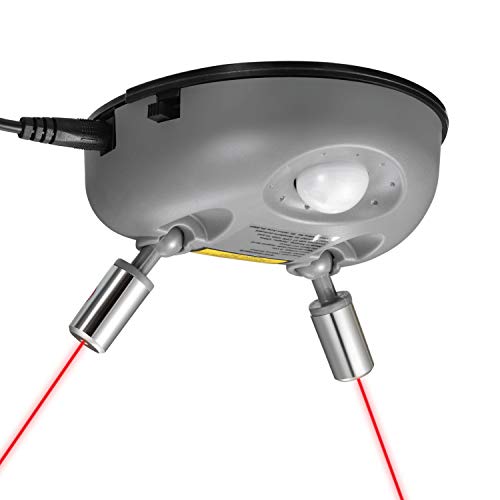 Fosmon
- [New Wider Angle Upgrade] This updated product from…
- [Park Correctly and Easily Every Time] Do you…
- [Motion Activated Laser] The motion activated lasers have…
 MAXSA 37310 Park Right Single Laser Garage
- Park Perfectly Every Time: A single, adjustable laser…
- Motion-Activated: Built-in motion sensor turns the laser on…
- Up to 15 ft / 130-Degree Detection: Wide…
 MAXSA 37312 Park Right Dual Laser Garage
- Park Perfectly Every Time: Our bestselling laser park,…
- Motion-Activated: Built-in motion sensor turns the laser on…
- Up to 15 ft / 130-Degree Detection: Wide…
| Product | Key specs | |
|---|---|---|
| Fosmon | [New Wider Angle Upgrade] This updated product from… [Park Correctly and Easily Every Time] Do you… [Motion Activated Laser] The motion activated lasers have… | Check price |
| MAXSA 37310 Park Right Single Laser Garage | Park Perfectly Every Time: A single, adjustable laser… Motion-Activated: Built-in motion sensor turns the laser on… Up to 15 ft / 130-Degree Detection: Wide… | Check price |
| MAXSA 37312 Park Right Dual Laser Garage | Park Perfectly Every Time: Our bestselling laser park,… Motion-Activated: Built-in motion sensor turns the laser on… Up to 15 ft / 130-Degree Detection: Wide… | Check price |
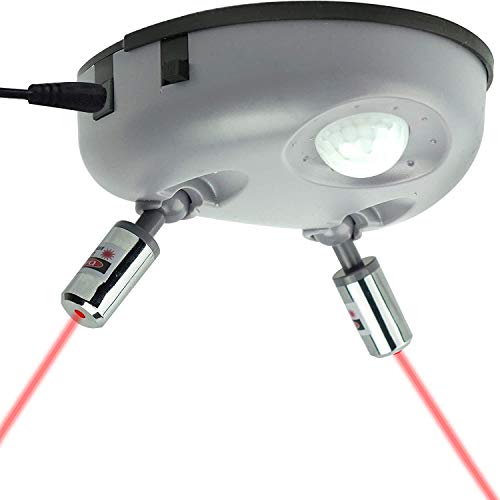 ZONETECH Garage Parking Assist Dual Laser Guide | ► MOTION SENSOR ► DUAL LASER - The Zone Tech dual… ► ADJUSTABLE - The Zone Tech dual laser… | Check price |
As an Amazon Associate we earn from qualifying purchases at no extra cost to you.
| Assistant type | Useful sensor range | Laser setup | Typical mounting and power | Best suited to |
|---|---|---|---|---|
| Single-beam overhead laser | About 3–6 m (10–20 ft) | One adjustable beam; aim at a fixed point on the vehicle | Ceiling; commonly plug-in, often with a cord around 1.5–2 m (5–6.5 ft) | One vehicle and a consistent parking position |
| Dual-beam overhead assistant | About 3–6 m (10–20 ft) | Two independently aimed beams for left-right references | Ceiling or crossbar; plug-in or battery-powered depending on model | Drivers who want to check both centering and stopping position |
| Sensor-triggered laser with movable mount | About 2–5 m (6.5–16 ft) | Beam angle and position can be changed after mounting | Ceiling, wall, or shelf; check the supplied bracket and power method | Garages with awkward joist or door-track placement |
| Basic parking sensor without a laser | About 1–3 m (3–10 ft) | No optical alignment; uses a light, sound, or distance indicator | Floor, wall, or dashboard area; battery or plug-in | Low ceilings or vehicles where a visible laser reference is impractical |
Pick by garage and driving routine
| Your situation | Best fit | Why | Watch out for |
|---|---|---|---|
| One driver, one car, daily parking | Plug-in single-beam overhead unit | Simple alignment and no routine battery changes | Check outlet access and cord routing before mounting |
| Two drivers or more than one vehicle | Dual-beam or easily adjustable model | More flexibility when vehicle width or seating position differs | Recheck the reference point for each vehicle |
| Low ceiling, exposed opener, or crowded tracks | Wall/shelf-mountable sensor assistant, or a non-laser sensor | Avoids forcing a ceiling position that produces a blocked or misleading beam | Make sure the sensor still faces the incoming vehicle |
| Occasional parking or limited budget | Basic laser pointer or simple stop indicator | Lower-cost way to establish a repeatable stopping point | Some basic units lack motion activation or fine adjustment |
| Frequent vehicle changes or shared garage | Adjustable mount with selectable sensitivity | Can accommodate different approach paths and vehicle sizes | Allow time to recalibrate when the vehicle changes |
Laser accuracy depends on setup
A laser beam is a visual guide, not a measurement system that knows where your bumper is. Its repeatability comes from aiming it at the same point each time and parking the vehicle in the same orientation. A sloped driveway, a vehicle that turns sharply as it enters, or a changing load can shift the apparent reference.
Before drilling, park where you want the vehicle to stop and identify a visible target that is easy to recognize from the driver’s seat. Check that the target remains visible in daylight and that the beam will not be hidden by a roof rack, tall hood, or windshield tint. If you use two vehicles, test each separately; one beam position may not suit both.
Installation: measure first, mount second
- Clear the parking path. Open the garage door fully and note the tracks, opener, lights, and any storage that could block the sensor or beam.
- Choose the stopping point. Park the vehicle with adequate clearance from the closed door and anything stored in front of it. Leave enough room to walk around the vehicle where needed.
- Find a solid mounting surface. Locate a ceiling joist or suitable wall structure. Avoid relying on drywall anchors alone for a device that may be bumped or vibrate.
- Test the beam before final fastening. Temporarily hold the unit in position, approach slowly, and confirm that the beam lands on the intended reference point. Adjust the sensor angle and sensitivity if the unit activates too early or too late.
- Secure the cable. Keep power cords away from the moving garage door, tracks, and vehicle path. Do not leave a loose loop where it could snag.
- Repeat the approach several times. Check that the unit activates consistently and that the stopping cue is visible from the normal driving position. Repeat after moving stored items or changing vehicles.
Ownership realities: what needs attention
The first problems are often alignment drift, a loose bracket, or a sensor lens covered with dust—not a failed laser. Garage vibration from a door opener can gradually move a light mount, particularly if it is attached to a thin panel rather than a joist. Recheck alignment after installation and whenever the beam appears to shift.
Wipe the sensor window and laser opening with a soft, dry cloth. Avoid harsh cleaners, which can cloud plastic lenses. Replace batteries promptly in battery-powered models; a dim or intermittent indicator can make a parking cue less dependable. If activation is inconsistent, first clear obstructions and check the mounting angle before assuming the unit is defective.
Do not treat a laser assistant as a safety stop. It may fail to detect a vehicle reliably in every position, and it cannot account for a person, pet, or object behind the car. Continue to park slowly and check the area around the vehicle.
Bottom line
For a straightforward one-car garage, start with an adjustable, plug-in overhead laser assistant whose stated sensor range covers your approach distance. Choose dual beams or a movable mount when multiple vehicles or a cluttered ceiling make alignment less predictable. If a clear beam path is impossible, a non-laser parking sensor is a better fit than forcing a laser into a poor mounting position.





