
Key takeaways
- Sweep or shake regularly so grit does not wear fibers.
- Hose off and let the rug dry fully on both sides; stand it up to dry when possible.
- Lift and clean the area underneath a few times per season to prevent mold and staining on wood or stone.
- Follow the maker’s cleaning instructions before using any detergent or cleaner, and test on a small corner.
- Keep rugs away from open flames and fire pits; most synthetic fibers can melt or burn, and some makers state this in their care notes. Leave clearance around a fire pit and never leave hot embers near a rug.
- Use a non-slip option approved by the maker so the rug cannot shift and cause a trip hazard.
For most patios, a polypropylene rug such as the Safavieh Courtyard line is the practical default, a washable option like Ruggable suits households with pets and spills, and a flatweave from a design-led maker such as Dash & Albert suits buyers who care more about look and feel than about rugged stain resistance. The right pick depends on where the rug sits, how much sun and rain it gets, and how you plan to clean it.
Our top picks
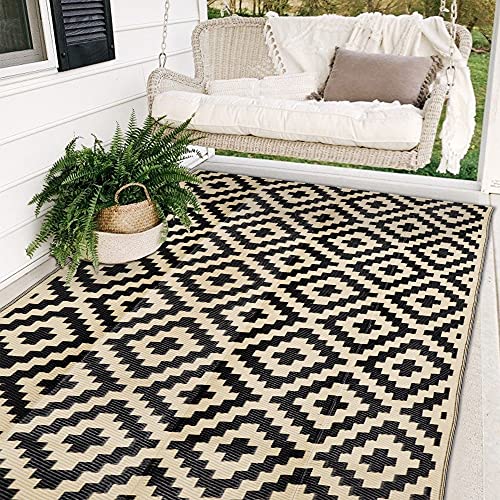

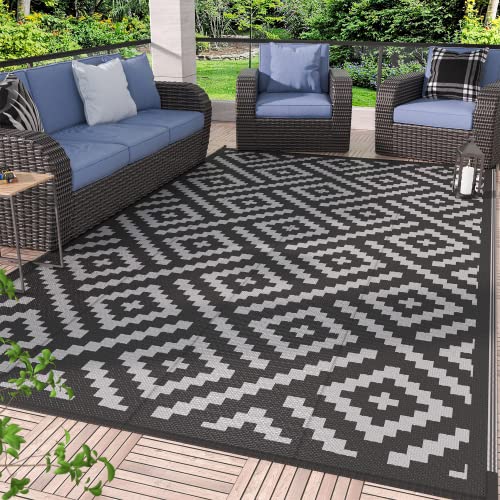

As an Amazon Associate we earn from qualifying purchases at no extra cost to you.
At a glance
| Option | Best for | Material the maker lists | Limits |
|---|---|---|---|
| Safavieh Courtyard | Covered or open patios on a budget to mid-range | Polypropylene, machine-made | Pile can flatten under heavy furniture; trapped moisture underneath is an issue |
| Ruggable outdoor | Pets, kids, frequent spills | Washable top layer with a separate pad system | Premium tier for the size; two-piece system needs laundering space |
| nuLOOM outdoor collections | Patterned looks at budget prices | Mostly synthetic fibers (check each listing) | Quality varies between lines; thinner pile |
| Dash & Albert | Designer flatweave, porches, entryways | Recycled-plastic or polypropylene fibers, depending on line | Mid-range to premium; fewer large sizes |
| Loloi outdoor | Coordinated decor, stripes and geometrics | Polypropylene or polyester blends | Colors can look different in daylight than on screen |
| Mohawk Home outdoor | Broad size range for big decks | Synthetic fibers, depending on line | Fewer upscale patterns |
What matters most when choosing an outdoor rug
Fiber type
Polypropylene is the most common outdoor fiber because it resists moisture, does not soak up water the way cotton or wool does, and is generally treated for fade resistance. Makers typically describe it as mildew resistant and easy to hose off. Polyester gives a softer feel and often richer color, though it can be a bit less forgiving of sun over many seasons. Recycled plastic (often sold as PET) is a lower-impact choice that many makers use for flatweaves. Natural fibers such as jute or sisal feel nice but are best kept to fully covered porches, since moisture can discolor and degrade them.
Pile height and weave
A flat or low-pile weave is easier to sweep, dries faster and lets table and chair legs sit evenly. High-pile rugs feel softer underfoot but trap crumbs, leaves and water. For dining areas, flatweave is the usual choice; for lounge areas with bare feet, a slightly deeper pile is more comfortable.
Drainage and underlay
A rug that cannot drain or dry will grow mildew, no matter what the label says. Place it on a surface that lets water move away, lift it periodically to let the deck or stone dry, and avoid laying a rug over a damp area for long stretches. Many makers sell breathable or mesh-style pads for outdoor use. Solid rubber or foam pads that are meant for indoor floors can trap moisture and may stain some surfaces, so follow the rug maker’s guidance on pads and on what surfaces they are safe over.
Sun and fade
Direct sun is the biggest factor in long-term appearance. Solution-dyed fibers, where color is part of the fiber rather than a surface treatment, generally hold color longer; when a maker lists that, it is a useful sign. Darker colors tend to show dust and pollen more, lighter ones show dirt and tannin stains more, so mid-tones and busy patterns are forgiving.
Size
A good rule is to size the rug so the front legs of seating sit on it, and for a dining set, so chairs stay on the rug when pulled out. Measure the full footprint of the furniture group and add roughly two feet on each side that you want the rug to extend. Common stock sizes include 5×8, 8×10 and 9×12, plus round and runner formats.
Option by option
Safavieh Courtyard: the sturdy default
The Courtyard collection is one of the most widely stocked synthetic outdoor lines. Safavieh describes the rugs as machine-made polypropylene and designed for indoor and outdoor use. The patterns range from traditional medallions to geometric and trellis designs, so it fits many decks. Reviewers commonly note that it is easy to rinse with a hose and sweep, and that it handles regular foot traffic well. The trade-off is that the pile can feel somewhat stiff and flatten under heavy furniture over time. It is a solid budget-to-mid-range pick for a first outdoor rug.
Ruggable: the washable system
Ruggable sells a two-piece setup in which a thin patterned cover sits on a separate pad, and the cover can be removed and machine washed according to the maker’s care label. That is a real advantage for households with dogs, children, or frequent grilling, since stains do not need to be scrubbed on the deck. The downside is the premium tier cost for larger sizes, the weight of the pad and cover, and the fact that you need a washer and a place to dry large pieces. The maker publishes specific care instructions, including which pad to use outdoors, so follow them closely.
nuLOOM: budget patterns
nuLOOM sells a large number of outdoor designs, many in synthetic fibers and in a budget tier. This is a good fit for a rental, a temporary setup, or a space you redecorate often. Since the brand offers many collections with different constructions, read the material and pile details of the specific rug, and expect thinner builds in the cheaper lines. Reviewers sometimes report edge curling out of the box, which usually flattens after some time laid flat in the sun.
Dash & Albert: design-led flatweaves
Dash & Albert is known for stripes, checks and flatweave rugs, with some lines made from recycled plastic bottles and marketed for indoor and outdoor use. These suit porches, entryways and sunrooms where style matters. They sit in the mid-range to premium tier, and the size run is narrower than that of mass-market brands, so check the dimensions against your space.
Loloi: coordinated looks
Loloi offers outdoor-rated collections built from polypropylene or polyester blends, with solid, striped and geometric choices that pair with modern furniture. It makes sense if you want your rug to coordinate with cushions or umbrella fabric. The maker lists care steps for each collection, so check whether it is rated for full sun and rain or only for covered use.
Mohawk Home: size range
Mohawk Home covers many standard and oversized dimensions, which helps for large decks or pergolas where a 9×12 or bigger is needed. Designs lean traditional and neutral. It is a reasonable choice when coverage matters more than a designer look.
Pick X if you…
| If you… | Pick | Why |
|---|---|---|
| Want a reliable, hose-clean rug on a budget | Safavieh Courtyard | Common polypropylene build, many sizes |
| Have pets or kids and want machine washing | Ruggable outdoor | Removable washable cover |
| Redecorate often or rent | nuLOOM | Lower cost per season |
| Want a cleaner, flat look for a porch | Dash & Albert | Flatweave designs, recycled-fiber lines |
| Need a very large rug | Mohawk Home or Safavieh | Wider size ranges |
| Want pattern coordination with other decor | Loloi | Broad color palettes |
Budget tiers
Budget rugs are usually thinner polypropylene with machine-made patterns. They work well for covered patios or short-term setups, though edges may curl and the pile may flatten sooner. Mid-range rugs add denser construction, better color retention and more size options. Premium rugs tend to have either a washable system, solution-dyed fibers or recycled-fiber flatweaves with a more refined hand feel. Paying more does not make a rug immune to sun and moisture, so treat care routines as part of the purchase.
Care and safety notes
- Sweep or shake regularly so grit does not wear fibers.
- Hose off and let the rug dry fully on both sides; stand it up to dry when possible.
- Lift and clean the area underneath a few times per season to prevent mold and staining on wood or stone.
- Follow the maker’s cleaning instructions before using any detergent or cleaner, and test on a small corner.
- Keep rugs away from open flames and fire pits; most synthetic fibers can melt or burn, and some makers state this in their care notes. Leave clearance around a fire pit and never leave hot embers near a rug.
- Use a non-slip option approved by the maker so the rug cannot shift and cause a trip hazard.
Alternatives to consider
- Outdoor mats and interlocking deck tiles: good when you need drainage and a quick change in a small area.
- Natural fiber rugs for covered porches: jute and sisal feel good but should stay dry.
- Indoor-outdoor runners: an efficient way to cover an entry path without paying for a full-size rug.
Frequently Asked Questions
Can I leave an outdoor rug out in the rain?
Most polypropylene outdoor rugs are made to tolerate rain, but they still need to dry afterward. Standing water and constant damp can cause mildew on the rug and on the surface underneath. Check the maker’s instructions and, for heavy rain or winter, store it or lift it to dry.
How do I keep an outdoor rug from blowing away or curling?
Weigh down the corners with furniture legs and use a maker-approved non-slip underlay. If the edges curl after unrolling, lay the rug flat in the sun for a day or reverse-roll it. Avoid tape or adhesives unless the maker says they are safe for the product and your surface.
What size outdoor rug do I need under a dining set?
Measure the table and add about two feet on every side, so chairs stay on the rug when pulled out. Round tables pair well with round or square rugs; rectangular tables suit rectangular ones. If you are between sizes, go larger.
Are outdoor rugs safe over a deck or patio surface?
Generally yes, but moisture trapped underneath can discolor wood and some stones. Choose a breathable underlay, and lift the rug now and then so the surface can dry. If your deck has a special finish, follow the finish maker’s guidance.
Can I use an indoor rug outside?
It is not a good idea. Indoor rugs often use fibers and backings that absorb water and break down in sun. Choose a rug the maker rates for outdoor use, and check whether it is rated for covered or full-exposure areas.
How long does an outdoor rug last?
It depends on sun, weather, foot traffic and care. Rugs on covered porches with regular cleaning typically last longer than rugs left fully exposed. Expect to replace budget rugs sooner, and treat any maker warranty as the best guide to expected use.





