
Key takeaways
- Best overall starting point: Carhartt Men’s Monterey Jacket, Black, Large — the highest-ranked general-purpose option in this comparison; verify its waterproofing, breathability, and hood features before purchase.
- Best for buyers considering a more protective shell: Carhartt Men’s Shoreline Jacket, Black, Large — a strong candidate to investigate for extended exposure to rain, wind, or spray.
- Best two-tone alternative: Carhartt Men’s Monterey Jacket, Carhartt Brown/Black, Large — the same Monterey family in a contrasting color combination; confirm whether the listing’s specifications match the other Monterey version.
- Best for layering: Carhartt Men’s Rain Defender Relaxed Fit Jacket Relaxed Fit Jacket, Steel, X-Large — the relaxed-fit listing to consider when a jacket must fit over work shirts, sweatshirts, or other layers.
- Best neutral-color Monterey alternative: Carhartt Men’s Monterey Jacket, Tarmac, Large — another Monterey colorway for shoppers who prefer a less traditional black or brown appearance.
- Best for high-visibility work: Carhartt Men’s HV Portsmouth Class 3 Jacket, Brite Lime, X-Large — the most relevant choice when visibility is part of the work requirement; verify the current compliance labeling and garment details.
- Best Bayou option to investigate in black: Carhartt Men’s Bayou Jacket, Black, Large — a straightforward black option for buyers comparing the Bayou line with the Monterey and Shoreline models.
- Best Bayou option to investigate in steel: Carhartt Men’s Bayou Jacket, Steel, Medium — the same named model in a different color and size; compare fit, lining, and listed protection with the black version.
If you need a Carhartt rain jacket in 2026, the first decision is not simply which color or size to choose. It is whether you need a jacket for occasional showers, repeated outdoor work, high-visibility conditions, or layering over work clothes. The lineup in this guide includes Monterey, Shoreline, Rain Defender, HV Portsmouth, and Bayou models, but the listings do not provide complete specifications for these individual products. That means buyers should verify the current product page for waterproofing details, shell construction, hood design, pockets, lining, and care instructions before ordering.
The ranking is therefore best used as a practical starting point rather than as a substitute for checking the exact listing. The top Monterey listing is the strongest general-purpose pick based on its position in this comparison, while the Shoreline is the option to investigate for more demanding wet-weather use. The Rain Defender Relaxed Fit jacket deserves attention from anyone who prioritizes room for layers, and the HV Portsmouth Class 3 model is the logical place to start when visibility is a job requirement. The two Bayou listings may suit buyers who want a simpler rain shell, but their exact protection and fit should be confirmed carefully because the listings do not include model specifications.
Our top picks


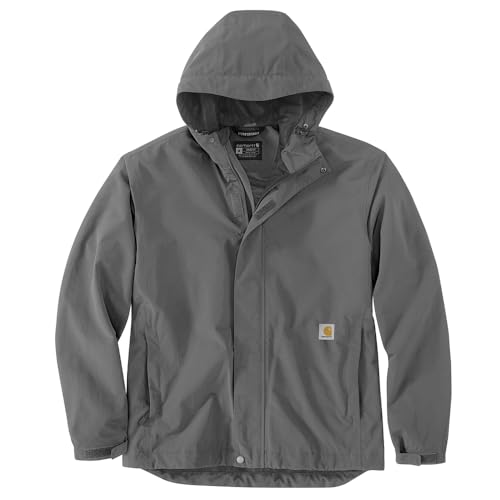
As an Amazon Associate we earn from qualifying purchases at no extra cost to you.
Quick answer
- Best overall starting point: Carhartt Men’s Monterey Jacket, Black, Large — the highest-ranked general-purpose option in this comparison; verify its waterproofing, breathability, and hood features before purchase.
- Best for buyers considering a more protective shell: Carhartt Men’s Shoreline Jacket, Black, Large — a strong candidate to investigate for extended exposure to rain, wind, or spray.
- Best two-tone alternative: Carhartt Men’s Monterey Jacket, Carhartt Brown/Black, Large — the same Monterey family in a contrasting color combination; confirm whether the listing’s specifications match the other Monterey version.
- Best for layering: Carhartt Men’s Rain Defender Relaxed Fit Jacket Relaxed Fit Jacket, Steel, X-Large — the relaxed-fit listing to consider when a jacket must fit over work shirts, sweatshirts, or other layers.
- Best neutral-color Monterey alternative: Carhartt Men’s Monterey Jacket, Tarmac, Large — another Monterey colorway for shoppers who prefer a less traditional black or brown appearance.
- Best for high-visibility work: Carhartt Men’s HV Portsmouth Class 3 Jacket, Brite Lime, X-Large — the most relevant choice when visibility is part of the work requirement; verify the current compliance labeling and garment details.
- Best Bayou option to investigate in black: Carhartt Men’s Bayou Jacket, Black, Large — a straightforward black option for buyers comparing the Bayou line with the Monterey and Shoreline models.
- Best Bayou option to investigate in steel: Carhartt Men’s Bayou Jacket, Steel, Medium — the same named model in a different color and size; compare fit, lining, and listed protection with the black version.
How we researched this guide
This guide uses the product names, colors, sizes, ranking order, and intended shopping context stated for the eight listings. The listings do not include verified feature lists, waterproof ratings, fabric compositions, seam construction, pocket layouts, or review statistics. We have not treated missing information as proof that a jacket does or does not have a particular feature.
Instead, the comparison focuses on the questions that matter when evaluating a work-oriented rain jacket: how much rain protection the listing actually promises, whether the fit leaves room for layers, whether the hood and cuffs can be adjusted, whether visibility requirements are clearly documented, and whether the jacket’s care instructions support long-term performance. These are the details to confirm on the current product page and in recent owner feedback before ordering.
Color and size are included because they can affect the buying decision. A black Large Monterey, a brown-and-black Large Monterey, and a Tarmac Large Monterey may be separate listings even when they belong to the same model family. Similarly, the Bayou listings differ in both color and size. Buyers should make sure the selected variation does not change the description, fit information, or available features.
1. Start with the level of rain protection
“Rain jacket” is a broad category. A jacket that works for a short walk between a truck and a building may not be appropriate for several hours of steady rain. Before choosing a model, decide how often the jacket will be exposed to water and whether the wearer will be standing, walking, driving, or performing strenuous work.
Look for clear language describing the garment’s water resistance or waterproof construction. If the listing only says that the jacket repels water, do not automatically interpret that as full waterproof protection. Check whether the product description identifies a waterproof membrane, a coated shell, sealed or taped seams, and a water-resistant finish. These terms describe different parts of the garment and should not be treated as interchangeable.
For light, occasional use, a simpler shell may be adequate if it keeps brief showers from soaking the clothing underneath. For frequent outdoor work, prioritize a listing that clearly explains how water is prevented from entering through the fabric, seams, zipper, hood, and cuffs. A jacket can have a water-resistant outer fabric while still allowing moisture through unprotected seams or a front zipper.
- Check: whether the listing uses “water-resistant” or “waterproof” language.
- Check: whether seams are described as sealed, taped, or otherwise protected.
- Check: whether the front closure has a storm flap or other rain barrier.
- Avoid: selecting based only on the brand name or a product title that says “rain jacket.”
2. Match breathability to your activity level
Rain protection is only part of comfort. If the wearer climbs, carries tools, walks long distances, or works in warm weather, body heat and perspiration can become as troublesome as rain. A shell that blocks outside moisture but allows little internal moisture to escape may feel clammy during active work.
Compare the way each listing describes breathability, ventilation, and shell construction. If no breathability information is provided, treat that as an unanswered question rather than assuming the jacket will be comfortable during exertion. Underarm vents, mesh-backed openings, two-way zippers, and lighter construction can influence comfort, but their presence should be verified for the exact listing.
There is usually a trade-off between protection, warmth, and ventilation. A more substantial jacket may be useful in cold wind and prolonged rain, while a lighter shell may be easier to wear during physical work. Consider what you will wear underneath and whether the jacket will be used year-round or only in a particular season.
A common mistake is choosing the most protective-looking jacket for every situation. If your work involves constant movement in mild weather, a heavy or poorly ventilated shell can become uncomfortable quickly. Conversely, a light shell may be a poor choice for long stationary periods in cold, wind-driven rain.
3. Choose the right fit for work layers
Rain jackets are often worn over more than a T-shirt. Work shirts, hoodies, insulated vests, and fleece layers all require extra space through the shoulders, chest, and upper arms. The Rain Defender Relaxed Fit listing is especially relevant for this use case because its name identifies a relaxed fit, but the exact amount of room should still be checked against the manufacturer’s size chart.
Do not assume that ordering one size larger is the best solution. Sizing up can create excess sleeve length, a loose collar, or a hood that shifts in wind. It can also make pockets harder to reach. Compare your measurements with the listing’s chart and review owner comments for recurring observations about sleeve length, torso width, and shoulder room.
Think about the clothing combination you will actually wear. If the jacket is intended for a thin base layer, a closer fit may reduce bulk. If it must cover a sweatshirt or work vest, a relaxed cut may be more practical. The selected variation also matters: the listings in this comparison include Large, Medium, and X-Large sizes, so availability should not be confused with a universal fit recommendation.
- Measure over the thickest layer you expect to wear.
- Check sleeve length and cuff adjustment, not only chest width.
- Make sure the hem does not ride up when reaching or bending.
- Confirm the return policy before ordering an unfamiliar fit.
4. Inspect the hood, cuffs, and front closure
Rain often enters through openings rather than through the main fabric. A hood that cannot be tightened may expose the neck and face. Loose cuffs can allow water to run up the sleeves. A zipper without adequate coverage can become a weak point during wind-driven rain.
Look for a hood that can be adjusted at the face and, when applicable, around the back of the head. The best arrangement depends on the work: a snug hood may be useful in strong wind, while a larger hood may be needed over a hard hat or winter cap. Do not assume that a hood is helmet-compatible unless the product page says so.
Adjustable cuffs are valuable when gloves, tools, or layered sleeves are involved. They can help limit water entry and keep the sleeves from catching on equipment. Check whether the cuffs use snaps, hook-and-loop closures, elastic, or another system, and consider whether the adjustment can be operated while wearing gloves.
Also inspect the front closure. A covered zipper, protective flap, and high collar can make a meaningful difference in exposed conditions. If the listing does not describe these features, add them to the questions you need answered before purchase.
5. Evaluate pockets for the way you work
Pockets should be judged by access, protection, and placement rather than by count alone. A pocket that sits under a tool belt, harness, or backpack strap may be difficult to use. A low hand pocket may be comfortable for casual wear but less practical when kneeling or carrying equipment.
Check whether the pockets are zippered, covered, open, or designed for specific items. Zippers can help protect keys and small tools from rain, but they may be harder to operate with gloves. Large pockets may hold more, yet they can become uncomfortable when filled. Interior pockets can protect phones and documents, but only if the construction and closure are clearly described.
Consider your dominant hand and the equipment you normally carry. Utility workers may want pockets that remain accessible while wearing a belt or harness. Drivers may prioritize easy access while seated. Commuters may care more about secure storage for a phone and wallet. Because pocket layouts are not described in the listings for these products, verify the product photographs and written description carefully.
6. Treat high visibility as a safety specification
The HV Portsmouth Class 3 listing is the obvious model to investigate when visibility is essential. However, the product name alone should not replace confirmation of the applicable standard, garment configuration, and current compliance information. Requirements can depend on the job, worksite, traffic conditions, and employer policy.
Check whether the listing identifies a recognized high-visibility classification and whether the garment includes the required background color and reflective elements. Brite lime is named for the Portsmouth listing, but color alone does not establish compliance. Confirm the visible striping, coverage, labeling, and intended use.
High-visibility workwear also needs to remain visible when layered over other clothing. Check whether the fit allows the reflective areas to lie flat and remain unobstructed. Dirt, wear, and repeated washing can reduce visibility over time, so follow the care instructions and replace the garment when its visibility is no longer adequate.
A frequent mistake is choosing a dark rain jacket for a job that requires certified visibility, then adding a separate vest without confirming that the combination meets workplace rules. If visibility is a requirement rather than a preference, begin with the documented standard and work backward to the jacket.
7. Check durability, maintenance, and long-term performance
Work jackets face abrasion from trucks, tools, branches, ladders, seats, and repeated movement. Look for information about the shell fabric, reinforcement, seam construction, zipper quality, and expected care. These details are especially important when the jacket will be worn frequently rather than kept for occasional emergencies.
Care instructions can affect water protection. Some finishes may require specific washing methods, while heat, fabric softener, or harsh detergents may damage a coating or reduce performance. Read the manufacturer’s directions before purchase if the jacket will be exposed to mud, oil, salt, or frequent laundering.
Owner reviews can help identify recurring issues such as peeling coating, failed closures, inconsistent sizing, or water entering through seams. Treat isolated comments cautiously, but pay attention when the same issue appears across multiple recent reviews. Also distinguish between a defective item and a complaint about choosing the wrong size or using the garment outside its intended conditions.
Do not judge durability by thickness alone. A heavy jacket may resist abrasion well but feel restrictive or retain too much heat. A lighter shell may be easier to move in but require more careful use. The right balance depends on your work environment and how often the jacket will be exposed to friction.
8. Avoid comparison and ordering mistakes
Several listings in this guide share a model name but differ in color or size. Before adding one to your cart, confirm the exact variation, seller information, delivery details, and product description. A color change can sometimes correspond to a separate listing, and the available information here does not establish that every variation has identical materials or features.
- Do not compare by name alone: Monterey, Bayou, Shoreline, Rain Defender, and HV Portsmouth indicate different product families or purposes, but the listings do not provide a complete specification comparison.
- Do not assume all rain protection is equal: verify whether the listing describes water resistance, waterproof construction, seam protection, and ventilation.
- Do not ignore layering: a jacket that fits a shirt may not fit over a sweatshirt or insulated work layer.
- Do not overlook visibility rules: confirm the required standard when working near traffic or moving equipment.
- Do not rely on a single review: look for repeated patterns involving fit, leakage, durability, and comfort.
- Do not skip care instructions: improper washing can affect coatings, reflective elements, and seam performance.
For most shoppers, the Monterey listings are the logical place to begin, followed by the Shoreline if the intended use involves more persistent exposure. Choose the Rain Defender Relaxed Fit model when room for layers is the priority, and investigate the HV Portsmouth Class 3 jacket first when documented visibility is required. The Bayou listings may be suitable alternatives, but buyers should verify their exact construction and intended weather conditions before deciding.
Detailed product breakdowns
1. Carhartt Men’s Monterey Jacket, Black, Large
The black Monterey is the highest-ranked option in this comparison, but the listing identifies only the model, color, and listed size. That means it should be treated as a promising candidate rather than a jacket with confirmed waterproofing, insulation, breathability, or pocket specifications. Buyers considering it for regular rain should verify the exact construction on the product page, including whether it uses a waterproof membrane, a water-repellent finish, or another type of weather protection.
Key specifications from the available data: Carhartt Men’s Monterey Jacket; black color; Large size. No verified information was provided about fabric, waterproof rating, seam sealing, hood design, closures, lining, pocket layout, ventilation, or intended work conditions.
Strengths: The neutral black color is versatile for work, commuting, and general outdoor use. The Monterey name gives buyers a clear model to compare with the other Monterey colorways in this list. Since this is the first-ranked option, it is a sensible starting point for shoppers who want one general-purpose Carhartt rain jacket and are willing to confirm the details before ordering.
Trade-offs: The absence of published feature data makes it impossible to confirm whether this jacket is suitable for prolonged downpours, brief showers, cold weather, or high-output work. Black can also show dust, lint, and light-colored residue more readily than a mixed or lighter color. The Large size may not provide enough room for a sweatshirt or insulated layer, but sizing cannot be judged from the product name alone.
Best for: Buyers who prefer a black, general-purpose Monterey and want to compare the model against other Carhartt options before choosing a size. It may suit work or everyday use if the listing confirms the required rain protection and fit.
Skip it if: You need confirmed specifications for severe weather, high-visibility work, cold-weather layering, or a particularly lightweight shell. In those cases, choose only after verifying the jacket’s waterproof construction, hood adjustability, and room over your normal layers.
Verify before buying: Check the shell material, waterproof versus water-resistant wording, seam treatment, hood adjustability, pocket placement, cuff closure, lining, care instructions, and the size chart. Also confirm that the listing is for the black Large version rather than a different color or size.
View the Carhartt Men’s Monterey Jacket in Black, Large
2. Carhartt Men’s Shoreline Jacket, Black, Large
The Shoreline is the second-ranked jacket and shares the black color and Large listed size with the first product. The listing does not establish whether it differs from the Monterey in waterproofing, weight, insulation, or fit, so buyers should not assume that the model name alone indicates a heavier-duty or more breathable design. The most useful comparison will come from the product page’s construction details and size chart.
Key specifications from the listing: Carhartt Men’s Shoreline Jacket; black color; Large size. No information is stated about the shell fabric, weatherproof treatment, membrane, lining, hood, pockets, ventilation, seam sealing, or recommended activity.
Strengths: A black Shoreline offers a straightforward appearance that can work across job-site and casual settings. Its separate model name gives shoppers an alternative to the Monterey rather than forcing a choice between colorways of the same jacket. The Large listing may be useful to buyers already familiar with Carhartt sizing, although the actual fit still needs to be checked against measurements.
Trade-offs: Without verified specifications, there is no reliable basis for saying that this jacket handles sustained rain better than the Monterey or that it provides more warmth. Buyers also cannot determine from the listing whether the Shoreline is lightweight enough for commuting or roomy enough for work layers. A black exterior may make dirt or pale marks visible, while the absence of a confirmed fit description creates uncertainty for broad shoulders or bulky midlayers.
Best for: Shoppers who specifically want to compare the Shoreline design with the Monterey and prefer black in a Large. It is most appropriate when the product listing confirms the level of rain protection, mobility, and layering room required for the intended use.
Skip it if: You need a jacket selected around a confirmed feature, such as high visibility, a relaxed cut, substantial insulation, or a packable design. None of those characteristics is established in the available data.
Verify before buying: Look for the jacket’s waterproof or water-resistant terminology, shell and lining materials, hood construction, pocket locations, cuff adjustment, hem design, and any ventilation features. Check whether the Large follows standard sizing or has a trim, relaxed, or roomy cut. For coastal or extended outdoor use, look for specific care and seam-construction information rather than relying on the model name.
View the Carhartt Men’s Shoreline Jacket in Black, Large
3. Carhartt Men’s Monterey Jacket, Carhartt Brown/Black, Large
This product is another Monterey jacket, but its listed color is Carhartt Brown/Black rather than solid black. Because the listing contains no feature information, it should be evaluated as a separate colorway listing until the product page confirms whether the construction and fit match the black Monterey. Color blocking can be practical for hiding some kinds of dirt, but it does not by itself indicate stronger weather protection or greater durability.
Key specifications from the available data: Carhartt Men’s Monterey Jacket; Carhartt Brown/Black color combination; Large size. No verified details were provided for fabric, waterproofing, breathability, seam sealing, hood, pockets, cuffs, lining, or fit.
Strengths: The two-tone appearance gives buyers an alternative to a fully black jacket and may be appealing in workwear settings where a traditional Carhartt color is preferred. Since the model is also a Monterey, shoppers can compare this listing directly with the black and Tarmac versions. The Large size makes it relevant to buyers who already know that size is likely to fit them.
Trade-offs: The color combination may not meet workplace dress requirements if an employer requires a solid color or a specific uniform appearance. The available data does not confirm whether the brown and black panels use identical materials or whether this listing has the same details as other Monterey versions. It also provides no basis for choosing it over the other Monterey listings for rain performance.
Best for: Buyers who want a Monterey in a traditional brown-and-black workwear look and do not require a solid black exterior. It is also a reasonable comparison option for anyone deciding between appearance preferences within the same model family.
Skip it if: Your workplace requires a uniform solid color, a high-visibility garment, or a particular safety classification. You should also skip it until the listing confirms that the Large measurement and construction match your needs.
Verify before buying: Confirm the color placement, available size, shell material, rain-protection claims, hood and pocket details, cuff and hem adjustments, and whether all panels receive the same weather treatment. Compare the size chart with the black Monterey because identical model names do not eliminate the possibility of listing-specific differences.
View the Carhartt Men’s Monterey Jacket in Carhartt Brown/Black, Large
4. Carhartt Men’s Rain Defender Relaxed Fit Jacket, Steel, X-Large
The fourth-ranked option is identified as a Rain Defender Relaxed Fit Jacket in Steel and X-Large. The relaxed-fit designation is the most useful specification available because it signals that fit is a central reason to consider this listing. However, the listing does not explain the Rain Defender treatment or establish the level of protection it provides. Buyers should distinguish a water-repellent finish from a fully waterproof construction when reviewing the listing.
Key specifications from the listing: Carhartt Men’s Rain Defender Relaxed Fit Jacket; relaxed fit; Steel color; X-Large size. No verified information is given for fabric weight, lining, waterproof rating, seam construction, hood, pockets, cuffs, ventilation, or insulation.
Strengths: A relaxed fit can be useful for buyers who wear a work shirt, sweatshirt, or other midlayer beneath a jacket. The Steel color offers a lighter alternative to black and may provide a more understated everyday appearance. The X-Large listing gives shoppers with a larger frame a starting point, though the size chart remains essential.
Trade-offs: A roomy cut can feel less streamlined and may allow more air movement around the torso. It can also create extra bulk when worn under a harness, in a vehicle seat, or beneath another outer layer. The available information does not confirm whether Rain Defender protection is appropriate for steady rain, nor whether the jacket includes a hood or adjustable cuffs. X-Large may be too loose for buyers who prefer a close fit or plan to wear only a thin base layer.
Best for: Workers and everyday users who prioritize layering room over a trim silhouette. It is particularly worth considering when the product page confirms that the relaxed cut accommodates the clothing you normally wear beneath a shell.
Skip it if: You need a close-fitting jacket for active movement, confirmed severe-weather protection, or a safety-certified garment. A relaxed fit is also a poor match if you dislike extra fabric around the arms and torso.
Verify before buying: Check the meaning of the Rain Defender finish, whether the seams are sealed, and whether the jacket is described as water resistant or waterproof. Review chest, sleeve, and back measurements rather than relying only on the X-Large label. Confirm hood availability, pocket access, cuff design, hem adjustment, lining, and washing instructions.
View the Carhartt Men’s Rain Defender Relaxed Fit Jacket in Steel, X-Large
5. Carhartt Men’s Monterey Jacket, Tarmac, Large
The Tarmac Monterey is the third listed colorway of the Monterey model in this roundup. Its listing is limited to the model, color, and size, so the Tarmac designation should be treated as a color description rather than evidence of a different fabric or performance level. Buyers who are comparing it with the black or Carhartt Brown/Black Monterey should verify whether the listings describe the same construction.
Key specifications from the listing: Carhartt Men’s Monterey Jacket; Tarmac color; Large size. No confirmed details are given for weather protection, fabric, lining, seam sealing, hood, closures, pockets, ventilation, or cut.
Strengths: Tarmac gives shoppers a darker alternative to black while retaining the recognizable Monterey model name. A dark neutral can fit workwear and casual wardrobes without the contrast of a lighter shell. This listing is also useful for buyers who want to compare availability or color preference among Monterey versions.
Trade-offs: The color alone cannot establish whether this jacket performs differently from the other Monterey listings. Dark colors may still show dust and light debris, and the listing does not confirm whether the Large has enough room for work layers. There is also no verified basis for calling this version more durable, more breathable, or more waterproof than the alternatives.
Best for: Buyers who prefer the Tarmac color and want a Large Monterey after checking that its specifications match the intended use. It suits shoppers whose main decision is appearance, provided the listing confirms the expected construction.
Skip it if: You are selecting primarily for a specific technical feature, safety standard, insulation level, or packability that is not documented in the available data. Choose based on verified specifications rather than the color name.
Verify before buying: Confirm the exact Tarmac shade, size measurements, shell and lining materials, rain-protection terminology, hood design, pocket arrangement, cuff adjustment, seam treatment, and care requirements. Compare the page with the other Monterey listings to identify any differences beyond color and size.
View the Carhartt Men’s Monterey Jacket in Tarmac, Large
6. Carhartt Men’s HV Portsmouth Class 3 Jacket, Brite Lime, X-Large
The HV Portsmouth Class 3 jacket is the clearest specialist option in this lineup because its name identifies a high-visibility product and a Class 3 designation. The Brite Lime color reinforces that intended use, while the listed X-Large size provides a starting point for fit comparison. The available data still does not identify the applicable safety standard, reflective layout, weatherproofing, lining, or exact work conditions, so those details should be confirmed before use on a job site or roadway.
Key specifications from the available data: Carhartt Men’s HV Portsmouth Class 3 Jacket; Brite Lime color; X-Large size. No additional verified information was provided about reflective materials, certification, waterproofing, fabric, hood, pockets, closures, insulation, or ventilation.
Strengths: The high-visibility positioning and bright lime color make this the most relevant option for buyers who need to stand out around traffic, equipment, or low-contrast work environments. The Class 3 designation is a useful signal that visibility is central to the garment’s purpose. X-Large may also accommodate some work layers, although the cut and measurements must be checked.
Trade-offs: High-visibility workwear is usually less versatile for casual use, and bright fabric can show dirt or staining quickly. The product name does not, by itself, confirm a particular ANSI classification, reflective pattern, waterproof rating, or temperature range. Buyers should not assume that a Class 3 label on a listing replaces verification of the standard, garment condition, or required employer specifications.
Best for: Road crews, utility workers, site personnel, and others whose primary concern is conspicuity rather than a discreet everyday appearance. It is best suited to buyers whose workplace requirements match the jacket’s confirmed visibility details.
Skip it if: You want a low-profile commuter jacket, a neutral color, or a shell selected mainly for packability. It may also be unsuitable if your employer requires a specific certification, reflective arrangement, or color combination that this listing does not document.
Verify before buying: Check the exact safety standard and Class 3 requirements, reflective striping, visibility coverage, waterproof or water-resistant construction, hood and cuff design, pocket access, and care instructions. Confirm the X-Large measurements and whether the jacket is designed to fit over the layers required for your shift.
View the Carhartt Men’s HV Portsmouth Class 3 Jacket in Brite Lime, X-Large
7. Carhartt Men’s Bayou Jacket, Black, Large
The black Bayou is the seventh-ranked option and provides another neutral-color alternative to the Monterey and Shoreline. The listing identifies no construction or performance features, so buyers should not infer that it is lighter, more packable, more waterproof, or less insulated simply from the Bayou name. Its suitability depends on details that must be confirmed in the current product listing.
Key specifications from the available data: Carhartt Men’s Bayou Jacket; black color; Large size. No verified data was provided for shell fabric, water protection, seam sealing, lining, hood, pockets, ventilation, closures, weight, or intended activity.
Strengths: Black is easy to coordinate with work clothing and everyday outfits. The Bayou gives shoppers a separate model to consider if the Monterey or Shoreline does not match their preferred fit or feature set. The Large listing may work for buyers who already have Carhartt outerwear in that size, but model-specific measurements should still be reviewed.
Trade-offs: There is no listed evidence that this jacket handles prolonged rain or that it offers any particular level of breathability. Buyers also cannot determine whether the Bayou is designed for layering, warm-weather use, or cold conditions from the available information. A black shell is practical but may reveal dust and lighter marks.
Best for: Buyers who want a black Carhartt jacket and are open to comparing model-specific construction, fit, and weather claims before ordering. It may be a practical general-use choice if the listing confirms the desired protection and features.
Skip it if: You need high visibility, a confirmed relaxed cut, substantial insulation, or documented waterproof performance. The listing does not establish any of those characteristics.
Verify before buying: Review the shell material, water-resistance language, seam construction, hood coverage, pocket placement, cuffs, hem, lining, and care requirements. Compare the measurements with your usual layers and confirm that the selected variation is the black Large listing.
View the Carhartt Men’s Bayou Jacket in Black, Large
8. Carhartt Men’s Bayou Jacket, Steel, Medium
The Steel Bayou is the second Bayou listing and differs from the black version in both color and size. Steel may appeal to shoppers who prefer a lighter neutral, while Medium is a better starting point for a smaller frame or a closer fit than Large. Those differences do not establish a change in construction, so buyers should compare the two listings carefully instead of assuming the colors represent different performance levels.
Key specifications from the listing: Carhartt Men’s Bayou Jacket; Steel color; Medium size. No verified details are given for fabric, waterproofing, seam sealing, lining, hood, pockets, closures, ventilation, weight, or fit profile.
Strengths: The Steel color can provide a lighter, less traditional workwear appearance and may be preferable for everyday wear. The Medium listing gives shoppers a size alternative to the Large Bayou. As a separate variation of the same model, it is useful for buyers who like the Bayou’s design but need a different color or body measurement.
Trade-offs: Medium may limit room for thick layers if the wearer is between sizes or prefers an oversized outer shell. The lighter Steel color may show mud, grease, and dark marks more readily than black. Since no technical detail is listed, buyers cannot confirm whether this jacket is intended for heavy rain, light showers, warm weather, or cold conditions without checking the listing.
Best for: Buyers who prefer a Steel-colored jacket and need a Medium. It is most suitable when the product page confirms the right level of weather protection and the measurements leave enough room for the layers used in the intended season.
Skip it if: You routinely wear bulky workwear underneath, require high-visibility protection, or need documented waterproof construction. In those cases, a different size or a more specifically documented jacket may be a better match.
Verify before buying: Check the Medium chest, sleeve, and body measurements, then compare them with a jacket that fits well. Confirm the Steel color, shell and lining materials, water-protection claims, hood and cuff details, pocket access, seam treatment, and cleaning instructions. Also confirm whether the product page allows the color and size to be selected independently or represents a fixed variation.
View the Carhartt Men’s Bayou Jacket in Steel, Medium
Carhartt Rain Jackets Compared
Because the listings do not include waterproof ratings, fabric details, insulation, seam construction, hood design, pocket layout, or care instructions, this comparison separates confirmed information from details you should verify on the individual listing. The product names, colors, and listed sizes are the only specifications available here. That makes fit, intended use, and published construction details especially important before ordering.
| Product | Listed color | Listed size | Best starting point for | Waterproofing details | Fit, hood, pockets, and lining |
|---|---|---|---|---|---|
| Carhartt Men’s Monterey Jacket | Black | Large | General rain-jacket comparison | Check listing | Check listing |
| Carhartt Men’s Shoreline Jacket | Black | Large | Buyers considering a Shoreline-specific design | Check listing | Check listing |
| Carhartt Men’s Monterey Jacket | Carhartt Brown/Black | Large | Buyers who prefer a two-tone appearance | Check listing | Check listing |
| Carhartt Men’s Rain Defender Relaxed Fit Jacket | Steel | X-Large | Layering-focused shoppers | Check listing | Relaxed Fit is included in the product name; other details check listing |
| Carhartt Men’s Monterey Jacket | Tarmac | Large | Buyers who want the Monterey in a different color | Check listing | Check listing |
| Carhartt Men’s HV Portsmouth Class 3 Jacket | Brite Lime | X-Large | High-visibility workwear shoppers | Check listing | Class 3 is included in the product name; other details check listing |
| Carhartt Men’s Bayou Jacket | Black | Large | Buyers comparing the Bayou line | Check listing | Check listing |
| Carhartt Men’s Bayou Jacket | Steel | Medium | Buyers comparing the Bayou in a lighter color | Check listing | Check listing |
The Monterey appears three times in this lineup, but the available data confirms only different color and size combinations: Black in Large, Carhartt Brown/Black in Large, and Tarmac in Large. Do not assume that a different color represents a different construction. Check the listing’s model information, photographs, and specifications to confirm whether the versions are otherwise identical.
The Bayou also appears twice, with Black in Large and Steel in Medium. These should be treated as separate purchase options until the listings confirm that the only difference is color and size. The Rain Defender Relaxed Fit Jacket is the clearest fit-specific choice because “Relaxed Fit” is part of its name. The HV Portsmouth Class 3 Jacket is the clearest visibility-oriented choice because “HV” and “Class 3” appear in its name, but buyers who need formal workplace compliance should still verify the applicable standard and garment labeling in the listing.
Best Pick by Need
Best starting point for an all-purpose rain jacket
The Monterey in Black is the most straightforward general-purpose option in this group. Its neutral color suits commuting, outdoor chores, and workwear, while the Large size gives shoppers a clear reference point for comparing the other Large options. Since no construction specifications are available here, verify the waterproofing method, hood adjustment, ventilation, and pocket arrangement before treating it as an all-weather choice.
Best for a two-tone workwear look
The Monterey in Carhartt Brown/Black is the logical choice when you want the Monterey name in a contrasting color combination rather than solid black. This is primarily an appearance and visibility preference based on the listing. Confirm whether the listing describes any construction difference from the Black or Tarmac versions; color alone should not be used to infer differences in weather protection.
Best for a darker neutral alternative
The Monterey in Tarmac gives shoppers another Large-size Monterey option without choosing Black or the Brown/Black combination. It may suit buyers who want a subdued workwear color, but the available data does not establish whether Tarmac changes the fabric, finish, lining, or performance. Check the size chart and product images carefully before ordering.
Best for shoppers prioritizing a roomier cut
The Rain Defender Relaxed Fit Jacket in Steel is the most obvious candidate for layering because Relaxed Fit is explicitly included in the product name. It may be appropriate for wearing over a work shirt, sweater, or other midlayer, but the listing does not provide measurements here. Compare chest, sleeve, and hem dimensions rather than assuming that X-Large will fit comfortably over every layer.
Best for high-visibility workwear shoppers
The HV Portsmouth Class 3 Jacket in Brite Lime is the strongest starting point for road work, site work, or other situations where visibility is central to the purchase. “HV,” “Class 3,” and “Brite Lime” are all part of the product name and color description. Still, verify the compliance marking, reflective trim, coverage, weatherproofing, and employer requirements before relying on it for a regulated work environment.
Best for comparing a Bayou option
The Bayou in Black is the better starting point for shoppers who want a classic dark color and a Large size. The Bayou in Steel is the corresponding Medium-size option in a lighter color. Neither listing has enough detail to establish a difference in material or weather protection, so compare the listings directly instead of choosing based on the product name alone.
Care and Setup Tips
- Confirm the care label before washing. The appropriate water temperature, detergent, cycle, drying method, and restrictions are not stated in the listing. Follow the sewn-in label and the manufacturer’s listing instructions rather than applying a generic rainwear routine.
- Check the weatherproofing language. Look for the exact terms used by the manufacturer, such as waterproof, water-resistant, coated, membrane, seam-sealed, or seam-taped. These descriptions are not interchangeable, and the listings do not identify which construction each jacket uses.
- Inspect closures before heading outdoors. Make sure the main zipper, cuffs, hood, snaps, and pocket closures operate correctly. A jacket can have a water-shedding fabric while openings still allow rain in during wind-driven conditions.
- Test the intended layering combination indoors. Wear the shirt, fleece, hoodie, vest, or other work layer you expect to use underneath. Raise your arms, bend forward, and reach across your body. This is especially important for the Relaxed Fit jacket, the X-Large options, and any jacket intended for active work.
- Do not assume a larger size improves rain protection. Extra room can help with layering but may leave cuffs, hem, or hood less secure. Use the listing’s size chart and garment measurements whenever available.
- Keep the shell clean according to the label. Dirt, oils, and residue can affect the performance of some water-shedding finishes. Avoid fabric softener or treatments unless the care instructions specifically permit them.
- Dry the jacket completely before storage. Storing damp rainwear can create odor and may damage some coatings or finishes. Hang it or use the manufacturer-approved drying method before placing it in a closet, vehicle, or gear bag.
- Verify workplace requirements separately. If the jacket is for traffic control, road work, construction, or another regulated setting, confirm the required visibility class, reflective coverage, color, and labeling. The product name alone is not a substitute for checking the applicable rules.
Frequently Asked Questions
Which Carhartt rain jacket should I choose first?
Start with the Monterey in Black if you want a neutral Large-size option and do not yet have a specialized requirement. Choose the Relaxed Fit jacket if layering room is the priority, or the HV Portsmouth Class 3 jacket if high visibility is essential. The available data does not provide enough weatherproofing information to declare one model universally best, so compare the manufacturer’s specifications before ordering.
Are the three Monterey jackets different models?
The product names identify all three as Monterey jackets. Their listed colors are Black, Carhartt Brown/Black, and Tarmac, and all three are listed in Large. No feature data is available to confirm whether the materials, fit, lining, or waterproofing differ. Check each listing for the model number and construction details.
Is the Rain Defender Relaxed Fit Jacket suitable for layering?
It is the most clearly layer-oriented option in this lineup because “Relaxed Fit” appears in its product name. However, the listing does not include chest or sleeve measurements. Compare the size chart with the dimensions of the layers you plan to wear underneath, and check whether the cuffs and hem can be adjusted.
Is the HV Portsmouth Class 3 Jacket appropriate for road work?
It is the most relevant option for buyers seeking high-visibility workwear because the product name includes “HV,” “Portsmouth,” and “Class 3,” and the color is Brite Lime. Before using it on a job, verify the listing’s compliance information, reflective-material details, weather protection, and your employer’s required standard.
What does “waterproof” mean for these jackets?
The listings do not define the waterproofing of any jacket in the lineup. On the individual listing, check whether the manufacturer identifies a waterproof or water-resistant rating, a coating or membrane, seam sealing, and any limits on exposure. Also review owner feedback for reports about wet-through, leaking seams, hood coverage, and performance after repeated use.
Should I choose Black, Steel, Tarmac, or Brite Lime?
Choose based on visibility, appearance, and the work environment. Black is a conventional dark option, Steel is a lighter neutral, Tarmac is another subdued color, Carhartt Brown/Black is a two-tone choice, and Brite Lime is the visibility-focused color in this lineup. Color does not establish differences in waterproofing or durability, so verify those separately.
How do I choose between the Bayou Medium and Bayou Large?
The options compared here are Bayou in Steel and Medium, and Bayou in Black and Large. Use your body measurements and the listing’s garment chart, while allowing for the layers you intend to wear. Do not select a size based only on usual T-shirt size, especially if the jacket will be worn over work clothing.
What should I check in owner reviews?
Look for repeated comments rather than isolated complaints. Useful patterns include whether the jacket wets through at the shoulders or zipper, whether the hood stays in place, whether sleeves restrict movement, whether pockets remain accessible with tools or gloves, whether the fit runs large or small, and whether the finish changes after washing. Treat reviews as supporting evidence and compare them with the manufacturer’s specifications.
Final Verdict
The best choice depends more on the job than on the Carhartt name alone. The Monterey Black is the most sensible general starting point, while the Brown/Black and Tarmac versions offer alternate color choices in the same named jacket line. The Rain Defender Relaxed Fit Jacket deserves attention from anyone who regularly wears substantial layers. For visibility-led work, the HV Portsmouth Class 3 Jacket is the obvious candidate, subject to confirming the required compliance details. The Bayou options are best compared as color-and-size alternatives until their listings provide more technical information, and the Shoreline should be evaluated from its individual specification page rather than assumptions about the name.
Before buying, verify five details: the jacket’s exact weatherproofing claim, the seam and zipper construction, the hood and cuff adjustments, the garment measurements, and the care instructions. Those checks will do more to prevent a poor fit or disappointing rain performance than choosing a color or relying on a model name.





