
Key takeaways
- Lake 22 Down: a down jacket with 650-fill-power down certified to the Responsible Down Standard (RDS), a water-resistant shell, and the brand’s Heat Seal construction, which replaces stitched baffles with bonded seams to cut down on cold spots. Hooded, long, and plus-size versions exist for men and women, and the “II” naming on some listings denotes a later revision.
- Delta Ridge II Down: a second down line, which retailer listings describe as 650-fill RDS-certified down with Heat Seal construction, an Omni-Heat reflective lining, and a water-resistant shell. Because listings differ by retailer and season, check the specific product page for the exact lining and fill details.
- Powder Lite: a synthetic jacket with Thermarator insulation made from recycled polyester, and an Omni-Heat reflective lining with metallic dots intended to reflect body heat. Columbia describes it as combining the look and feel of down with the resilience of synthetic insulation.
- Puffect: another synthetic Thermarator jacket (currently sold as Puffect III, with earlier Puffect II versions still circulating), which Columbia places at the warm end of its warmth scale and which is generally thicker and bulkier than Powder Lite.
Columbia’s true-down options are the Lake 22 Down Jacket and the Delta Ridge II Down Jacket, both listed with 650-fill-power RDS-certified down, and they suit budget-minded buyers who want light, packable warmth for cool-to-cold days, while the Powder Lite and Puffect lines are synthetic jackets, not down, and suit people who expect damp weather or want a down look without down’s upkeep. Many shoppers search for a “Columbia down jacket” and land on Powder Lite because of its puffy appearance, so it helps to separate the two types before choosing: the Lake 22 and Delta Ridge use down, whereas the Powder Lite and Puffect use Columbia’s synthetic Thermarator insulation.
Our top picks


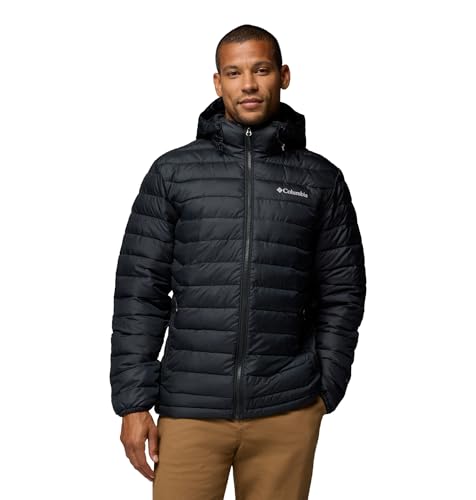

As an Amazon Associate we earn from qualifying purchases at no extra cost to you.
How Columbia Organizes Its Insulated Jackets
Columbia sells a wide range of insulated outerwear, and the names overlap in ways that confuse buyers. Three details are worth keeping straight, based on the brand’s product pages and retailer listings relayed by reviewers:
- Lake 22 Down: a down jacket with 650-fill-power down certified to the Responsible Down Standard (RDS), a water-resistant shell, and the brand’s Heat Seal construction, which replaces stitched baffles with bonded seams to cut down on cold spots. Hooded, long, and plus-size versions exist for men and women, and the “II” naming on some listings denotes a later revision.
- Delta Ridge II Down: a second down line, which retailer listings describe as 650-fill RDS-certified down with Heat Seal construction, an Omni-Heat reflective lining, and a water-resistant shell. Because listings differ by retailer and season, check the specific product page for the exact lining and fill details.
- Powder Lite: a synthetic jacket with Thermarator insulation made from recycled polyester, and an Omni-Heat reflective lining with metallic dots intended to reflect body heat. Columbia describes it as combining the look and feel of down with the resilience of synthetic insulation.
- Puffect: another synthetic Thermarator jacket (currently sold as Puffect III, with earlier Puffect II versions still circulating), which Columbia places at the warm end of its warmth scale and which is generally thicker and bulkier than Powder Lite.
Omni-Heat is a lining technology rather than a type of insulation. Columbia’s own Lake 22 pages do not list it, though a few third-party listings and reviews mention it for certain hooded versions, so treat those mentions as unconfirmed and check the tag or product page. Delta Ridge listings, by contrast, do cite an Omni-Heat lining alongside the down. Model names and revisions change every season, and some jackets named here may be succeeded by a newer version by the time you shop. This article is organized around insulation type so the guidance stays useful across those changes.
Columbia Insulated Jackets Compared
| Line | Insulation | Best for | Key stated specs | Notable limits |
|---|---|---|---|---|
| Delta Ridge II Down | 650-fill RDS down (per retailer listings) | Cool to cold dry days, layering | Heat Seal construction; Omni-Heat lining cited in listings; water-resistant shell | Not hydrophobic down; lining details vary by listing |
| Lake 22 Down (jacket, hooded, long) | 650-fill RDS down | Cool to cold dry days, commuting, travel layering | Heat Seal construction; 100% polyester water-resistant shell; zippered hand pockets; chin guard; men’s regular center back about 28 in | Not hydrophobic down; thin for severe cold; some reviewers note a non-adjustable hood and sizing variance |
| Powder Lite / Powder Lite II | Synthetic (recycled polyester Thermarator) | Mild-to-cool days, light hiking, damp climates, budget layering | Omni-Heat reflective lining; water-resistant shell; men’s regular center back about 28 in | Less packable than down; the metallic lining can feel clammy against bare skin |
| Puffect III (earlier Puffect II) | Synthetic Thermarator | Everyday cold-weather wear in cities | Down-like puffed look; synthetic; water-resistant, light rain only | Bulkier; not waterproof; some versions lack inner pockets or a hem drawstring |
Lake 22: The Down Option
The Lake 22 is built around 650-fill-power down, which sits in the middle of the fill range. Fill power measures loft per ounce, so 650 down is less efficient than the 800-fill used in premium jackets and generally means a jacket needs more material to reach the same warmth, or accepts a little less. Columbia compensates with the Heat Seal baffles and a close-woven shell that is described as water-resistant, meaning it handles light moisture but should not be treated as rainproof.
Retail reviews on Zappos, Backcountry, and similar sites are mostly positive on warmth for the weight, with many owners calling the Lake 22 light but warm. Individual comfort claims vary widely: some owners report comfort around 20 degrees Fahrenheit, others place the limit nearer 25 degrees or even the 40s, particularly if standing still. Those figures are anecdotal rather than standardized ratings. A reasonable reading is that it is a cool-to-cold weather jacket for active or commuting use, not a deep-winter parka.
Common complaints in those reviews include a hood without adjustment, occasional zipper catching, and inconsistent sizing: some buyers say it runs small and recommend sizing up, while others find it slightly large. The long hooded version is reported to reach just above the knee on a person around 5 feet 5 inches. The best sizing approach is to compare your chest and hip measurements with Columbia’s size chart and read recent reviews on the specific version you plan to buy.
Powder Lite: Down Look, Synthetic Fill
The Powder Lite is where shoppers expect a down jacket and receive a synthetic one. That can be an advantage. Synthetic insulation keeps working when damp and dries faster than down, so a Powder Lite is a sensible choice for wet, cool places or for people who do not want to think about down care. Advnture’s review of the Powder Lite gilet praised its warmth for the price, and an assortment of retailer reviewers describe the jacket as uncommonly warm for its thin insulation, which Columbia credits to the Omni-Heat lining. Reviewers also note it does not compress as small as down and that the reflective lining can feel clammy if worn directly against skin, so a base layer helps.
Sizing reports are mixed. One retailer reviewer says it runs small and suggests sizing up, another finds it slightly loose across broad shoulders, which suits layering, and a cycling reviewer found a Small tight around the hips. If you plan to layer, you may be fine with your usual size; for a fitted look, check the size chart.
Puffect: A Bulkier Synthetic Option
Puffect jackets use Thermarator insulation and aim at everyday winter wear. Retail reviewers rate the Puffect line highly for warmth, with some calling it the warmest coat they have owned, and one owner uses it below 35 degrees Fahrenheit. Others note it is not waterproof and may lack interior pockets or a hem drawstring depending on the model. It is a poor fit for backpacking weight-savers because of bulk but a sensible fit for urban commuting.
Who Should Buy and Who Should Skip
Buy a Lake 22 if
- You want actual down at a modest price tier from a mainstream brand.
- Your use is commuting, travel, or casual outdoor wear in dry cool-to-cold weather.
- You value packability and light weight over a premium fill power.
Buy a Powder Lite or Puffect if
- You live somewhere damp and prefer synthetic insulation.
- You want low-maintenance care and are not worried about maximum packability.
Skip Columbia’s jackets if
- You need a technical alpine layer with high fill power, hydrophobic down, and a precise fit.
- You need waterproof protection; none of these insulated jackets is intended to replace a rain shell.
How Columbia Compares With Alternatives
For down, the closest value competitors are Eddie Bauer’s CirrusLite, which also uses 650-fill down and has a recycled nylon shell; Uniqlo’s Ultra Light Down; and entry-level jackets from The North Face and Marmot. Eddie Bauer’s CirrusLite earned a Best Buy award in OutdoorGearLab’s down jacket comparison, where reviewers praised the price and packability while noting a thinner shell with limited durability and weather resistance, a profile similar to the Lake 22’s. Uniqlo’s jacket is often lighter and thinner. Patagonia’s Down Sweater uses 800-fill and has a stronger repair and sustainability program, but it sits in a higher price tier. If you need to step up to hydrophobic down or lighter weight, that is where premium brands justify their cost. Columbia’s advantages are broad availability, extended sizes, and a mix of down and synthetic choices under one label.
Care and Common Issues
- Follow the care label. Washing instructions differ between down and synthetic jackets, so use the label inside the jacket as the authoritative guide.
- Washing down. A gentle cycle with a down-specific cleaner, then low-heat drying with clean dryer balls, restores loft. Avoid fabric softener.
- Washing synthetic. Synthetic Thermarator jackets usually tolerate regular machine washing and drying on a gentle setting.
- Leaking down. Small feather leaks happen with lightweight shells; pull stray feathers back inside rather than out, and patch holes promptly.
- Omni-Heat lining. Avoid ironing or high heat on the metallic dots and wash inside out if the label allows.
Decision Table
| Pick this | If |
|---|---|
| Lake 22 Down or Delta Ridge II Down | You want true down, low weight, and a modest price tier for dry cool weather |
| Lake 22 long hooded | You want extra coverage on cold commutes and do not mind a non-adjustable hood |
| Powder Lite | You want a light synthetic layer with a reflective lining for damp conditions |
| Puffect | You want a thicker everyday coat and are fine with extra bulk |
| A premium down brand | You need hydrophobic down, higher fill power, or a technical fit |
Frequently Asked Questions
Is the Columbia Powder Lite a down jacket?
No. The Powder Lite uses synthetic insulation, specifically polyester Thermarator (listed as recycled on some pages), with an Omni-Heat reflective lining. It has no down and therefore no fill-power rating.
How much down is in the Lake 22?
Columbia lists 650-fill-power RDS-certified down in the Lake 22, and retailer listings give the same for the Delta Ridge II. A standardized warmth rating is not stated on the pages reviewed, so judge them as cool-to-cold weather jackets.
Is the Lake 22 waterproof?
No. The shell is described as water-resistant, which covers light drizzle, but you should wear a rain shell over it in sustained wet weather because down loses loft when soaked.
Does Columbia down run small?
Retail reviewers disagree, with some advising sizing up and others finding a normal size slightly large. Compare your measurements to the brand’s size chart and read recent reviews for the specific version.
Does Omni-Heat make a jacket warmer?
Columbia designs Omni-Heat to reflect body heat back toward the wearer, which reviewers say adds warmth for thin garments. It is a lining technology rather than a type of insulation; it appears on synthetic jackets such as the Powder Lite and is cited on Delta Ridge down listings, but Columbia’s own Lake 22 pages do not list it.
How should I wash a Columbia down jacket?
Follow the label, which typically calls for a gentle machine cycle with down-safe detergent and low-heat drying with dryer balls to restore loft. Never use fabric softener, which coats the down and reduces its loft.





