Key takeaways
- Pro: Extremely low price per pair makes them a practical stock item for multi-bike setups.
- Pro: Wide compatibility across handlebar types reduces the chance of a mismatch.
- Con: The soft rubber wears noticeably faster under aggressive trail use, with some owners reporting a glossy, slick surface after a few months of hard riding.
What's inside
Replacing mountain bike grips is one of the cheapest upgrades a rider can make, yet the difference between a bad pair and a good pair shows up immediately: numbness after twenty minutes, slipping when your hands get wet, or a lock-on collar that walks out of position on rough trails. The problem is that the market is flooded with options ranging from six-dollar slip-ons to thirty-dollar engineered rubber compounds, and the specs rarely tell you how they will feel after your first real descent.
This roundup compares published specifications, listed prices, and aggregated owner feedback across eight options currently available for 2026. What separates the good from the bad comes down to a handful of variables: rubber durometer (how soft or tacky the compound is), lock-on mechanism quality, grip diameter and profile shape, and surface texture pattern. A $7 grip with a well-designed waffle pattern can outperform a $30 lock-on with a mediocre compound, but not always. The goal here is to map each product to the rider whose hand size, riding style, and budget it actually fits.
As an Amazon Associate we earn from qualifying purchases at no extra cost to you. Product prices and availability are accurate as of the date shown and are subject to change.


Quick Picks
| Product | Best for | Price |
|---|---|---|
| GPMTER Universal Grips | Multi-bike garages and rental fleets | $6.98 |
| Odi Motocross Single Ply | Aggressive trail riders who want thin contact | $13 |
| PNW Loam Slip-On | Cross-country riders prioritizing light weight | $29 |
| ROCKBROS Double Lock-On 4-Pack | Replacing grips on multiple bikes at once | $13.99 |
| PNW Loam Lock-On 25A | Enduro and trail riders with medium-to-large hands | $29 |
| GPMTER Single Lock-On | Cruisers and folding bikes needing a secure fit | $6.98 |
| Corki Double Lock-On | Downhill riders wanting a budget lock-on | $9.99 |
| CHUNZEXI Rubber 4-Pack | Cost-conscious commuters and casual riders | $6.28 |
How We Picked
We narrowed the field using four criteria: compound tackiness (measured by shore A rating when published), lock-on or slip-on retention quality based on owner reports, profile ergonomics relative to common hand sizes, and value—meaning whether the price reflects the durability and ride quality you can reasonably expect from that tier of product. We also factored in availability of multiple color and size options, since a grip that only comes in one diameter excludes riders who need a narrower or wider fit.
The 8 Best Mountain Bike Grips in 2026
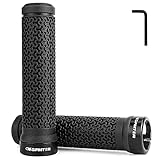
GPMTER Universal Grips
This pair is designed for riders who maintain several bikes—mountain, BMX, commuter, folding—and want a single inexpensive solution that fits all of them. The soft non-slip rubber compound provides reliable traction in dry and moderately wet conditions, and the universal fit means you are not worrying about bar diameter compatibility.
- Pro: Extremely low price per pair makes them a practical stock item for multi-bike setups.
- Pro: Wide compatibility across handlebar types reduces the chance of a mismatch.
- Con: The soft rubber wears noticeably faster under aggressive trail use, with some owners reporting a glossy, slick surface after a few months of hard riding.
Skip these if you ride technical terrain regularly and need a compound that resists abrasion beyond casual use.
Odi Motocross Single Ply Grips
Odi has built its reputation on motocross-derived textures, and the Half Waffle pattern carries that lineage into mountain biking. The single-ply construction makes these noticeably thinner than most competitors, appealing to riders who want maximum bar feel and minimal diameter increase. The tacky compound is well-reviewed for wet-weather grip.
- Pro: Half Waffle texture is among the most proven patterns for keeping hands locked in place when mud or rain is present.
- Pro: Single-ply profile keeps overall bar diameter slim, beneficial for riders with smaller hands.
- Con: Slip-on design requires stretching or compressed-air installation, and some owners note the ends can loosen over time compared to lock-on alternatives.
Skip these if you dislike the hassle of slip-on installation or ride bars with integrated controls where lock-ons offer easier service access.
PNW Loam Slip-On
PNW Components entered the mountain bike market with a focus on Pacific Northwest trail riding, and the Loam slip-on reflects that ethos: a softer rubber compound with a low-profile pattern optimized for the damp, rooty terrain the brand was designed around. At $29 they carry a premium price, justified by compound quality and ergonomic shaping.
- Pro: The rubber compound is noticeably tackier than budget alternatives, maintaining grip even when worn slightly.
- Pro: Ergonomic wall thickness varies along the grip length, reducing palm pressure on long rides.
- Con: Slip-on retention is the weak point—owners report occasional rotation on rough descents, especially as the rubber ages and softens further.
Skip these if you ride aggressively and cannot tolerate any grip movement; the lock-on version solves that issue.
ROCKBROS Double Lock-On
Sold as a four-piece set (two pairs), these grips serve riders who want lock-on security without spending more than a premium single pair would cost. The double-aluminum-locking-collar design prevents rotation, and the textured surface provides adequate grip for trail and commuter use. The value proposition is the pack quantity.
- Pro: Double lock-on collars provide strong rotational resistance even under hard braking and cornering.
- Pro: Two pairs in the box means you get spares or can outfit a second bike at a per-pair cost under $7.
- Con: The rubber compound is firmer and less tacky than premium options, so wet-weather performance is adequate rather than excellent.
Skip these if you ride in consistently wet or muddy conditions and need the highest available traction from your compound.
PNW Loam Lock-On 25A
The lock-on variant of the Loam uses a 25A shore rubber—softer than most competitors—which delivers exceptional tackiness and comfort. The 30mm diameter in Regular size suits medium-to-large hands, and the ergonomic profile mirrors the slip-on version while eliminating the rotation concern through its aluminum lock ring. This is the most technically complete grip in the roundup.
- Pro: 25A tacky rubber offers best-in-class grip for its price tier, confirmed by consistent owner praise in wet conditions.
- Pro: Lock-on mechanism removes the one genuine weakness of the slip-on version.
- Con: The softer compound wears faster than harder alternatives, and at $29 per pair, replacing them every season adds up.
Skip these if you weigh over 220 pounds or ride with very aggressive hand pressure, as the soft compound compresses and may flatten prematurely.
GPMTER Single Lock-On
These occupy the middle ground between the universal slip-on GPMTER and a full lock-on system. The single locking collar secures one end while the other seats against the bar end, making installation faster than a double-lock design. The soft rubber compound and red color option add a cosmetic upgrade to otherwise utilitarian bikes like cruisers and folders.
- Pro: Single lock collar provides meaningful rotation resistance without requiring two Allen keys during installation.
- Pro: The soft rubber is comfortable for upright riding positions and absorbs trail vibration well.
- Con: The unlocked end can still shift inward on bars without a lip or stop, and owners note this is the most common failure point.
Skip these if your handlebar lacks a natural stop or you ride in a forward-leaning position where inward slip is more likely.
Corki Double Lock-On
At under ten dollars per pair, the Corki double lock-on punches above its price for downhill and aggressive trail riders who want a functional lock-on without committing to premium branding. The locking mechanism is straightforward, and the rubber texture is sufficient for dry and mixed conditions. It is the cheapest way to get a genuine double-lock design.
- Pro: Lowest price available for a double lock-on construction in this comparison.
- Pro: Lock rings are aluminum rather than plastic, improving durability under repeated torquing.
- Con: Surface texture is relatively shallow, and owners report it fills with mud more quickly than deeper-pattern alternatives.
Skip these if you ride in muddy winter conditions where a deep waffle or aggressive pattern is essential for ejecting debris.
CHUNZEXI Rubber 4-Pack
Four grips for $6.28 total means roughly $1.57 per pair—the absolute floor of this category. These are plain black rubber with a basic texture and no lock-on hardware, designed for riders who need functional bar coverage on multiple bikes without any expectation of premium performance.
- Pro: Unbeatable per-pair cost makes bulk replacement or multi-bike outfitting essentially a rounding error.
- Pro: Simple slip-on design means no tools required for installation.
- Con: The rubber compound is thin and hardens with UV exposure, leading to cracking and poor grip within a single season for frequent riders.
Skip these for any bike you ride more than a couple times per week; the compound quality cannot sustain regular trail use.
Buying Guide
Compound Durometer and Tackiness
The single biggest performance variable in mountain bike grips is the rubber compound. Softer compounds (lower shore A rating, such as the 25A used by PNW Loam Lock-On) conform to your palm and generate higher friction, which is critical in wet or muddy conditions. Firmer compounds last longer and resist tearing on rocks but provide less initial bite. If you ride in the Pacific Northwest or during winter months, prioritize tackiness. If you ride arid trails with sharp debris, a slightly firmer compound will survive longer without shearing.
Lock-On vs. Slip-On Retention
Lock-on grips use aluminum collars clamped around the handlebar to prevent rotation and lateral movement. Slip-on grips rely entirely on friction between the rubber ID and the bar surface. Lock-ons cost more, add a few grams, and require tools, but they eliminate the most common grip failure mode—rotation under load. For riders using wide handlebars (780mm and above) who generate high torque during cornering, lock-ons are a meaningful safety advantage rather than a convenience upgrade.
Profile Shape and Diameter
Grip diameter and wall thickness vary along the length, and this ergonomic shaping determines whether your hands stay comfortable over two hours or develop hot spots in thirty minutes. Wider diameter suits larger hands and provides more palm contact area; narrower diameters suit smaller hands and allow a more secure wrap. A flared outer end (present on some PNW models) prevents your hand from sliding off during descents. Match the profile to your hand size before matching it to riding style.
Our Verdict
The PNW Loam Lock-On 25A is the top pick in this roundup. It combines the tackiest compound in the group, a secure lock-on mechanism that removes the slip-on’s only real weakness, and an ergonomic profile validated by consistent owner praise. The RockBros Double Lock-On 4-Pack earns the budget pick: at $13.99 for two pairs, the per-pair cost under $7 delivers lock-on security and adequate grip for anyone not riding at the sport’s sharp end. If your priority is maximum bar feel and minimal diameter for small hands, the Odi Motocross Single Ply wins over everything else here despite its slip-on installation quirk.
FAQ
How often should I replace mountain bike grips?
Soft tacky compounds typically last one full season of regular riding (two to four months of weekly use) before surface wear reduces grip noticeably. Harder budget compounds may crack or become slick within the same window. Inspect for glossiness, visible thinning, or any rotational slip during rides—these are signs replacement is overdue.
Do lock-on grips work with any handlebar?
Lock-on grips are designed for bars with a straight section where collars can clamp—typically the outer 130 to 150mm. Bars with integrated rise-and-clamp systems, unusual step diameters, or carbon fiber construction with tight tolerance limits may not accommodate standard lock-on collars. Check your bar’s outer diameter and available clamping length before purchasing.
Is a 25A compound too soft for aggressive riding?
For most riders, no. The 25A rating means the rubber is soft enough to conform and grip well but firm enough that the lock-on collar prevents it from deforming or rotating under load. Riders above 220 pounds who lean heavily on the bars may compress the softer wall faster, so they should monitor wear on the inner palm zone more frequently than lighter riders.
Can I use the same grips on my mountain bike and my commuter?
Yes, provided both bikes have the same bar diameter and you are comfortable with a single-compromise choice. The GPMTER Universal and CHUNZEXI multi-packs are explicitly designed for this use case. Premium single-purpose grips like the PNW Loam are tuned to aggressive riding positions and may feel unnecessarily thick or soft for upright commuting.