Key takeaways
- Pro: Virtually impossible to destroy; works equally well as a ground cloth under a fancier pad.
- Pro: Lowest price point in the Therm-a-Rest lineup with zero maintenance required.
- Con: Bulky on pack—straps to the outside rather than fitting inside a backpack sleeve.
What's inside
A thermarest sleeping pad is not a luxury—it is the single piece of gear that determines whether you sleep through the night or wake up shivering at 3 a.m. The ground beneath you conducts heat away from your body faster than cold air does, and no sleeping bag can compensate for a pad with inadequate insulation. The problem most buyers face is not finding a pad; it is choosing between dozens of options that look similar on paper but differ dramatically in warmth, comfort, durability, and how much weight you carry on your shoulders.
What separates an excellent pad from a mediocre one comes down to how well it matches your specific use case. A weekend car camper needs different characteristics than a thru-hiker counting every gram. The eight pads covered in this roundup span closed-cell foam, self-inflating, and insulated air-pad construction, each excelling in its own scenario. We compared published specifications, price points, and aggregated owner feedback across the Therm-a-Rest lineup to identify which pad serves which camper best in 2026.
As an Amazon Associate we earn from qualifying purchases at no extra cost to you. Product prices and availability are accurate as of the date shown and are subject to change.



Quick Picks
| Product | Best For | Price |
|---|---|---|
| Z Lite Original | Emergency backup, car camping on a strict budget | $36.89 |
| Basecamp Large | Tall campers who want self-inflating comfort | $104.89 |
| Basecamp Regular | Weekend car campers, family trips | $89.89 |
| Z Lite Sol | Ultralight hikers who want dependable warmth | $59.95 |
| MondoKing 3D XX-Large | Couple camping or home-guest comfort | $289.95 |
| NeoAir Xlite NXT | Three-season backpacking | $156.89 |
| NeoLoft Large | Side sleepers who want warmth without bulk | $215.17 |
| NeoAir XTherm NXT | Winter camping and cold-weather expeditions | $191.98 |
How We Picked
We evaluated these pads against four criteria that consistently determined owner satisfaction in this category. First, warmth-to-weight ratio: how much insulation the pad delivers relative to what you carry. Second, durability and value: whether the price aligns with expected lifespan given typical use. Third, comfort geometry: thickness, width, and surface design matter differently for side sleepers versus back sleepers. Fourth, packability: how the pad compresses and where it fits on a loaded pack. No single pad wins all four, so our rankings reflect which use case each product serves best.
The 8 Best Thermarest Sleeping Pad in 2026
Therm-a-Rest Z Lite Original
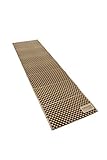
The Z Lite Original is the pad you buy for your emergency kit, your teenager’s first camping trip, or the back of your car where it waits for an unexpected overnight. It is a closed-cell foam pad that never deflates, never needs repair, and costs less than most people spend on gas to reach a trailhead. Owners consistently praise its indestructible simplicity. The accordion-style design doubles as a seat on damp ground.
- Pro: Virtually impossible to destroy; works equally well as a ground cloth under a fancier pad.
- Pro: Lowest price point in the Therm-a-Rest lineup with zero maintenance required.
- Con: Bulky on pack—straps to the outside rather than fitting inside a backpack sleeve.
Skip it if you need packable comfort or sleep on uneven rocky ground where thin foam transmits every bump.
Therm-a-Rest Basecamp Large
The Basecamp in Large format (25 x 77 inches) is built for campers who need extra length or width without committing to air-pad fragility. The self-inflating foam construction provides genuine cushioning on hard ground, and the generous dimensions accommodate restless sleepers who turn throughout the night. Owners note the thickness gives real pressure relief for hips and shoulders. The valve design allows you to top off firmness to personal preference.
- Pro: Large footprint suits taller campers or those who sleep wide, reducing shoulder-edge contact with the ground.
- Pro: Self-inflating design means no pumping lunges required—open the valve and it does most of the work.
- Con: Heavier and bulkier than any backpacking pad; this is car-camp-only territory.
Skip it if you are hiking more than a mile from the car or want anything packable for multi-day trips.
Therm-a-Rest Basecamp Regular
The Regular Basecamp (20 x 72 inches) covers the same self-inflating comfort formula at a slightly lower price and smaller footprint. It is the sensible default for families, first-time campers, or anyone who wants a dependable pad for car-accessible sites. Owners appreciate the durability of the fabric shell and the forgiving foam core that resists punctures far better than thin air pads. Setup requires only opening the valve and waiting.
- Pro: More affordable than the Large version while delivering the same comfort technology.
- Pro: Puncture-resistant construction means it will survive years of car camping without a repair kit.
- Con: Not designed to be carried on foot for any reasonable distance—weight and rolled size make it impractical for trail use.
Skip it if you need a pad for backpacking, bikepacking, or any scenario where pack weight matters.
Therm-a-Rest Z Lite Sol
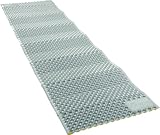
The Z Lite Sol upgrades the original foam pad with a reflective Thermal Mirror surface that measurably improves warmth-to-weight, making it a legitimate three-season backpacking option for minimalists. At its Regular size (20 x 72 inches), it folds rather than rolls, which some owners prefer for fitting against a pack’s exterior. It remains virtually indestructible while adding a genuine thermal advantage over the non-Sol version. The price premium over the Original is modest and well justified for anyone leaving the car behind.
- Pro: Reflective layer boosts warmth without adding weight, making it suitable for cooler shoulder-season trips.
- Pro: Cannot deflate or puncture—ideal for remote trips where a repair means a cold night.
- Con: Still bulkier on pack than any air pad; the accordion fold takes up real exterior space.
Skip it if you prioritize small packed size over absolute reliability, or if you need plush thick comfort for sensitive hips.
Therm-a-Rest MondoKing 3D XX-Large
The MondoKing 3D is the most plush pad in this lineup and clearly designed for stationary comfort rather than portability. Its XX-Large size (80 x 30 inches) provides genuinely generous sleeping real estate. The self-inflating foam core delivers thickness that rivals a guest mattress, and the 3D construction minimizes side-sleeper edge collapse. Owners who use it at basecamp, in a cabin, or as a permanent home sleeping surface consistently describe it as the most comfortable pad they have owned.
- Pro: Exceptional thickness and width provide pressure relief that no backpacking pad matches.
- Pro: Self-inflating foam resists punctures and requires no pumping or blowing.
- Con: Highest price in this group and far too heavy for anything beyond car camping or indoor use.
Skip it if you plan to hike anywhere with this pad; the weight and packed size make it strictly a car-camp or home product.
Therm-a-Rest NeoAir Xlite NXT
The NeoAir Xlite NXT is the benchmark three-season backpacking pad. It uses a baffled air-chamber design with reflective insulation to deliver strong warmth in a pack that fits inside your hip belt pocket. Owners praise the balance of comfort, weight, and pack size. The Triangular Core Matrix construction reduces the lateral wobble that plagued earlier air pads, and the fabric shell has improved noticeably over prior generations. For most backpackers who camp below snow line, this is the default recommendation.
- Pro: Excellent warmth-to-weight ratio with a packed size small enough for any backpack.
- Pro: Triangular baffle design minimizes roll-wobble, improving comfort for side sleepers.
- Con: Requires a pump sack or blowing to inflate fully, and puncture risk always exists with thin air pads.
Skip it if you camp in winter conditions where the XTherm provides meaningfully better insulation, or if absolute puncture immunity matters to you.
Therm-a-Rest NeoLoft Large
The NeoLoft occupies a unique position: it uses synthetic insulation rather than reflective film to achieve warmth, giving it a more forgiving and comfortable feel under side sleepers. In the Large size, it offers extra width and length that addresses the most common complaint about narrow backpacking pads. Owners who find the Xlite too firm or bouncy describe the NeoLoft as the pad they have been waiting for. The tradeoff is added weight and packed volume relative to the Xlite.
- Pro: Soft, lofted surface provides pressure relief that feels more like a mattress than a raft.
- Pro: Wider Large format keeps shoulders and hips fully supported without edge contact.
- Con: Heavier and bulkier than the Xlite NXT for similar warmth levels; not ideal for weight-conscious hikers.
Skip it if your priority is the smallest possible pack or the lowest trail weight; the Xlite serves those needs better.
Therm-a-Rest NeoAir XTherm NXT
The XTherm NXT is the warmest pad in this roundup and the clear choice for winter camping, snow travel, or any trip where sub-freezing temperatures are expected. It shares the Triangular Core Matrix baffle design of the Xlite but layers significantly more reflective insulation to resist heat loss into frozen ground. Owners who use it in winter consistently report that it transforms their sleep experience compared to lighter pads. The price reflects its specialized thermal capability.
- Pro: Highest warmth rating in the lineup; purpose-built for cold-weather and four-season use.
- Pro: Despite its insulation, it remains light and packable enough for expedition use.
- Con: Overkill for summer car camping—you pay for warmth you will not need.
Skip it if your trips are limited to warm-weather camping; the Xlite delivers better value for that scenario.
Buying Guide
Insulation Type and Warmth
Sleeping pad warmth is measured by R-value, though exact numbers vary by model. The key distinction is construction: reflective film (used in the Z Lite Sol, Xlite, and XTherm) resists radiant heat loss, while trapped air within foam or synthetic loft resists conductive loss. For three-season use, moderate insulation suffices. Winter camping demands the highest available R-value, making the XTherm the clear choice. Closed-cell foam pads like the Z Lite Original provide steady but lower warmth that never degrades over time.
Thickness and Comfort Geometry
Pad thickness determines how well it isolates you from ground irregularities. Self-inflating pads like the Basecamp and MondoKing deliver more cushioning than air pads of equivalent weight. Side sleepers benefit from wider dimensions and softer surfaces—the NeoLoft addresses this directly. Back sleepers tolerate thinner pads. If you sleep on rocky terrain, err toward thickness; if you sleep on packed dirt or pads inside a shelter, comfort margin shrinks.
Construction Durability and Use Case
Foam pads cannot puncture, which makes them ideal for rough terrain, pet owners, and anyone who hates maintenance. Air pads and self-inflating pads require a patch kit and careful ground preparation. The NeoAir models have improved shell durability significantly, but they remain the most vulnerable construction type. Match your pad to your risk tolerance and how much repair infrastructure you want to carry in the field.
Our Verdict
For the broadest range of backpacking use, the NeoAir Xlite NXT is the top pick—best overall balance of warmth, weight, pack size, and price for three-season adventures. The Z Lite Original is the budget pick: it costs almost nothing, lasts forever, and solves the fundamental insulation problem for anyone who does not need packability. If your primary use is winter camping or high-altitude travel where the ground steals heat aggressively, the NeoAir XTherm NXT wins because no other pad in this lineup delivers equivalent thermal protection at comparable weight.
FAQ
Can I use two pads stacked together?
Yes, stacking a closed-cell foam pad under an air pad is a common cold-weather strategy. The foam provides a puncture barrier and adds insulation without any risk of deflation, while the air pad delivers comfort and additional R-value.
How do I keep an air pad from puncturing?
Clear your campsite of sharp debris, use a ground cloth or footprint under the pad, avoid inflating with your mouth (moisture degrades internal coatings over time), and store the pad partially inflated to prevent crease fatigue in the material.
Is a self-inflating pad better than an air pad for backpacking?
Generally no. Self-inflating pads add significant weight and bulk compared to air pads of equivalent warmth, which is why they appear mainly in car-camping products. For trail use, air pads deliver far better warmth-to-weight performance.
How long do Therm-a-Rest sleeping pads last?
Foam pads like the Z Lite effectively last indefinitely under normal use. Air pads with proper care commonly last five to ten years before seams or coatings degrade. Therm-a-Rest offers a lifetime warranty on manufacturing defects, which covers the vast majority of premature failure claims owners report.