
Key takeaways
- Rinse the kayak after saltwater use and let it dry fully before covering.
- Clean the cover with mild soap and water, following the maker’s care label, and air dry it.
- Avoid hot machine washing unless the label allows it.
- Inspect seams, zippers and straps regularly, and replace worn tie-downs.
- Do not use the cover as a substitute for securing the boat; use rack straps or tie-downs on a vehicle, and lock the kayak if it is stored outside.
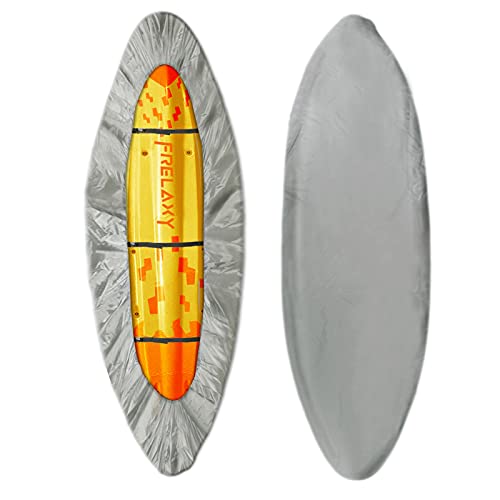
If you store a kayak outdoors or haul it on a roof, a full-length 420D to 600D polyester cover such as the Frelaxy 420D, the Neverland 600D or the Classic Accessories StormPro is the most common recommendation; if you only need to keep rain, debris and critters out of the seat, a cockpit cover is cheaper and simpler; and sea kayakers with long, narrow boats may prefer a fitted wrap such as the Salamander Yak Wrap. Whatever you choose, match the cover to your boat’s measured length and beam.
Our top picks


As an Amazon Associate we earn from qualifying purchases at no extra cost to you.
Kayak Covers at a Glance
| Model | Type | Best for | Key stated details | Limits |
|---|---|---|---|---|
| Frelaxy 420D | Full-length cover | All-round outdoor storage | Named best overall by Paddle Round the Pier after a multi-month test, per that site | Fit depends on boat size |
| Neverland 600D | Full-length cover | Budget heavy-duty | Named budget pick by Top Notch Outdoor | Thick fabric can be bulky |
| Classic Accessories StormPro 12 ft | Full-length cover | Outdoor storage | Named best for outdoor storage by one reviewer | Fits specific lengths |
| Wilderness Systems cover | Fitted shower-cap style | Matching Wilderness boats | Rated highly by Outside Pursuits; covers boats up to about 11 ft | Brand-specific fit |
| Kohree | Full-length cover | General use | Scored well on Outside Pursuits | Check size range |
| iiSport | Full-length cover | General use | Scored well on Outside Pursuits | Check size range |
| Advanced Elements cover | Full-length cover | Best overall at Kayak Addicts | Marketed for kayaks and inflatables | Premium tier |
| GYMTOP | Full-length cover | Budget | Budget pick at Kayak Addicts | Thinner fabric |
| Salamander Yak Wrap | Wrap for sea kayaks | Long, narrow boats | Sea kayak pick at Kayak Addicts | Specialized fit |
| Seals cockpit covers | Cockpit cover | Spray skirt-style protection | Cockpit-cover pick at Kayak Addicts | Does not protect the hull |
Information comes from makers and the reviewers named. Reviews on affiliate-style sites vary, so confirm size ranges and fabric specs on each maker’s product page.
Full Cover or Cockpit Cover?
A full-length cover wraps the whole boat and protects the deck, hull and cockpit from sun, rain, snow, bird droppings and dirt. It is the right choice for boats stored outside or in a carport. A cockpit cover seals only the opening, which prevents water, leaves, spiders and wasps from getting into the seat area. It is lighter and cheaper, and useful for sit-in boats stored in a garage or hauled on a trailer. Sit-on-top kayaks usually need a full cover because there is no cockpit to seal.
Measure Before You Buy
Fit varies widely between size ranges. Measure the length of your kayak, bow to stern, and its widest beam, then compare with the cover maker’s stated length and beam ranges. A cover that is too small leaves ends exposed; one that is too large flaps in wind and pools water. Tandem kayaks and fishing kayaks with high seats often need a larger cover than their length suggests. Many makers list a range such as 10 to 12 feet, so choose a range that fits the boat with a little spare.
For cockpit covers, measure the cockpit opening’s length and width and compare with the cover’s dimensions. Reviewers mention models such as a 60 by 29 inch two-pack; match your own measurements rather than assuming.
Fabric: Denier and Coatings
Denier measures thread thickness, and a higher number generally means a tougher fabric. Common options are 420D and 600D polyester, usually with a waterproof or water-resistant coating. 600D is thicker and more abrasion-resistant but heavier and bulkier; 420D is lighter and easier to fold. A coating helps shed rain, but no cover is waterproof forever, and seams are often where water gets in. Look at what the maker says about seam taping and UV resistance, since sun is one of the main things that weakens fabric over time.
Fastening and Wind Resistance
Straps, buckles and elastic hems are what keep a cover on in wind. Look for an adjustable strap system that runs under the hull, drawstrings or an elastic hem at each end, and grommets for tie-downs. Zippers on some budget covers can fail. For roof-rack transport, use covers designed for travel rather than storage covers, since flapping fabric can damage paint and may loosen at highway speeds. Follow your rack and cover makers’ instructions and secure the kayak with proper tie-downs.
Ventilation and Moisture
Trapping moisture under a cover can lead to mildew, especially if the boat is put away wet. Rinse and dry the kayak before covering, and favor covers with vents or breathable panels if you live in a damp climate. Store the boat off the ground on padded supports or hang it with wide straps so air can circulate and the hull does not deform.
Budget, Mid-Range and Premium
Budget
Covers like GYMTOP and Neverland provide simple coverage and a drawstring or strap closure. They suit occasional use and garage or carport storage. Reviewers caution that durability reports for the cheapest unbranded covers are inconsistent.
Mid-Range
Frelaxy, Kohree and iiSport are among the names reviewers cite for a balance of fabric, straps and fit. For most owners who keep the boat outside, this tier is where value seems to concentrate.
Premium
Wilderness Systems and Advanced Elements covers, and specialty wraps such as the Salamander Yak Wrap, cost more but may fit specific boats better or use heavier material. They are worth considering for expensive boats and harsh climates.
Care and Storage
- Rinse the kayak after saltwater use and let it dry fully before covering.
- Clean the cover with mild soap and water, following the maker’s care label, and air dry it.
- Avoid hot machine washing unless the label allows it.
- Inspect seams, zippers and straps regularly, and replace worn tie-downs.
- Do not use the cover as a substitute for securing the boat; use rack straps or tie-downs on a vehicle, and lock the kayak if it is stored outside.
Pick X If …
| Pick this | If … |
|---|---|
| Frelaxy 420D | You want a well-reviewed all-around outdoor cover. |
| Neverland 600D | You want heavier fabric on a budget. |
| Classic Accessories StormPro | You store the boat outside year-round. |
| Wilderness Systems cover | You own a compatible Wilderness boat. |
| Salamander Yak Wrap | You have a sea kayak with a long, narrow hull. |
| Seals or other cockpit cover | You only need to keep out debris and water. |
| GYMTOP | You need a low-cost cover for light use. |
Alternatives to Consider
- Indoor storage: A garage, shed or covered rack avoids the need for a cover and extends the life of the boat.
- Tarps or canopies: A raised tarp over the boat can shed rain while allowing airflow, though wind can be a problem.
- Kayak storage racks with built-in covers: A fixed solution for those with several boats.
Matching the Cover to Where the Boat Lives
A kayak kept under a carport needs less than one sitting in open sun year-round. In sunny climates, UV resistance and a lighter color can matter more than raw fabric thickness. In snowy regions, a cover that is supported so snow does not pool and stretch the fabric is worth thinking about, and the boat should sit on a rack rather than the ground. Near the coast, salt and wind are the bigger challenges, which favors strong straps, stainless or plastic buckles and a thorough fresh-water rinse before covering.
If the boat travels often, consider keeping a lightweight cover for storage and relying on proper tie-downs and bow and stern lines on the road. Reviewers also point out that a cover left tight and wet in a humid garage can cause more harm than no cover at all, so airflow and a dry hull are as important as the fabric you pick.
Signs a Cover Needs Replacing
Fabric that feels brittle or chalky, seams that let water through, stretched elastic and cracked buckles are all signs that a cover has reached the end of its life. A worn cover can trap moisture while giving little protection, so replace it rather than patching it repeatedly.
Frequently Asked Questions
How do I know what size kayak cover to buy?
Measure your kayak’s length and widest beam, then compare them with the cover maker’s stated ranges. Choose the range that fits the boat with a little spare, and be careful with tandem or wide fishing kayaks.
Is 600D better than 420D?
600D is thicker and generally more abrasion-resistant, while 420D is lighter and easier to handle. Coating, seams and UV resistance matter as much as the denier number.
Can I use a storage cover while driving?
Generally no. Storage covers can flap and loosen at highway speed. Use a cover designed for transport if the maker offers one, and always secure the kayak with proper tie-downs.
Will a cover stop mildew?
Not on its own. Dry the kayak first, allow airflow, and favor a vented or breathable design in humid climates. Trapped moisture can cause mildew.
Do sit-on-top kayaks need a different cover?
Usually a full-length cover, since there is no cockpit to seal. Cockpit covers are mainly for sit-in kayaks.
How long does a kayak cover last?
It depends on fabric, sun exposure and use. UV is a main cause of wear, so inspect the cover regularly and replace it when seams, straps or fabric degrade.





