
Key takeaways
- Penetrates deep in a variety of seafloor compositions
- Slip ring shank makes it simple to retrieve…
- Recommended for boats 15-19 feet in length
The best boat anchors are the ones correctly matched to your boat’s length and weight, the seabed beneath you, your cruising area, and the space available in your locker—not necessarily the heaviest anchor on the shelf.
For most trailer boats and cruising sailboats, a modern scoop-style anchor such as the Rocna, Mantus M1, or Lewmar DTX is the strongest all-around choice for reliable setting in sand, mud, and mixed bottoms. A Fortress or other lightweight aluminum Danforth-style anchor is excellent as a secondary anchor for sand and mud, while a traditional mushroom anchor remains useful for small freshwater boats that stay on one mooring location.
Our top picks
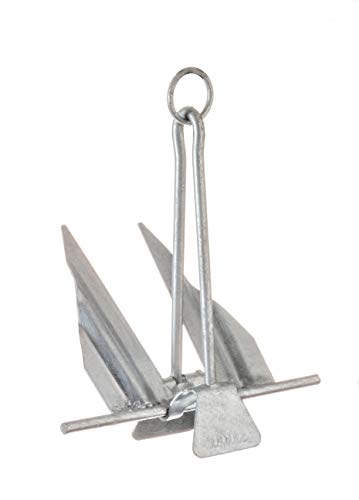 Seachoice Utility Anchor w/ Slip Ring
- Penetrates deep in a variety of seafloor compositions
- Slip ring shank makes it simple to retrieve…
- Recommended for boats 15-19 feet in length
 Attwood 9934B1 Navy Anchor
- 15 lb weight and integrated flukes help the…
- Reverse-action shank design helps free and retrieve a…
- Black PVC-coated finish helps resist rust while reducing…
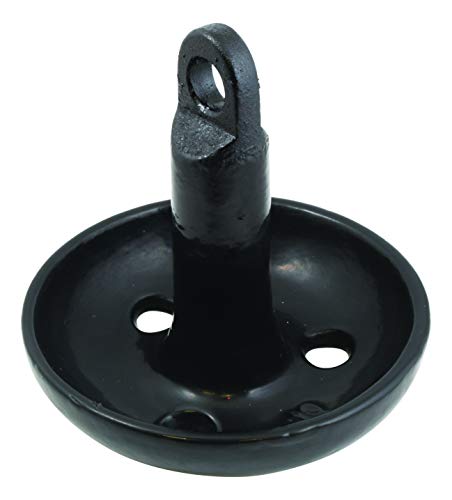 Attwood 9942B1 Mushroom Anchor 10 lb PVC
- Wide-area mushroom design increases surface contact to provide…
- Black PVC coating helps shield hull and deck…
- Large steel eye allows quick connection of anchor…
| Product | Key specs | |
|---|---|---|
| Seachoice Utility Anchor w/ Slip Ring | Penetrates deep in a variety of seafloor compositions Slip ring shank makes it simple to retrieve… Recommended for boats 15-19 feet in length | Check price |
| Attwood 9934B1 Navy Anchor | 15 lb weight and integrated flukes help the… Reverse-action shank design helps free and retrieve a… Black PVC-coated finish helps resist rust while reducing… | Check price |
| Attwood 9942B1 Mushroom Anchor 10 lb PVC | Wide-area mushroom design increases surface contact to provide… Black PVC coating helps shield hull and deck… Large steel eye allows quick connection of anchor… | Check price |
 Seachoice River Anchor | River anchor design helps provide a secure hold… Designed to hold in mud, rock, gravel and… Designed to penetrate the bottom better than regular… | Check price |
As an Amazon Associate we earn from qualifying purchases at no extra cost to you.
Best boat anchors by situation
| Situation | Best anchor type | Why it fits | Main limitation |
|---|---|---|---|
| General coastal cruising | Modern scoop or roll-bar anchor | Strong resetting behavior and good performance across sand, mud, and mixed bottoms | Heavier and bulkier than a Danforth-style anchor |
| Soft sand or mud, limited storage | High-tensile aluminum Danforth-style anchor | Large flukes provide strong holding for its weight; easy to handle | Less dependable in rock, weed, and hard clay |
| Small lake boat on a fixed mooring | Mushroom anchor | Compact, inexpensive, and suitable for soft sediment when the boat is not frequently moved | Not a good choice for changing anchorages or strong current |
| Rocky or grassy bottom | Plow-style or fisherman-style anchor | Better chance of finding a purchase where flat flukes cannot bury | May be difficult to retrieve if it wedges in rock |
| Backup or stern anchor | Danforth-style anchor | Stores flat and works efficiently in sand and mud | Can break out or skate when the wind shifts on rough bottoms |
Our top anchor choices
Best all-around: modern scoop-style anchor
A modern scoop anchor has a concave fluke that digs into the bottom as the rode pulls horizontally. Rocna, Mantus M1, and Lewmar DTX are examples of this design. Many versions include a roll bar or other geometry that helps the anchor land in a position where it can set.
This is the most sensible single-anchor choice for owners who anchor in several locations during the year. It generally sets more predictably than an old-style plow or basic fluke anchor, and it usually resets better after a wind shift. Select the size from the manufacturer’s chart using your boat’s length and displacement, then move up a size if the boat has unusually high windage, carries substantial gear, or spends nights at anchor in exposed water.
Best for low weight: aluminum Danforth-style anchor
A Fortress anchor is a well-known example of a high-tensile aluminum Danforth-style design. Its broad, adjustable-angle flukes can create impressive holding power in suitable sand or mud while weighing far less than a steel anchor of similar rated capacity.
This makes it useful for a dinghy, a lightweight fishing boat, or a secondary anchor on a larger vessel. It is also easier to lift from a deep locker. The trade-off is bottom sensitivity: broad flukes can clog with weed, fail to penetrate hard clay, or drag across rock rather than dig in. It is a specialist tool, not a universal replacement for a primary coastal anchor.
Best for small freshwater boats: mushroom anchor
Mushroom anchors are practical for small boats that remain in one lake or on a protected mooring. They gradually settle into soft mud or silt and can hold a lightweight boat in calm conditions. A 10- to 20-pound mushroom anchor is common for smaller boats, but the correct weight depends on boat size, wind exposure, water depth, and whether the anchor is used temporarily or as part of a permanent mooring system.
Do not use a mushroom anchor as a shortcut for serious storm holding power. It is difficult to judge its performance in changing bottoms, and it is not the preferred choice for repeatedly anchoring along a coast.
Best for mixed or difficult bottoms: plow-style anchor
Plow-style anchors, including the Lewmar Delta, can work well in sand, mud, gravel, and some grassy bottoms. Their pointed profile is useful when a broad flat fluke cannot penetrate. They are also less dependent on a roll bar to land correctly.
Compared with newer scoop designs, a traditional plow may require more careful setting and can be less consistent after a major wind shift. It remains a reasonable choice when its shape fits your bow roller and your typical bottom conditions.
How to choose the right size
Anchor sizing is not based on boat length alone. Length provides a useful starting point, but displacement and windage can matter more. A tall cabin, flybridge, enclosure, or large outboard presents more area to the wind than a low open skiff of the same length.
| Boat length | Typical primary-anchor range | Typical secondary-anchor range | Common use case |
|---|---|---|---|
| 10–14 feet | 4–8 lb | 3–6 lb | Dinghy or small open fishing boat |
| 15–18 feet | 8–15 lb | 6–10 lb | Small runabout or bass boat |
| 19–24 feet | 15–25 lb | 10–20 lb | Trailerable cabin boat or center console |
| 25–30 feet | 25–45 lb | 15–30 lb | Coastal cruiser or larger fishing boat |
| 31–36 feet | 35–55 lb | 20–40 lb | Heavier cruiser with greater windage |
These are planning ranges rather than universal prescriptions. Always compare them with the anchor manufacturer’s chart. If two sizes overlap, choose the larger size when the anchor fits the roller, can be safely retrieved, and does not overload the bow hardware. Oversizing does not compensate for insufficient rode or poor technique, however.
Rode matters as much as anchor design
A well-sized anchor can drag if the pull reaches it at a steep angle. Use enough rode to create a shallow pull, particularly in deeper water or strong wind. A common starting point is a scope of 5:1 in moderate conditions: 5 feet of rode for every foot from the bow roller to the seabed. Increase toward 7:1 or more when space and conditions permit.
For example, if the bow roller is 6 feet above the bottom, a 5:1 scope requires approximately 30 feet of horizontal-plus-vertical rode distance. Allowing for the vertical depth calculation, many boaters would deploy about 35–40 feet in calm conditions, then more if wind, waves, or current increase. A short length of galvanized chain between the anchor and rope helps the anchor stay aligned with the bottom and protects the rope from abrasion. Larger boats commonly use all-chain rode.
Check the working-load ratings of the shackle, swivel, chain, rope, bow roller, and cleat as a system. The strongest anchor is not useful if a small shackle or undersized cleat is the weakest link.
Decision matrix for real-world buyers
- First-time owner with one anchor locker: choose a galvanized steel scoop anchor sized from the manufacturer’s table. It offers the broadest range of useful bottom conditions.
- Experienced owner who anchors mostly in sand: carry a lightweight aluminum Danforth-style anchor as a secondary or stern anchor, especially if lifting weight is a concern.
- Small lake boat used in one protected location: choose a mushroom anchor if the bottom is soft and the mooring arrangement is appropriate; otherwise use a small fluke or scoop anchor.
- Coastal boat that encounters grass, gravel, and tidal current: prioritize a modern scoop or suitable plow anchor, plus adequate chain and enough rode for changing conditions.
- Boat with a narrow or shallow bow roller: measure the roller, locker opening, anchor shank length, and clearance before buying. A theoretically excellent anchor that cannot seat securely is the wrong anchor.
Setup and maintenance that improve holding power
- Inspect the hardware before departure. Look for bent flukes, cracked welds, distorted shackles, damaged galvanizing, and worn rope near the splice.
- Attach the rode with a properly sized shackle. Secure the pin against accidental loosening, but do not substitute an unmarked decorative shackle for marine-rated hardware.
- Lower rather than throw the anchor. Let it reach the bottom without piling the rode on top of it.
- Back down gradually. Pay out rode while moving slowly astern, then apply gentle reverse power to confirm that the anchor has dug in.
- Set an alarm or take bearings. A boat can appear stationary while dragging slowly, especially on a muddy bottom.
- Rinse after saltwater use. Flush mud and salt from the anchor, chain, shackle, and windlass. Salt buildup accelerates corrosion and can make the chain jam in the locker.
- Store it securely. Prevent the anchor from shifting in the locker or bouncing against the bow roller. Inspect the connection again after heavy weather.
Common buying mistakes
The most common mistake is choosing by weight alone. A heavy anchor with an unsuitable shape may hold worse than a lighter anchor designed for the local bottom. The next is buying an anchor that fits the boat but not the storage system: measure the shank, fluke width, roll-bar height, and roller throat.
Another mistake is assuming that a successful set in calm weather proves storm readiness. Holding depends on bottom type, scope, chain, current, wind direction, and the ability of the anchor to reset. For overnight coastal use, a properly sized primary anchor and a compatible secondary anchor provide more practical security than simply carrying one very large anchor.
Final recommendation
For most owners asking for the best boat anchors, start with a modern galvanized scoop anchor sized to the manufacturer’s boat-length and displacement guidance. Add a lightweight aluminum Danforth-style anchor when sand, mud, storage space, or lifting weight is the priority. Choose a mushroom anchor mainly for small, protected freshwater applications, and consider a plow-style design when your typical bottom includes gravel, grass, or harder substrate. Match the anchor to adequate chain, rode, bow hardware, and setting technique, because reliable holding power is the result of the whole anchoring system.





