
The best dog e-collars for safer, smarter training are models with clearly adjustable output, dependable tone and vibration, a secure comfortable fit, strong waterproofing, and enough range and battery life for your actual training environment—not simply the highest stimulation setting or longest advertised distance.
Our top picks
 Dog Shock Collar
- [4 Custom Humane Training Modes] Train with confidence…
- [4500FT Remote Range] Enjoy reliable off-leash training in…
- [IPX8 Waterproof Receiver Collar] Let your dog enjoy…
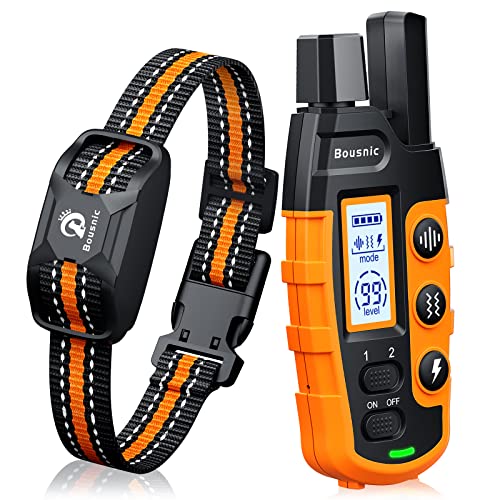 Bousnic Dog Shock Collar
- Humane and Safe, Eliminate Bad Behavior Effectively: Bousnic…
- Extended 3300FT Range: Bousnic Dog Training Collar covers…
- Fits for All Sizes of Dogs 5-120lbs: Bousnic…
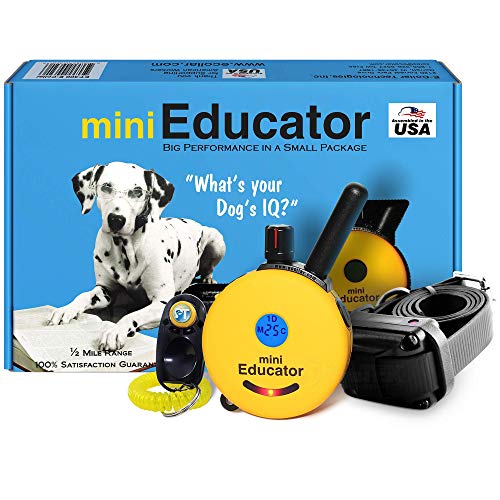 Educator ET-300 Mini E Collar for Dog
- Equipment issues shouldn't interrupt your dog's training
- Designed for dogs 15+ lbs with adjustable 10–26"…
- When your dog's focus shifts to people, pets,…
| Product | Key specs | |
|---|---|---|
| Dog Shock Collar | [4 Custom Humane Training Modes] Train with confidence… [4500FT Remote Range] Enjoy reliable off-leash training in… [IPX8 Waterproof Receiver Collar] Let your dog enjoy… | Check price |
| Bousnic Dog Shock Collar | Humane and Safe, Eliminate Bad Behavior Effectively: Bousnic… Extended 3300FT Range: Bousnic Dog Training Collar covers… Fits for All Sizes of Dogs 5-120lbs: Bousnic… | Check price |
| Educator ET-300 Mini E Collar for Dog | Equipment issues shouldn't interrupt your dog's training Designed for dogs 15+ lbs with adjustable 10–26"… When your dog's focus shifts to people, pets,… | Check price |
 Dog Shock Collar | [4 Effective Training Mode - Recall & Correct… [Extended 4500FT Range - Ultimate Outdoor Freedom] The… [IPX8 Waterproof Collar - Ready for Any Adventure]… | Check price |
As an Amazon Associate we earn from qualifying purchases at no extra cost to you.
Best dog e-collars by training situation
| Situation | Best fit | What to prioritize | Typical market range |
|---|---|---|---|
| First-time owner, basic recall | Entry-level tone, vibration, and low-level stimulation collar | Simple controls, lockout, adjustable intensity, 400–900 yards of range | $100–$200 |
| Regular off-leash work in a large park | Mid-range remote training system | At least 0.5 mile of rated range, 20 or more output levels, waterproof receiver | $180–$300 |
| Professional or advanced field training | High-adjustability system such as Dogtra 1900S | Fine output control, long battery life, rugged construction, tactile buttons | $250–$400 |
| Multiple dogs | Expandable system with separate receiver channels | Individual dog selection, identical controls, clear channel indicators | $200–$500 for a system |
| Wet, muddy, or swimming environments | Fully waterproof receiver and remote | IPX7 or stronger receiver protection, sealed charging ports, corrosion-resistant contacts | $150–$400 |
Our top picks
Best all-around: Garmin Sport PRO
The Garmin Sport PRO is a practical choice for owners who want a physical remote with dedicated controls rather than navigating a phone app. It provides tone, vibration, and stimulation, with 10 stimulation levels and a rated range of up to three-quarters of a mile. The receiver is designed for outdoor use, and the system supports training multiple dogs by adding compatible receivers.
Its main advantage is control clarity. A dial and dedicated buttons make it easier to select the same cue repeatedly while your attention stays on the dog. That matters when teaching recall, because hesitation or pressing the wrong control can make timing less consistent. The trade-off is that 10 stimulation levels offer less fine adjustment than systems with dozens or hundreds of levels.
- Best for: general obedience, recall, hiking, and owners who value simple controls
- Range: up to 0.75 mile under favorable conditions
- Output: tone, vibration, and 10 stimulation levels
- Battery: approximately 60 hours, depending on use
- Limitation: less granular adjustment than high-resolution training remotes
Best for fine adjustment: Dogtra 1900S
The Dogtra 1900S is built for larger, energetic dogs and experienced handlers who need very gradual changes in output. It offers tone, vibration, and a broad 100-level stimulation range, plus a rated range of three-quarters of a mile. Its receiver is highly water-resistant, and the remote uses tactile controls that are useful in cold or wet conditions.
The unusually broad adjustment range does not mean every dog needs a stronger setting. Its value is the ability to make small changes. A handler can move from level 12 to 13 rather than making a large jump, then return to the lowest effective setting. This model is relatively substantial compared with compact systems, so it may be excessive for a small dog or casual backyard training.
- Best for: advanced obedience, field work, and larger dogs
- Range: up to 0.75 mile under favorable conditions
- Output: tone, vibration, and 100 stimulation levels
- Battery: roughly 72 hours of standby and normal intermittent use, depending on conditions
- Limitation: larger receiver and more controls require careful learning before use
Best compact option: Educator ET-300 Mini
The Educator ET-300 Mini suits owners who want a smaller receiver and very precise adjustment for a small or medium-sized dog. It has a rated range of up to half a mile and uses a fine-grained stimulation dial, along with tone and vibration. The remote is designed to reduce accidental button presses, while the receiver is waterproof for outdoor training.
A compact collar is not automatically a better fit: check the receiver’s minimum neck size, contact-point options, and strap width before buying. The ET-300 Mini is most useful when the dog’s size and training needs favor a lighter system, not when a long range rating is the primary concern.
- Best for: smaller dogs, compact carry, and careful low-level adjustment
- Range: up to 0.5 mile under favorable conditions
- Output: tone, vibration, and adjustable stimulation
- Battery: typically about 24 hours of active-use capacity, depending on use
- Limitation: shorter rated range than larger field-training systems
Features that make an e-collar more humane to use
Start with non-stimulation cues
A useful collar should let you train with tone and vibration alone. Begin by pairing a cue with a behavior the dog already understands, such as looking toward you or returning for a reward. Stimulation, if used at all, should not replace teaching, reinforcement, or supervision. It should never be used to punish fear, aggression, confusion, barking caused by distress, or behavior you have not first identified.
Choose fine control over maximum power
More levels are helpful because dogs vary in sensitivity and distractions vary by location. The correct setting is the lowest level that produces a noticeable orientation toward the handler without panic, yelping, freezing, frantic scratching, or avoidance. If the dog shows those signs, stop, lower the setting, and return to reward-based practice.
Look for safety-oriented controls
- A lock or recessed dial to prevent accidental intensity changes
- Separate buttons for tone, vibration, and stimulation
- A clearly marked dog-selection switch for multi-dog systems
- Automatic safety limits or a short stimulation duration
- A remote display or dial that can be read without stopping training
- A receiver that gives an audible or visual low-battery warning
Fit matters more than range
The receiver should sit high on the neck, usually below the jaw and behind the ears, with the contact points touching the skin through the coat without being painfully tight. You should be able to slide two fingers under the strap. Recheck the fit after movement, especially on dogs with thick or shifting coats.
Do not leave a training collar on continuously. Rotate its position, remove it after sessions, and inspect the skin. Extended pressure from any tight collar can cause irritation or sores. Longer contact points may be needed for a dense coat, but they should be selected according to the manufacturer’s guidance rather than tightened excessively.
Range and battery: calculate what you actually need
Advertised range is measured in open conditions. Trees, hills, buildings, vehicles, radio interference, and the dog’s position can reduce usable distance. If your largest training area is 600 yards across, a 0.5-mile system provides a theoretical 880-yard maximum and some margin; a three-quarter-mile system provides more margin, but not necessarily better training.
Battery capacity is easier to evaluate by sessions. Suppose a receiver provides about 24 hours of active-use capacity and you train for 30 minutes, four times each week. That equals two hours weekly, or approximately 12 weeks of receiver runtime before accounting for standby drain, cold weather, and aging. In practice, recharge weekly or before every important outing rather than relying on the maximum figure.
Responsible setup in five steps
- Teach the behavior first. Establish recall, walking, and release cues with food, toys, praise, and a long line.
- Pair the remote cue. Use tone or vibration immediately before a known cue, then reward the correct response.
- Begin in a quiet area. Add distance and distractions gradually; do not begin beside traffic, livestock, or unfamiliar dogs.
- Use the lowest effective setting. Watch body language continuously and stop if the dog appears distressed or confused.
- Finish with success. End after an easy repetition, remove the collar, and inspect the skin and contact points.
Ownership realities and maintenance
The parts most likely to wear first are the strap, contact-point covers, charging-port seals, remote buttons, and rechargeable batteries. Wash mud and salt from the strap, dry the receiver before charging, and keep charging contacts clean. Waterproof does not mean indestructible: follow the manual’s depth and charging-port instructions, and never charge a wet receiver.
Rechargeable batteries gradually lose capacity. If a formerly full charge no longer lasts through a normal outing, replace the battery or receiver according to the manufacturer’s service options. Keep spare straps and contact-point covers available for frequent field use. Before every session, test the remote, confirm the correct dog channel, check the battery, and verify that the receiver is attached securely.
Bottom line
For most owners, the Garmin Sport PRO offers the clearest all-around balance of range, dedicated controls, and outdoor durability. Choose the Dogtra 1900S when fine adjustment and rugged field use matter most, or the Educator ET-300 Mini when a compact system suits your dog. Whatever you buy, prioritize a good fit, reward-based teaching, non-stimulation cues, and controlled progression over maximum intensity or maximum range.





