
Our Top Picks
 MSR PocketRocket 2 Ultralight Camping and Backpacking Stove-5 x 4 x 7.25 inches0.16 poundsCheck on Amazon
 Jetboil MightyMo Ultralight and Compact Camping and Backpacking1-2 People4.1 x 4.1 x 3.75 Inches0.21 PoundsCheck on Amazon
 Jetboil Stash Ultralight Camping and Backpacking Stove Cooking1-2 People4.4 x 4.4 x 5.1 inches0.6 poundsCheck on Amazon
The best backpacking stove for solo hikers in this set depends on how you like to cook. The MSR PocketRocket 2 is the pick if you want a burner-only setup that you pair with your own small pot, and the Jetboil Stash is the pick if you would rather buy an integrated cooking system in one go. One person usually boils about half a liter of water at a time, so a single small burner is enough. The real decisions are fuel, wind protection, how the igniter behaves and what the whole kit weighs once you add a pot and a canister.
Here is what the eight titles actually say. One states a weight (6.7 oz) and an output (10,000 BTU), and that is the Coleman Classic. Two mention piezo ignition. One mentions a butane adapter. One calls itself a cooking system. None states a boil time. Anything else is marked “check the listing” below, and the later sections explain how to check it. This is a buyer’s checklist built from titles and manufacturer-style information, not a performance report.
The eight stoves side by side
MSR PocketRocket 2 Ultralight Camping and Backpacking Stove | Backcountry super hero.


As an Amazon Associate we earn from qualifying purchases. Product prices and availability are accurate as of the date/time indicated.

AOTU Portable Camping Stoves Backpacking Stove with Piezo Ignition Stable Support Wind-Resistance Camp Stove for Outdoor Camping Hiking Cooking


As an Amazon Associate we earn from qualifying purchases. Product prices and availability are accurate as of the date/time indicated.

Portable Camping Stove Backpacking Stove, Specialized Hiking Stove Camping Stove with Piezo Ignition Stable Support Wind-Resistance, Camp Stove for Outdoor cooking Camping Hiking Adventure Cooking


As an Amazon Associate we earn from qualifying purchases. Product prices and availability are accurate as of the date/time indicated.
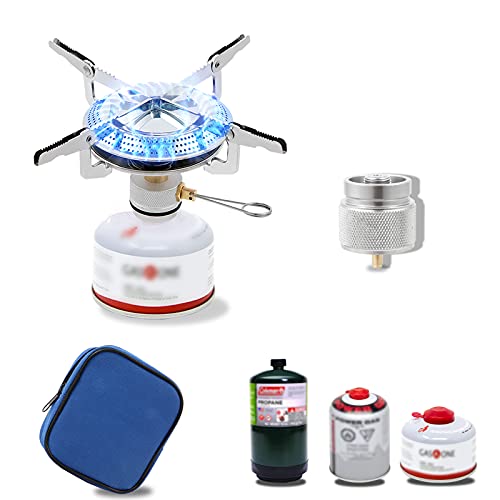
Small Backpacking Stove Portable Camping Stove Burner with Butane Adapter


As an Amazon Associate we earn from qualifying purchases. Product prices and availability are accurate as of the date/time indicated.
Jetboil MightyMo Ultralight and Compact Camping and Backpacking Stove


As an Amazon Associate we earn from qualifying purchases. Product prices and availability are accurate as of the date/time indicated.
Jetboil Stash Ultralight Camping and Backpacking Stove Cooking System


As an Amazon Associate we earn from qualifying purchases. Product prices and availability are accurate as of the date/time indicated.
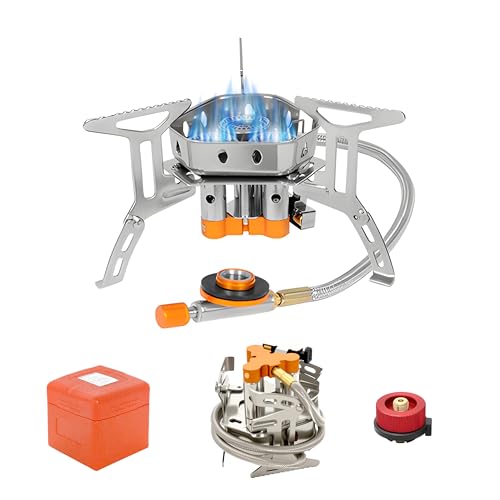
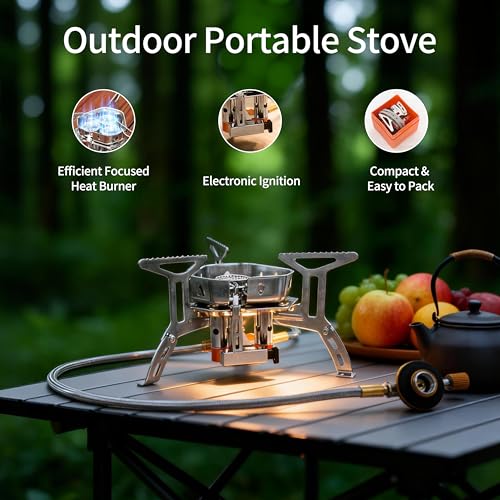
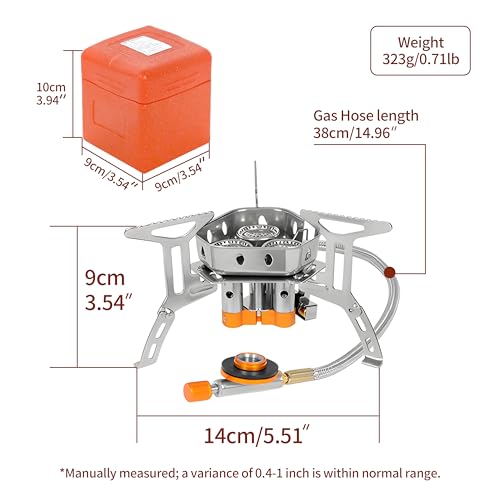
TGpao Ultralight foldable backpacking Gas Stove for camping


As an Amazon Associate we earn from qualifying purchases. Product prices and availability are accurate as of the date/time indicated.

Coleman Classic 1-Burner Backpacking Stove, 10000 BTU | Compact 6.7 oz Design, 10,000 BTU Cooking Power, Adjustable Burner, Folds for Easy Packing


As an Amazon Associate we earn from qualifying purchases. Product prices and availability are accurate as of the date/time indicated.
The table sorts each listing by what its title says it is. Price tiers are relative within this set only: Budget is the lowest group, Premium the highest.
| Listing | What the title says it is | Details stated in the title | Price tier | Best for |
|---|---|---|---|---|
| MSR PocketRocket 2 | Stove sold on its own (fuel not named) | Ultralight, camping and backpacking | Mid-range | Burner-only kit with your own pot |
| AOTU Portable Camping Stove | Stove (fuel not named) | Piezo ignition, stable support, wind-resistance wording | Budget | Cheap entry after checking fuel |
| YCDMLJC Portable Camping Stove | Stove (fuel not named) | Piezo ignition, stable support, wind-resistance wording | Budget | Cheap entry, close cousin of the AOTU |
| Caudblor Small Backpacking Stove | Burner with butane adapter | Small, portable, butane adapter | Budget | Hikers who want butane-capable fuel options |
| Jetboil MightyMo | Stove (check whether a cup is included) | Ultralight and compact | Mid-range | Jetboil-brand burner shoppers |
| Jetboil Stash | Integrated cooking system | Ultralight, “Cooking System” | Premium | One-purchase boil-and-eat kit |
| TGpao Ultralight Foldable Stove | Gas stove, foldable | Ultralight, foldable | Budget | Small packed size on a low budget |
| Coleman Classic 1-Burner | One-burner backpacking stove | 6.7 oz, 10,000 BTU, adjustable burner, folds | Mid-range | Buyers who want stated weight and output |
Stove types and what suits one person
Backpacking stoves fall into four broad families, and knowing which one you are looking at matters more than any single feature. A burner-only canister stove screws onto a pre-filled fuel canister and holds your own pot above the flame. It is light, small and simple, and it is the style most of the budget listings here appear to follow. An integrated system packages the burner with a matching cup or pot so heat transfer is tuned to that one vessel. It is convenient for boiling water, and it tends to cope with wind better than an open burner under a loose pot, though it is bulkier and less flexible for cooking real meals.
The other two families are wood-burning stoves and liquid-fuel stoves. A wood stove burns twigs, so there is no fuel to carry, but many areas treat it as an open fire and ban it in dry periods. A liquid-fuel stove runs on refillable bottles and handles cold well, but it is heavier and wants more maintenance. None of the eight titles here says wood or liquid fuel, so this set is entirely about the first two families. If you hike in a cold climate or at high altitude, remember that canister fuel loses pressure as temperatures fall, so read the fuel guidance for your chosen stove.
For a solo hiker the logic is simple. If you mostly add boiling water to a dehydrated meal, an integrated system or a small burner with a single pot will do. If you want to simmer, fry or cook for longer, a burner with an adjustable valve and a wider pot is more forgiving. Our broader guide to the best camping gas stoves goes deeper on the canister category if you also cook at a car camp.
The eight stoves, one at a time
MSR PocketRocket 2: the burner-only option from a gear specialist
The title reads “MSR PocketRocket 2 Ultralight Camping and Backpacking Stove” with a tagline, “Backcountry super hero.” The tagline is marketing, not a specification. The title does not name the fuel, state the weight, give the packed size or claim a boil time, so open the listing and read all four before you compare it with the others. What the title does tell you is the category: a stove sold by itself, with no pot and no word like “system”, so plan to supply your own pot.
For a solo hiker, a burner-only setup has a practical advantage. You choose the pot, and a single small pot sized for half a liter of water keeps the carried weight down. The tradeoff is that wind management is also your job. Check the listing for the pot supports and how wide a pot they accept, because a narrow base on small supports can tip. If you use a windscreen, follow the manufacturer’s instructions first, since some warn against screens that wrap closely around a stove sitting on a fuel canister because heat can build up.
The mid-range tier means it costs more than the four budget burners here and noticeably less than the Jetboil Stash. Whether that extra buys better flame control, a sturdier build or a more reliable ignition is not in the title, so read recent critical buyer reviews rather than the highest-scoring ones. The title does not mention an igniter, so carry a lighter or matches regardless.
Before buying fuel, confirm exactly which canister type and connection the listing says this stove uses. A mismatch is an avoidable mistake and the title does not settle it.
Pros
- Sold as a stove on its own, so you control pot size and total weight
- “Ultralight” in the title, to be confirmed against the listed weight
- Mid-range tier, well below the integrated system
Cons
- Title omits fuel, weight and packed size
- No igniter mentioned, so a separate lighter is needed
- No pot included, so the full kit weight depends on what you add
Who it’s for: solo hikers who already own a small pot and want a simple burner they can build a kit around.
AOTU Portable Camping Stove: budget piezo burner with a fuel question
The AOTU title packs in a lot of keywords: portable camping stove, backpacking stove, piezo ignition, stable support, wind-resistance, for camping, hiking and cooking. It sits in the Budget tier, as one of the cheapest listings in the group. What it does not say is the fuel, the weight or the folded size. Stoves with push-button igniters are commonly designed around screw-on gas canisters, but that is a general pattern and not a statement in this title, so confirm the fuel type and the connector on the listing page before you buy a canister.
The piezo ignition is a convenience, since it saves you reaching for a lighter every morning. It is also the part most likely to give trouble, because a spark mechanism can fail after a drop, a rainy day or simply wear. Treat it as a bonus and carry a backup lighter. The “wind-resistance” wording is the seller’s claim and comes with no number, so treat it as unverified until buyer reviews describe how the flame behaves in a breeze.
“Stable support” is worth examining in the photos. A solo pot is small and tall, and a stove with short or narrow supports can wobble under it. Look at how the supports fold and whether a lightweight pot sits level. Never use a stove with a damaged seal or a leaking canister.
If you want to pair it with a windscreen, check what the instructions say about distance and material first. A budget stove can be a perfectly reasonable first purchase for short trips close to the road, because the cost of being wrong is low. For a long trip far from help, the lack of stated weight and the unproven igniter argue for a backup plan.
Pros
- Budget tier
- Piezo ignition and stable support named in the title
- Wind-resistance claimed by the seller
Cons
- Fuel type, weight and folded size are not in the title
- Piezo igniters can fail, so a lighter is still needed
- Wind claim is unquantified
Who it’s for: new hikers on short trips who have confirmed the fuel type and want a low-cost starting burner.
YCDMLJC Portable Camping Stove: the near-twin of the AOTU
The listing’s brand field reads YCDMLJC, though the brand does not appear in the title text, which begins “Portable Camping Stove Backpacking Stove, Specialized Hiking Stove.” It then repeats the same set of phrases as the AOTU: piezo ignition, stable support, wind-resistance, for outdoor cooking, camping, hiking and adventure cooking. The two titles are so close that you should assume similar positioning and then look for the differences on the listing pages themselves. Both sit in the Budget tier.
That similarity is itself useful information. When two low-priced listings use almost the same wording, the specifics that separate them are the ones the title leaves out: fuel type, weight, folded dimensions, what is in the box and whether a case is included. Put the two listings side by side and compare those items, not the headline claims. If either lacks a clear weight, treat it as a gap, because a backpacking stove that does not state its weight is asking you to take the weight on trust.
The word “specialized” in the title is marketing. It does not describe a feature you can verify. The same goes for the wind-resistance claim, which, like the AOTU’s, is a seller’s claim without a figure attached. Look in buyer photos for how the pot supports look in use and whether the burner head appears shielded.
As with any piezo-equipped stove, bring a lighter. Keep your fuel canister away from heat sources, never store it in a hot vehicle, and follow the manufacturer’s instructions for connecting and disconnecting it. If the instructions in the listing or the box are thin, that is a reasonable reason to prefer a better-documented product.
Pros
- Budget tier
- Piezo ignition and stable support named in the title
- Easy to compare directly against the AOTU
Cons
- Fuel, weight and packed size are not in the title
- Brand name is not in the title text
- Wind-resistance is a claim without a number
Who it’s for: price-driven solo hikers who will compare it with the AOTU on the listing pages and pick whichever documents itself better.
Caudblor Small Backpacking Stove: the butane adapter listing
The title is “Small Backpacking Stove Portable Camping Stove Burner with Butane Adapter,” and the brand field reads Caudblor. The unusual detail is the adapter. A butane adapter suggests the burner can be connected to butane fuel, but the title does not say which canister types or valve connections it accepts, and canister compatibility is not something to guess. Read the listing for the supported fuel containers and the exact adapter description before buying any fuel.
That fuel question is the main thing to settle. Butane-heavy canisters can be cheap and widely sold in some regions, and they can struggle in cold weather because butane vaporizes poorly at low temperatures. That is general knowledge about the fuel, not a claim about this stove, and it means a shoulder-season hiker should check what mix the supported canisters contain. For summer trips at moderate temperatures, it matters less.
The title also uses the word “burner,” which hints at a simple burner head and not an integrated kit. No pot, igniter, weight or packed size is mentioned. The Budget tier makes it attractive for a hiker who wants a spare or a second stove for a cabin or car camp, but for a primary trail stove, the missing weight is a concern. Add up the stove, the adapter, a small pot and the fuel before deciding it is light enough.
Any adapter introduces another connection point, and every connection near fuel needs care. Follow the maker’s instructions, inspect seals before each trip, connect fuel away from open flames, and stop using any fitting that leaks or looks damaged.
Pros
- Budget tier
- Butane adapter named in the title
- Described as small and portable
Cons
- Supported canister types are not in the title
- No weight, igniter or packed size stated
- Extra adapter adds one more connection to inspect
Who it’s for: budget-minded hikers who have confirmed which canisters it accepts and want butane-capable flexibility.
Jetboil MightyMo: Jetboil’s stove listing, not its system listing
The title is “Jetboil MightyMo Ultralight and Compact Camping and Backpacking Stove.” Jetboil is known for integrated cooking systems, but this title says “stove” and not “cooking system,” and that distinction is the thing to verify. Open the listing and read the contents: does it include a cup or pot, a stand or a lid? The title does not answer, so the answer on the page is what counts. Compare it with the Stash, whose title does use the words “Cooking System.”
Both “ultralight” and “compact” appear in the title, but neither comes with a figure. If you plan to carry it on a multi-day trip, check the listed weight and the packed dimensions, and then add your pot (if it does not come with one) and a fuel canister. Many hikers forget that the real number is the entire kit and not the burner alone.
It sits in the Mid-range tier, near the upper edge of that group. That price is higher than the bargain burners and meaningfully below the Stash. What the money buys is not spelled out in the title. Possible differences, such as ignition, a regulated flame or integrated pot supports, should be confirmed on the listing and with recent critical buyer reviews. Do not assume that a known brand name guarantees performance in wind or cold.
The title does not give a boil time. If the listing page quotes one, treat it as a manufacturer figure from specific conditions, and note that wind, cold fuel and a partly empty canister can all slow real-world boiling. For safe use, follow the instructions for attaching and removing the canister, and only cook outdoors on level ground.
Pros
- “Ultralight and compact” in the title, to be checked against the listing
- Mid-range tier, below the integrated system
- Same brand family as the Stash for easy comparison
Cons
- Title does not say whether a cup or pot is included
- No weight, fuel or ignition details stated
- Price is above the budget burners
Who it’s for: hikers who like the brand and will confirm exactly what is in the box before comparing it with cheaper burners.
Jetboil Stash: the integrated cooking system
This is the only listing in the set whose title uses the words “Cooking System”: “Jetboil Stash Ultralight Camping and Backpacking Stove Cooking System.” That wording points to an integrated design, where the burner and a matching cup or pot are packaged together, but the title gives no capacity, weight or packed size, so confirm all three. It is also the Premium tier by a wide margin, the most expensive listing here, which is the main thing a budget-conscious hiker has to weigh.
An integrated system suits solo hiking because one person mostly boils water. A matching pot and burner means you do not hunt for a pot that fits the supports. Check the listing for whether a lid and cup cover come in the box. The tradeoff, as with all such systems, is flexibility: a narrow cup is good for boiling and rehydrating and less good for frying or cooking for two. If you often cook beyond boil-and-pour, check the listed capacity and whether a separate pot or pan can be used.
The “Stash” name and “ultralight” wording suggest an emphasis on small packed size, but again that is an inference from the name, not a figure. Pull up the listing, find the stated weight and the packed dimensions, and compare them with a burner-plus-pot combination that you could assemble from the other listings. A system can look expensive and still weigh about the same as a loose kit, or it can weigh more. The title cannot settle that.
The title does not mention an igniter, a boil time or the fuel connection. Check each, and bring a backup lighter. Use it only outdoors, never inside a tent or vestibule.
Pros
- Title explicitly calls it a cooking system
- Burner and cup matched as a set
- “Ultralight” in the title, to be checked against the listing
Cons
- Premium tier, the highest in the set
- Less flexible for cooking beyond boiling than a burner with a wide pot
- Weight, capacity and ignition are not in the title
Who it’s for: solo hikers who mostly boil water, want one box with everything matched and accept the higher price.
TGpao Ultralight Foldable Gas Stove: the packability pitch
The title reads “TGpao Ultralight foldable backpacking Gas Stove for camping.” Three words matter: ultralight, foldable and gas. “Gas” is the clearest statement of fuel family in any budget title here, though it does not say which gas canister or connection. Foldable suggests the supports collapse for packing, and that is a real advantage for a solo hiker who stores the burner in a small pot. Neither claim is accompanied by a weight or a folded size, so check both on the listing.
The Budget tier makes it a sensible low-risk purchase for someone building a first kit. The usual cautions of cheap folding burners apply, and they are worth checking rather than assuming: how rigid the supports look in buyer photos, how the folding joints are built, and whether a small pot sits level. Reports of wobbly supports or bent arms in recent critical reviews would be a warning sign.
The title does not mention an igniter or any wind-related feature. Without an igniter, you will light the burner with a lighter or a ferrocerium striker, which is not a drawback so long as you carry one. Without wind claims, you should plan on wind protection from your campsite choice, a natural windbreak and, where the manufacturer’s instructions allow, a screen.
A foldable burner is a good candidate to nest inside a small cook pot with a canister, so check the folded dimensions against the pot you intend to use. A kit that nests saves pack space, even if the weight is similar.
Pros
- Budget tier
- Ultralight and foldable named in the title
- Title identifies it as a gas stove
Cons
- No weight, folded size or canister details stated
- No igniter mentioned
- Foldable joints and supports are worth scrutinizing
Who it’s for: solo hikers building a first, low-cost kit who care about small packed size and will carry their own lighter.
Coleman Classic 1-Burner Backpacking Stove: the one with numbers
This is the most informative title in the set. It states “10000 BTU,” “Compact 6.7 oz Design,” “Adjustable Burner” and “Folds for Easy Packing.” The 6.7 oz figure is the weight stated by the seller, and 10,000 BTU is the stated output. Both are seller figures, not measurements from us, and the listing should say what the weight includes. The title does not say which fuel it burns, so check that before buying a canister.
A stated weight is useful because it lets you do arithmetic. Add a small pot, a lighter and the fuel, and you have a defensible kit weight. By comparison, several of the lighter-sounding listings give you “ultralight” and nothing more. Whether 6.7 oz is light enough depends on what you compare it with, and the listings that do not state a weight leave you unable to check. A hiker counting every ounce may find a lighter burner, while one who values transparency will appreciate this title.
The “adjustable burner” wording is relevant to simmering. A solo hiker who wants to warm a sauce or cook oatmeal without scorching it benefits from a valve that can be turned down. The title mentions no igniter and no wind features, so carry a lighter and plan your windbreak.
It sits in the Mid-range tier, below the MSR and the Jetboil MightyMo and above the budget burners. Whatever you buy, download the manual before the trip and read the sections on connecting fuel and on storage.
Pros
- Title states weight (6.7 oz) and output (10,000 BTU)
- Adjustable burner named in the title
- Folds for packing
Cons
- Fuel type is not stated in the title
- Not the lowest-priced listing
- No igniter or wind features mentioned
Who it’s for: solo hikers who want a stove whose weight and output are on the page and who plan to simmer as well as boil.
How we picked these
This page was written by the Editorial team using published specifications, manufacturer documentation and buyer reviews. Nobody on the team used or measured these units. The eight listings came from a fixed product set, and we built the comparison from what each title says, marking everything else as “check the listing.” We did not rank by review scores, because those numbers move daily and are not part of the source data.
Three filters shaped the write-up. First, category honesty: we sorted each listing into burner-only stove or integrated system, and we said so when a title does not make it clear. Second, fit for one person: a solo hiker needs one small pot of capacity, a reasonable weight and a flame that survives a breeze, so we looked for what each title says about those things. Third, transparency: a title that states its weight and output, as the Coleman does, gives you something to check, and a title that says only “ultralight” does not.
Boil times, fuel economy and wind performance are the areas where seller claims and real conditions diverge the most. None of the eight titles provides a boil time, so any figure you see on a listing page is a seller claim from unspecified conditions. For a real-world picture, read the recent critical buyer reviews on each product, since they tend to describe failures such as loose supports, igniters that stop clicking or fuel connections that leak. Treat them as clues to investigate, not as proof.
A fuel budget for three nights, worked through
The numbers below are a labeled estimate based on stated assumptions. They are not measurements of any product, and your results will vary with wind, cold, altitude and how you cook.
- Water per boil: 0.5 liter, enough for one dehydrated meal or two hot drinks.
- Boils per day: 3 (breakfast drink, afternoon drink, dinner).
- Trip length: 3 nights, about 4 days of cooking, so 12 boils.
- Starting water temperature: 10 C, heated to 100 C.
Heating 0.5 liter by 90 degrees takes about 188 kilojoules (0.5 kg x 4.186 kJ per kg per degree x 90). That is the energy that ends up in the water. A real stove loses much of what it burns. Canister gas contains roughly 45 megajoules per kilogram, which we use as a round planning figure, and the efficiency you assume decides everything else.
| Scenario (assumed efficiency) | Fuel per boil | Fuel for 12 boils |
|---|---|---|
| Open burner in cold or windy conditions (25 percent) | about 17 g | about 200 g |
| Open burner in calm conditions (35 percent) | about 12 g | about 144 g |
| Integrated system in calm conditions (50 percent, assumed) | about 8 g | about 100 g |
The 50 percent row is an assumption about integrated designs, not a figure from the Stash listing, so treat it as a what-if. The practical reading is that a single canister is usually enough for a solo three-night trip if you mostly boil water, and that plenty of margin is cheap insurance. Cold fuel, strong wind, lids left off and longer simmering all push consumption toward the top row. If you plan to cook rather than just boil, raise the figures.
Two habits make the budget real. Weigh your canister at home before you leave and again after the trip to learn your own consumption, since a half-full canister is hard to judge by feel. And keep a small reserve beyond the estimate, because running out of fuel on day three is a bigger problem than carrying an extra thirty grams. For related planning, our guide to whether you need a backpacking water filter explains how filtering reduces the amount of water you need to boil, and our bear canister guide covers where your food and stove fuel should be stored in bear country.
Wind, igniters and fuel compatibility
Wind is the biggest reason a stove burns more fuel than the math says. Two titles here claim wind-resistance, and both are seller claims with no number attached. Integrated systems tend to shelter the flame more than a bare burner under a loose pot, but only the Stash is titled that way. For burner-only models, choose a sheltered cooking spot, use natural windbreaks like rocks or terrain, and follow the manufacturer’s instructions on screens before using any.
Igniters deserve the same skepticism. Two titles name piezo ignition, and the rest are silent. A piezo igniter is convenient, but it can fail after a knock in the pack, so carry a lighter or matches. Store them in a small waterproof bag. If an igniter fails mid-trip, you lose nothing but a few seconds, provided you planned for it.
Fuel compatibility is where titles say the least. The Caudblor mentions a butane adapter, the TGpao says gas, and none of the eight titles specifies a canister brand or a thread type. That means you should confirm, on each listing, which canister type and connection the stove uses before you buy fuel. Do not assume that canisters from different brands are interchangeable until the manufacturer says so, and never force a connection that does not thread smoothly. If you are traveling, check whether the canisters your stove needs are sold at your destination, since airlines generally restrict fuel canisters in luggage and local shops may stock only certain types.
Weight and packed size: comparing when titles do not say
Only one title states a weight, so you will have to gather the rest from the listing pages. Make a short table for yourself with five columns: stove weight, pot weight, lid, fuel and lighter. Add them for each candidate. A 3-ounce difference between two burners vanishes if one has a pot that is much heavier or one needs a larger canister. Weight stated in a listing can also mean different things, such as stove only, stove with case, or whole kit, so read the footnotes.
Packed size matters as much as weight. A foldable burner that nests inside a small pot with a canister takes almost no extra space in your pack, while an integrated system has a fixed shape. Measure your pot before buying and compare it with the stated folded dimensions. If you carry a bear canister, remember that it sets your pack volume, and see our backpacking backpack guide to plan where the kitchen fits.
Safety rules that apply to every stove here
Stoves and open flames are a risk to you and to the land. Follow the manufacturer’s instructions for the specific unit you buy, and treat the points below as general cautions that do not replace them.
- Never use a stove inside a tent, vestibule or enclosed shelter. Fire and carbon monoxide are the concerns, and tent fabric can ignite quickly.
- Check local fire restrictions before every trip, and again if the weather turns dry. Some areas restrict all open flames, including stoves.
- Set the stove on level, non-flammable ground with a wide clear zone around it, and never leave it lit and unattended.
- Keep fuel canisters away from heat, direct sun for long periods and the stove itself while it is lit.
- Do not attach, remove or swap a fuel canister near an open flame or a hot stove.
- Inspect seals and connections before each trip, and retire any damaged canister or fitting.
- Let the stove cool completely before packing it.
Mistakes solo hikers make with backpacking stoves
Buying fuel before confirming compatibility. Titles rarely name the canister connection, so check the listing first. Trusting “ultralight” without a number. Several titles use the word, only one gives a weight. Skipping the backup lighter. Piezo igniters are convenient but not reliable enough to be your only plan. Cooking in the vestibule. It feels sheltered in rain, but it is the most dangerous place to use a stove. Ignoring fire restrictions. A ban can apply to stoves you assumed were exempt. Carrying too much pot. A big pot adds weight and needs more fuel for each boil. Not practicing at home. A trial boil in the yard teaches you how the stove handles a breeze and how much fuel a typical meal needs, before the lesson costs you a cold dinner.
Where this set falls short
There is no wood-burning stove, no alcohol stove and no liquid-fuel stove among the eight. If you hike where canisters are hard to find, in very cold conditions or on long expeditions, you may want a different family altogether. The set is also thin on stated numbers, so most comparisons depend on information outside the titles. Treat this page as a framework for checking listings, and bring your own checklist.
Verdict
For most solo hikers who want a burner and a pot of their own, the MSR PocketRocket 2 is the pick in this set, once you have confirmed its fuel and weight on the listing. The Jetboil Stash is the pick for hikers who mostly boil water and would rather buy a matched cooking system, at the top price tier. For the lowest cost, the AOTU and YCDMLJC burners are the entry points, provided you verify their fuel and carry a lighter. The Coleman Classic is the choice if you want a title that states its weight and output, and the TGpao suits hikers who put packed size first. Whichever you choose, check local fire restrictions and never cook in your tent.
Frequently asked questions
How much stove does one hiker really need?
One hiker mostly boils water for a dehydrated meal and a hot drink or two, so a single small burner and one pot are enough. Extra burners, large pans and heavy bases add weight without adding capability. What matters more is a stable support for your pot, a way to light the stove that works in wind, and a fuel plan that covers the days between resupplies. Check each listing for weight and packed size, because most titles state neither.
What is the difference between a canister stove and an integrated cooking system?
A burner-only canister stove screws onto a fuel canister and you supply the pot, which keeps the kit flexible and usually lighter. An integrated cooking system packages the burner with a matching cup or pot so the two work together, which can be convenient for boiling water but is less flexible for real cooking. Among these listings, only the Jetboil Stash calls itself a cooking system in its title. Check the contents list for any other Jetboil or kit-style listing.
Do I need to carry a backup way to light the stove?
Yes. Two titles in this set mention piezo ignition, but a push-button igniter is a small mechanical part that can fail after rough handling or when wet. A lighter or matches kept dry in a small bag weigh almost nothing and remove the single most common point of failure. If a listing does not mention an igniter at all, assume you need a separate lighter and plan for it.
Can I use a stove inside my tent or vestibule?
No. Stove manufacturers warn against operating stoves in tents, vestibules and other enclosed spaces because of fire risk and carbon monoxide, which combustion produces even in efficient burners. Tent fabric can ignite quickly. Cook outdoors in an open, ventilated spot on stable, level ground, away from tent walls and dry vegetation, and never leave a lit stove unattended. Follow the instructions that come with your specific stove, and ask the manufacturer if anything is unclear.
How do I check whether a stove is allowed where I hike?
Land managers often restrict open flames, and some restrict all stoves, during dry or high-risk periods. Rules differ by park, forest and season. Before every trip, read the current fire restrictions on the agency website or call the local ranger office. Many agencies treat stoves with a shutoff valve differently from open fires, but that is not universal, so confirm the specific rule for your route and dates rather than assuming.





