
The best Leica cameras in 2026 come down to three systems: choose the M-system (like the M11-P) for manual rangefinder control and the M-mount, the Q-system (like the Q3) for a fixed-lens, full-frame everyday carry, and the SL-system (like the SL3) for autofocus versatility and the L-Mount. Your budget and shooting style determine which tradeoff makes sense, not which camera is objectively better.
Our top picks
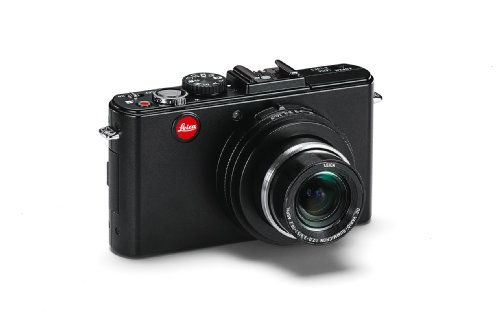 Leica D-LUX5 10.1 MP Compact Digital Camera
- 1/1.63" CCD image sensor with a resolution of…
- Low image noise, more precise details and natural…
- Intuitive handling concept with automatic and manual setting…
 Leica D-Lux 8 Compact Digital Camera
- Compact Powerhouse with a 17MP Four Thirds CMOS…
- Versatile Leica 10.9-34mm f/1.7-2.8 Lens for Any Scene:…
- Advanced OLED Viewfinder & High-Resolution LCD Display: Compose…
 Leica V-LUX
- 20MP 1" Mos sensor
- 25-400Mm equivalent, 16x optical zoom
- 0.39" Oled 2, 360k-dot EVF
| Product | Key specs | |
|---|---|---|
| Leica D-LUX5 10.1 MP Compact Digital Camera | 1/1.63" CCD image sensor with a resolution of… Low image noise, more precise details and natural… Intuitive handling concept with automatic and manual setting… | Check price |
| Leica D-Lux 8 Compact Digital Camera | Compact Powerhouse with a 17MP Four Thirds CMOS… Versatile Leica 10.9-34mm f/1.7-2.8 Lens for Any Scene:… Advanced OLED Viewfinder & High-Resolution LCD Display: Compose… | Check price |
| Leica V-LUX | 20MP 1" Mos sensor 25-400Mm equivalent, 16x optical zoom 0.39" Oled 2, 360k-dot EVF | Check price |
 Leica Q3 Compact Digital Camera | Leica Q3: A groundbreaking digital camera renowned for… Triple Resolution Sensor: Featuring a first-ever 60MP BSI… Versatile Framing: Offers digital zoom options up to… | Check price |
As an Amazon Associate we earn from qualifying purchases at no extra cost to you.
M vs Q vs SL: The Core Differences That Actually Matter
Leica organizes its full-frame digital lineup around sensor size, lens mount, and how much the camera automates for you. Understanding these three factors prevents buying the wrong system.
1. Sensor and Image Character
All three main systems now use full-frame sensors, but they process images differently. The M11 family and Q3 family use a 60MP BSI CMOS sensor with Triple Resolution Technology, allowing you to shoot at 60MP, 36MP, or 18MP raw with the same sensor to balance detail and file size. The SL3 uses a similar 60MP sensor but pairs it with phase-detection autofocus and in-body image stabilization, which the M system lacks entirely.
The Leica M11 Monochrom is the exception: it uses a 60MP monochrome sensor with no color filter array, delivering higher per-pixel sharpness and native ISO up to 200,000 for black-and-white specialists. Leica’s APS-C and smaller-sensor lines like the D-Lux 8 and Sofort 2 instant camera exist for compact budgets, but for the best Leica cameras for serious stills, the decision is between these full-frame options.
2. Lens Mount: Flexibility vs. Commitment
- M-Mount (M-System): Manual focus only, mechanical rangefinder coupling. The mount has been unchanged since 1954, so lenses from decades ago work on a new M11-P with an adapter-free fit. Focus is entirely manual via a rangefinder patch. This is deliberate slowness and complete control.
- Fixed Lens (Q-System): No mount. The Q3 has a fixed Summilux 28mm f/1.7 ASPH. lens, and the Q3 43 has a fixed APO-Summicron 43mm f/2 ASPH. lens. Both offer macro mode and digital crop to 35mm, 50mm, 75mm, and 90mm framelines. You gain compactness and simplicity but lose lens interchangeability.
- L-Mount (SL-System): Autofocus bayonet developed with Panasonic and Sigma via the L-Mount Alliance. The SL3 accepts Leica SL, Leica TL, Sigma, and Panasonic L-Mount lenses, from 16mm to 500mm, with full autofocus, image stabilization, and weather sealing. It is the only Leica system that functions like a modern mirrorless workhorse.
3. Manual Controls and Shooting Experience
This is where Leica systems feel completely different in the hand. The M11 has no autofocus, no IBIS, and relies on a top-plate shutter speed dial, aperture ring on the lens, and ISO via menu or button. Metering is through the viewfinder, focusing is via rangefinder patch. It rewards deliberate shooting but punishes fast action.
The Q3 adds autofocus, IBIS, and a tilting touchscreen while keeping a classic aperture ring, shutter dial, and a thumbwheel. You can shoot fully manual or fully automatic without changing systems.
The SL3 is the most conventional: mode dial, AF joystick, dual card slots, IBIS rated to 5.5 stops, and a high-resolution EVF. If you come from Sony, Canon, or Nikon mirrorless, the SL3 will feel familiar. If you want a tactile, analog-style interaction, the M11 and Q3 are closer to that ideal.
Spec Comparison: Size, Weight, and Real-World Numbers
Spec sheets do not tell the whole story, but weight, battery endurance, and stabilization do affect how often you will actually carry the camera on trails, travel, or daily walks.
| Model | Sensor / Processor | Lens Mount | Weight (body only) | Stabilization | EVF / Viewfinder | Battery Life (CIPA) | Video |
|---|---|---|---|---|---|---|---|
| Leica M11-P | 60MP Full-Frame BSI CMOS, Maestro III | Leica M (manual focus) | 455g (black aluminum), 530g (silver brass) | None | 0.73x optical rangefinder | ~700 shots (BP-SCL7) | None (stills only) |
| Leica M11 Monochrom | 60MP Full-Frame Monochrome BSI CMOS | Leica M (manual focus) | 455g (black aluminum) | None | 0.73x optical rangefinder | ~700 shots | None |
| Leica Q3 | 60MP Full-Frame BSI CMOS, Maestro IV | Fixed 28mm f/1.7 Summilux | 743g | Yes, IBIS | 5.76M-dot OLED EVF | ~350 shots (BP-SCL6) | 8K 30p, 4K 60p |
| Leica Q3 43 | 60MP Full-Frame BSI CMOS, Maestro IV | Fixed 43mm f/2 APO-Summicron | yard743g | Yes, IBIS | 5.76M-dot OLED EVF | ~350 shots (BP-SCL6) | 8K 30p, 4K 60p |
| Leica SL3 | 60MP Full-Frame BSI CMOS, Maestro IV | L-Mount (AF) | 769g | Yes, 5.5-stop IBIS | 5.76M-dot OLED EVF, 3.2″ tilting touchscreen | ~400 shots (BP-SCL6) | 8K 30p, 4K 60p, ProRes internal |
| Leica D-Lux 8 | 17MP Four Thirds CMOS | Fixed 10.9-34mm f/1.7-2.8 (24-75mm equiv.) | 403g | Yes | 2.36M-dot OLED EVF | ~300 shots | 4K 30p |
Weight differences become significant on long hikes: an M11-P with a Summicron-M 35mm f/2 ASPH. totals about 700g, while an SL3 with a Vario-Elmarit-SL 24-70mm f/2.8 ASPH. exceeds 1,600g. The Q3 sits in the middle as a one-lens, grab-and-go kit that never requires a lens decision.
Decision Matrix: Which Leica System Fits Your Situation
Use this matrix to map your budget, experience, and intended use to the right system instead of choosing purely on megapixels.
| Your Situation | Best Fit System | Why It Fits | General Market Range (Body or Kit, New) |
|---|---|---|---|
| Budget under $6,000, want Leica color and handling, compact for travel | D-Lux 8 or used Q2 | Smaller sensor but classic controls, pocketable, lowest cost of entry to Leica image processing | $1,800 – $5,500 |
| One-camera, one-lens simplicity, street/travel/documentary | Q3 (28mm) or Q3 43 (43mm) | Full-frame 60MP with AF and IBIS, no lens buying needed, excellent for daily carry | $6,500 – $7,500 |
| Manual focus enthusiast, value longevity and lens heritage | M11 or M11-P | Rangefinder experience, mechanical controls, M-lenses hold value for decades, thinnest body | $8,500 – $9,500 body only |
| Hybrid shooter: wildlife, landscape, portraits, video | SL3 | Autofocus, IBIS, L-Mount lens breadth, professional video and dual card slots | $6,900 – $8,000 body only |
| Black-and-white specialist, darkroom-style workflow | M11 Monochrom | Dedicated monochrome sensor, no demosaicing softness, highest high-ISO usability for B&W | $9,000 – $9,500 body only |
Cost per use calculation helps justify the ranges: A Q3 at around $7,000 used three times per week for three years equals roughly 468 uses, or about $15 per outing before accessories. An SL3 system that requires two additional L-Mount lenses at $1,500-$2,500 each pushes the per-use cost higher unless you shoot professionally and can amortize it across paid work. For infrequent shooters, the fixed-lens Q3 often delivers the lowest total ownership cost.
Picks by Budget and Style in 2026
Best for Everyday Carry and First Leica: Leica Q3
The Q3 remains the most recommended entry to the best Leica cameras if you want full-frame quality without building a lens system. The 28mm focal length is ideal for environmental portraits, interiors, architecture, and landscapes, and digital crop modes let you simulate 35mm, 50mm, and 75mm without changing glass. Autofocus is reliable for street work, and USB-C charging plus wireless tethering to the Leica FOTOS app makes it practical for travel. Choose the Q3 43 if you prefer a natural field of view closer to human vision and shoot more people than places; the 43mm f/2 APO lens is sharper edge-to-edge but less versatile indoors.
Best for Tactile Control and Long-Term Value: Leica M11-P
The M11-P adds internal 256GB storage, a sapphire rear screen, and no red dot for discretion compared to the standard M11, but both share the same sensor and rangefinder. This is the camera for photographers who want aperture, shutter speed, and focus to be physical actions rather than menu settings. The trade-off is a steep learning curve: rangefinder focusing takes practice, there is no autofocus fallback, and wide-angle framing requires external viewfinders. In return, you get the smallest full-frame Leica body and access to compact M primes like the Summicron-M 35mm f/2, Summilux-M 50mm f/1.4, and Elmarit-M 28mm f/2.8 that weigh half what SL primes do.
Best for System Versatility: Leica SL3
The SL3 is the only choice if you need autofocus tracking, telephoto reach, or serious video. Its L-Mount lets you pair Leica’s APO-Summicron-SL primes with more affordable Sigma Art options or Panasonic zooms for field work. IBIS allows handholding at 1/15s with a 50mm lens, and weather sealing with IP54-rated protection makes it the most outdoor-capable Leica. It is heavier and less discreet, but for hikers who also photograph wildlife or want to cover everything from 21mm to 200mm, it is far more flexible than M or Q.
Lower-Budget Leica Character: Leica D-Lux 8
If the M, Q, and SL systems exceed your budget, the D-Lux 8 delivers Leica color science and a manual control layout in a compact body. Its Four Thirds sensor and fixed zoom cannot match full-frame depth of field, but for daylight travel and as a second camera to a phone, it provides the Leica interface and JPEG rendering at a general market range well under $2,500.
Durability and Ownership Realities
Leica bodies are built for longevity, but ownership costs extend beyond the initial purchase.
- What wears first: Rangefinder calibration on M bodies can drift after heavy impact or temperature cycling; budget for a CLA (clean, lube, adjust) every 3-5 years if you shoot frequently. On Q3 and SL3, the most common wear points are the rubber thumb rest and the tilting screen hinge, both replaceable but worth protecting with a half-case.
- Batteries and consumables: The M11 series uses BP-SCL7 and the Q3/SL3 share BP-SCL6. They are not cross-compatible. Real-world life drops 20-30% in cold weather below freezing, so carry one spare for day hikes and two for winter. Leica batteries charge via USB-C in the Q3 and SL3 but require an external charger for the M11.
- Sensor cleaning: M cameras have no IBIS dust-shaking mechanism and no sensor cover; dust is more visible at f/11-f/16. Use a blower before a wet swab, and avoid changing M lenses in wind or on dusty trails. The SL3’s IBIS unit vibrates to shake dust, but L-Mount lenses should still be swapped with the body facing down.
- Common mistakes: Mounting M lenses without updating the lens detection menu leads to incorrect EXIF and vignetting correction. Leaving the Q3’s macro dial locked causes missed focus at distance. On the SL3, forgetting to set the mechanical shutter vs. electronic shutter can introduce banding under flickering light.
- Weather handling: Only the SL3 and Q3 are formally weather-sealed. The M11 is splash resistant but not sealed at the lens mount; use a rain sleeve in sustained rain. After coastal or desert exposure, wipe the brass or aluminum top plate with a dry microfiber to prevent salt or fine sand from abrading the finish.
How to Choose Between M, Q, and SL Without Regret
Ask three questions in order: 1) Do you want interchangeable lenses? If no, the Q3 ends the search. 2) Do you need autofocus? If yes, eliminate the M-system. 3) Is size or speed more important? If size and discretion outweigh speed, choose M. If speed, stabilization, and lens variety outweigh size, choose SL. Most buyers who hesitate between M and Q are actually debating manual experience versus convenience; renting both for a weekend clarifies that faster than any spec comparison.
FAQ
Is a Leica M camera good for beginners?
The M-system has the steepest learning curve because it is manual focus only and uses a rangefinder. Beginners can learn it, but expect several weeks to focus accurately at f/1.4. The Q3 or SL3 with autofocus is more forgiving while still offering manual controls to grow into.
Can I adapt M lenses to the SL3?
Yes, with the Leica M-Adapter L you can mount virtually any M lens on the SL3 with focus peaking and magnification. You retain manual focus and aperture control but gain IBIS and EVF focusing aids, which many photographers prefer for critical focus over the rangefinder.
Which Leica holds its value best?
Historically, M bodies and M primes depreciate the least due to cross-generational mount compatibility and limited production. Q series holds value well as a fixed-lens compact, while SL bodies follow typical mirrorless depreciation curves but L-Mount lenses from Leica hold value better than third-party options.





