
Our Top Picks
The best DJI action cameras for most buyers in this set are the recent Osmo Action combos, with the Action 5 Pro Essential Combo as the balanced all-rounder and the Action 4 Essential Combo as the lower-priced way in. The list also covers the 8K Action 6 variants, a large accessory bundle, the Osmo Pocket 3 and the Osmo Nano. Two of those are not action cameras in the classic sense, so we flag them where it matters.
Top picks at a glance
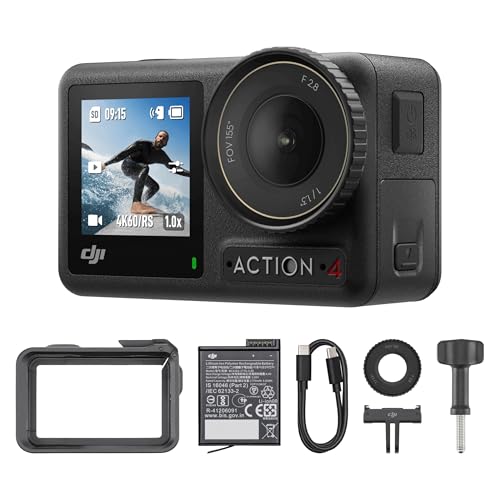
DJI Osmo Action 4 Essential Combo, Waterproof Action Camera Vlogging Camera | 1/1.3" Sensor, 4K/120fps Video, Stunning Low-Light Imaging, 10-bit & D-Log M Color Performance, Long-Lasting 160 Mins


As an Amazon Associate we earn from qualifying purchases. Product prices and availability are accurate as of the date/time indicated.

DJI Osmo Action 5 Pro Essential Combo, Waterproof Action Camera | 1/1.3" Sensor, 4K/120fps Video, Subject Tracking, Stabilization, Dual OLED Touchscreens, 47GB Storage, Vlogging Camera


As an Amazon Associate we earn from qualifying purchases. Product prices and availability are accurate as of the date/time indicated.
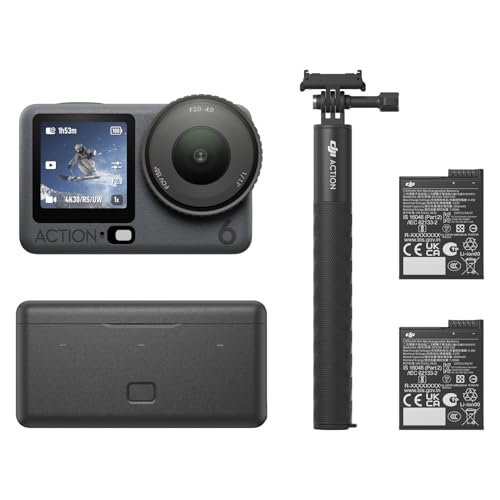
DJI Osmo Action 6 Enhanced Combo, 8K Waterproof Action Camera | 1/1.1" Square Sensor, Variable Aperture f/2.0–f/4.0, Extended Battery Life with 2 Batteries, 1.5m Extension Rod, Battery Case




As an Amazon Associate we earn from qualifying purchases. Product prices and availability are accurate as of the date/time indicated.

DJI Osmo Action 4 Waterproof Action Camera Bundle, 1/1.3" Sensor | 4K/120fps Video, Stunning Low-Light Imaging, Original Essential Combo + 58 Piece Accessory Kit



As an Amazon Associate we earn from qualifying purchases. Product prices and availability are accurate as of the date/time indicated.

DJI Osmo Action 6 Capture More Combo, 8K Waterproof Action Camera | 1/1.1" Square Sensor, Variable Aperture of f/2.0–f/4.0, Extended Battery Life with 2 Batteries, 1.5m Extension Rod


As an Amazon Associate we earn from qualifying purchases. Product prices and availability are accurate as of the date/time indicated.

DJI Osmo Action 6 Essential Combo, 8K Waterproof Action Camera | 1/1.1" Square Sensor, Variable Aperture of f/2.0–f/4.0, Rocksteady 3.0, Cold-Resistant, 4hrs Battery, 50GB Storage


As an Amazon Associate we earn from qualifying purchases. Product prices and availability are accurate as of the date/time indicated.

DJI Osmo Pocket 3 Vlogging Camera with 1'' CMOS & 4K/120fps Video | 3-Axis Stabilization, Fast Focusing, Spotlight Follow, 2" Rotatable Touchscreen, Video Camera Camcorder for Photography


As an Amazon Associate we earn from qualifying purchases. Product prices and availability are accurate as of the date/time indicated.
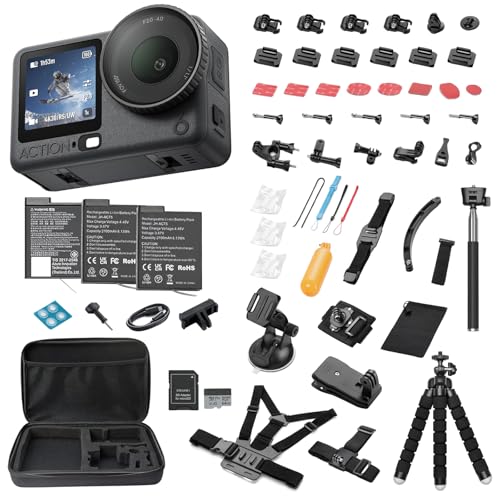
DJI Osmo Action 6 8K Waterproof Action Camera Bundle | 1/1.1" Square Sensor, 50GB Built-In Storage, Original Essential Combo + 58-in-1 Accessory Kit + 2 Extra Batteries + 64GB Card


As an Amazon Associate we earn from qualifying purchases. Product prices and availability are accurate as of the date/time indicated.
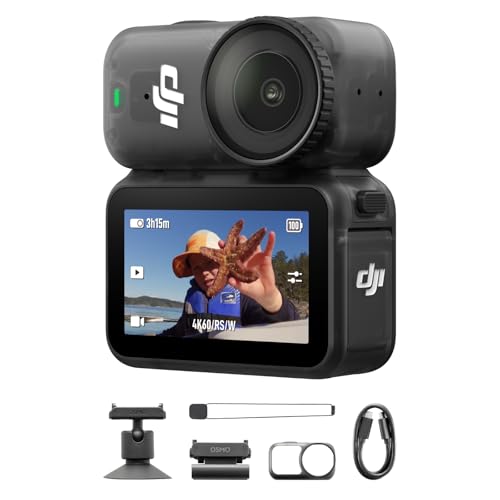
DJI Osmo Nano Standard Combo (128GB), 4K Wearable Camera, 1/1.3″ Sensor | 1/1.3″ Sensor | 4K/60fps & 143° Wide FOV | 200-Min Battery | Swift Content Transfer | Magnetic Wearable Design


As an Amazon Associate we earn from qualifying purchases. Product prices and availability are accurate as of the date/time indicated.
| Model | Key point from the title | Price tier | Best for |
|---|---|---|---|
| Osmo Action 5 Pro Essential Combo | 1/1.3″ sensor, 4K/120fps, subject tracking, dual OLED screens, 47GB storage | Budget to mid-range | All-round everyday action filming |
| Osmo Action 4 Essential Combo | 1/1.3″ sensor, 4K/120fps, 10-bit and D-Log M, 160 mins | Budget | Lowest cost in this set |
| Osmo Action 6 Essential Combo | 8K, 1/1.1″ square sensor, f/2.0 to f/4.0, cold-resistant, 4hrs battery | Mid-range | Cold weather and long days |
| Osmo Action 6 Capture More Combo | 8K, square sensor, 2 batteries, 1.5m extension rod | Premium | Buyers who want an extension pole |
| Osmo Action 6 Enhanced Combo | 8K, 2 batteries, extension rod, battery case | Premium | Long outings away from a charger |
| Osmo Action 6 Essential Combo Bundle | 58-in-1 accessory kit, 2 extra batteries, 64GB card | Premium | One-purchase kits |
| Osmo Action 5 Pro Standard Combo | Same listed features as the Essential version | Mid-range | Comparing combo contents |
| Osmo Action 4 Bundle with 58-piece kit | Original Essential Combo plus accessories | Budget to mid-range | Beginners who want extras |
| Osmo Pocket 3 | 1″ CMOS, 3-axis stabilization, 2″ rotatable touchscreen | Mid-range | Vlogging, not rugged use |
| Osmo Nano Standard Combo (128GB) | 4K/60fps, 143 degree view, magnetic wearable design | Mid-range | Hands-free, body-worn clips |
What is changing with DJI cameras
Looking across the titles, the clearest trend is that DJI is now selling three distinct shapes of camera under one Osmo name. The Action line is the rugged, waterproof body with front and rear screens. The Pocket line is a stabilized handheld camera built around a larger sensor. The Nano is a small wearable that attaches by magnet. A buyer who searches for an action camera may land on any of the three.
Inside the Action line, sensors and video modes have moved upward generation by generation. The older listings describe a 1/1.3-inch sensor and 4K at up to 120 frames per second, while the newest ones describe a larger 1/1.1-inch square sensor, 8K and a variable aperture. Those are seller claims in the titles, and the real-world difference depends on lighting, settings and how you edit.
Bundling is the other shift. Many of the listings are not just a camera but a combo with batteries, an extension rod, a battery case, a memory card or a very large accessory kit. That makes price comparison harder than it looks, because two listings with the same camera can differ by hundreds of dollars of extras. Older generations also tend to remain on sale next to the new ones, so a lower price may simply reflect an earlier model. We keep these general observations hedged, because stock and bundles change often.
How we picked these
The Editorial team built this list from published specifications, manufacturer documentation and buyer reviews, working from the product titles in the current listings. We grouped them by line, then by generation, then by what is in the box. Nobody on the team used or measured these units. Where a title is ambiguous, we say so and point you to the listing instead of filling the gap from memory. Price tiers are relative within this set only.
Reviews of each camera
DJI Osmo Action 5 Pro Essential Combo
The title lists a 1/1.3-inch sensor, 4K video at up to 120fps, subject tracking, stabilization, dual OLED touchscreens and 47GB of storage. It is the model we would send first-time action-camera buyers to, because the claims cover what most people actually do: mount it, press record, and check the screen from either side. It sits in the sensible middle of the set.
Picture a weekend of mountain biking, then a family beach day. A chest mount for the ride and a quick handheld selfie on the sand both benefit from a front screen. The built-in storage mentioned in the title also means a short clip does not depend on a card being inserted, though most people will still add one.
- Pros: Dual screens for framing from either side; subject tracking and stabilization are listed; built-in storage is stated.
- Cons: Not 8K; battery runtime is not given in the title; “Essential” may mean a leaner accessory list.
Check the listing for battery life, included mounts and how many batteries ship. Ask yourself: do you need more than one battery for your longest outing?
DJI Osmo Action 4 Essential Combo
This is the lowest-priced model in the set. The title promises a 1/1.3-inch sensor, 4K/120fps, low-light imaging, 10-bit and D-Log M colour, and a 160-minute battery claim. D-Log M is a flat colour profile meant for editors who want room to grade footage, which is a real asset for anyone who edits.
It suits a hobbyist who wants good image options without paying for the newest hardware, such as a snorkelling trip or a camping weekend where the footage ends up on a laptop. The trade-off is that you give up the newer features found in later listings, and the title does not mention dual screens or subject tracking.
- Pros: Lowest cost here; colour profile aimed at editors; a battery claim that is easy to compare.
- Cons: Older generation than the Action 5 and 6; the 160-minute figure is a seller claim with no stated conditions.
Before buying, ask what the “Essential” combo includes and whether a second battery is in the box.
DJI Osmo Action 6 Essential Combo
The newest generation in the basic combo. The title states 8K video, a 1/1.1-inch square sensor, a variable aperture from f/2.0 to f/4.0, Rocksteady 3.0 stabilization, cold resistance, a 4-hour battery claim and 50GB of storage. Cold resistance is the interesting point for winter sports, since batteries usually suffer in low temperatures.
A skier or snowshoe hiker who films all morning is the obvious match. A variable aperture also gives you a choice between a wide opening for dim scenes and a smaller one for bright snow. Treat the runtime as a headline claim, because real results depend on resolution, temperature and screen use.
- Pros: Newest sensor design in the set; cold-resistance claim; long runtime claim.
- Cons: Costs notably more than the Action 4 and 5 Pro; 8K files are large; accessories may be limited.
Check the listing for the stated cold temperature limits, and ask whether you will actually edit 8K footage.
DJI Osmo Action 6 Capture More Combo
The title adds two batteries and a 1.5-metre extension rod to the 8K Action 6 camera. The pole is what makes this listing distinct: it lets you film yourself from a distance, shoot from a higher angle, or get a low shot near the ground. A pole is a common choice for travel and group clips.
Think of a trekker who wants a steady third-person shot of a trail, or a diver who wants more reach from a boat. The two batteries stretch a single day, though the title does not say how long each lasts.
- Pros: Includes a 1.5m extension rod; two batteries; same 8K camera as the Essential combo.
- Cons: More expensive than the Essential combo; no battery case in the title; the pole adds bulk.
Ask whether you will use an extension pole often enough to justify the extra cost. If not, the Essential is the cleaner buy.
DJI Osmo Action 6 Enhanced Combo
Here the title mentions 8K, the large square sensor, the variable aperture, extended battery life with two batteries, a 1.5-metre extension rod and a battery case. It reads as the fullest official-style kit in the Action 6 family.
It suits someone leaving for a long day, a multi-day trip or a charging-limited location, such as a ski weekend, where spare power and a safe case for batteries are real benefits. A battery case helps keep spares organised, but the title does not say whether it also charges them.
- Pros: Pole, two batteries and a battery case in a single listing; extended-battery wording.
- Cons: Highest cost among the official combos; the case function is not described; heavier carry.
Check exactly what the battery case does, and compare against the Capture More combo to see whether it is worth the difference.
DJI Osmo Action 6 8K Bundle with Accessory Kit
This listing pairs the Essential Combo with a 58-in-1 accessory kit, two extra batteries, and a 64GB card. It is the most expensive listing in the set. Because it looks like a seller-assembled bundle, confirm who packs it and who handles returns or warranty questions.
It fits a buyer who wants to start filming the day the box arrives and would otherwise be buying a card, spare batteries and mounts separately. Remember that 8K recording can fill a 64GB card quickly, so a larger card may still be on your list.
- Pros: Everything in one purchase; spare batteries; a card included.
- Cons: Highest price tier; accessory kits often include pieces you will never use; seller details matter.
Ask whether the kit mounts match your activities, and compare the total with buying the Essential combo and a few chosen extras on their own.
DJI Osmo Action 5 Pro Standard Combo
The title is nearly identical to the Essential Combo version: same sensor, same 4K/120fps, subject tracking, stabilization, dual screens and 47GB of storage. The only visible difference is the combo name and a slightly higher price tier.
That is the point of including it. The listing does not explain what “Standard” adds, so the right move is to open both pages and read the included-items lists next to each other. If the Standard version adds a useful mount or battery, the small price gap may be worth it. If not, the Essential is the easier choice.
- Pros: Same feature set as the Essential listing; a slightly different bundle may suit some buyers.
- Cons: The title does not say what is different; the price gap is small but unexplained.
Ask the one deciding question: what exactly is in this box that the Essential combo lacks?
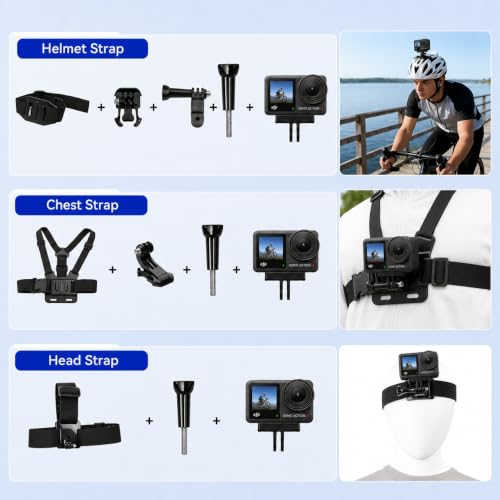
DJI Osmo Action 4 Bundle with 58-Piece Accessory Kit
This is an Action 4 listing that combines the original Essential Combo with a 58-piece accessory kit. It is a convenient purchase for a first-time buyer who has no mounts, and it keeps the Action 4 sensor and video specs from the title: 1/1.3-inch, 4K/120fps.
The weaker point is value. The price sits above the plain Action 4 Essential Combo, and some of the 58 pieces may be generic third-party add-ons. A new owner who plans a bike ride, a pool day and a car-dash clip could use a handful, but few buyers need all 58.
- Pros: Easy start for someone with no accessories; Action 4 image specs preserved.
- Cons: Kit quality is not described; costs more than the plain combo; older generation.
Before buying, ask whether the kit brand is named and whether a few individual mounts would suit you better.
DJI Osmo Pocket 3 (not a classic action camera)
The Pocket 3 is a different kind of camera, and the listing calls it a vlogging camera with a 1-inch CMOS sensor, 4K/120fps, 3-axis stabilization, fast focusing, Spotlight Follow and a 2-inch rotatable touchscreen. The 3-axis gimbal is the signature, because it keeps handheld walking footage smooth.
It is a good match for a travel vlogger, a family event or a food video, where the camera sits in your hand and you want a flattering, steady shot. The title does not claim a waterproof body, so we would not take it into a pool or heavy rain without checking.
- Pros: Larger 1-inch sensor claim; gimbal stabilization; rotatable screen for framing.
- Cons: Not described as waterproof; not suited to helmet mounts; a weaker class for action use.
Ask yourself which you will do more: walk with it in your hand, or strap it to something that moves fast?
DJI Osmo Nano Standard Combo (128GB)
The Nano is a small wearable, and it is also not a classic action camera. Its title mentions 4K/60fps, a 143-degree wide field of view, a 200-minute battery claim, swift content transfer, a magnetic wearable design and 128GB of storage. The 1/1.3-inch sensor is stated twice in the title, so treat that as a typo in the listing.
The magnetic attachment is made for clips worn on clothing, such as a collar view of a cooking session, a walk or a kid’s birthday. It is more discreet than a standard action camera and lighter to carry.
- Pros: Small and light; hands-free wearable concept; 128GB included.
- Cons: Lower maximum frame rate than the Action models; waterproofing is not stated; fewer controls.
Check the listing for water resistance, mount types and what you give up compared with a full Action camera.
How to choose a DJI action camera
Match the camera shape to the job
Start with how you will film. If the camera will be mounted to a helmet, handlebar, board or chest, the Osmo Action family fits best. If you will hold it and walk, the Pocket 3 is more natural. If you want a small clip-on camera that stays out of the way, the Nano is the most relaxed option. Many regrets come from buying the wrong shape, not the wrong sensor.
Sensor size and aperture
A larger sensor usually gathers more light, which helps indoors, at dusk and in shaded forests. The Action 4 and 5 Pro listings state 1/1.3 inches; the Action 6 listings state 1/1.1 inches; the Pocket 3 states 1 inch. A variable aperture, as in the Action 6 titles, gives you some control over exposure. These are seller claims, and image quality also depends on processing, so do not treat sensor size as the whole story.
Resolution and frame rate
4K at 60 or 120fps covers nearly every use. 8K is available on the Action 6 listings, but it produces large files and needs a capable computer. Higher frame rates are useful for slow motion, as long as you shoot in good light. If your plan is to post clips to a phone app, 4K is likely more than enough. If you want to crop in heavily during editing, 8K gives more room.
Battery, cold and runtime
The titles give different battery claims: 160 minutes for the Action 4 Essential, a 4-hour claim for the Action 6 Essential and 200 minutes for the Nano. These are not directly comparable, because the conditions are not stated. Cold weather shortens battery life for most camera types, so the cold-resistance wording on the Action 6 listing is worth reading closely if you film in winter.
Storage and cards
Built-in storage is stated on several listings: 47GB on the Action 5 Pro, 50GB on the Action 6 and 128GB on the Nano. That helps, but a memory card is still wise for long trips. If you shoot in 8K or high frame rates, plan for a large, fast card, and offload footage often.
Worked example: sizing power and storage for a day trip
Assume a ski day with 3 hours of total recording, a 4K bitrate of about 100 megabits per second (an estimate, since the listings do not state it), and a battery that realistically gives 90 minutes in cold conditions. Three hours at 100 Mbps is roughly 135GB of data (100 Mbps divided by 8, times 10,800 seconds). You would need at least two batteries and a storage plan beyond built-in space.
| Spec concept | What to look for | Why it matters |
|---|---|---|
| Sensor size | Stated inch size and aperture | Affects low-light footage |
| Frame rate | 4K at 60 or 120fps | Smooth motion and slow-motion options |
| Battery claim | Minutes and number of batteries | Decides how long you can film |
| Stabilization | Named system (Rocksteady, 3-axis) | Smoother handheld and mounted clips |
| Storage | Built-in GB plus card needs | Prevents running out mid-trip |
| Waterproofing | Stated depth and case needs | Safe use near water |
The budget answer is simple: bring spare batteries, a big card, and offload at lunch. If you mostly shoot stills, a standalone camera may serve you better, and our guide to cameras for beginner photographers covers that route.
Safety and care
Follow the manufacturer’s instructions for water use, charging and battery handling. Do not charge lithium batteries unattended or near flammable material, and stop using any swollen or damaged battery. Rinse after salt water if the manual says to, and check seals before each trip. Mounting a camera on a helmet or board should always follow the mount maker’s guidance.
Mistakes buyers make
The first mistake is comparing prices without comparing contents. A cheaper listing with one battery and no card can cost more than a pricier bundle. Always line up what is in each box.
The second is buying 8K by default. The files are heavy, editing is slower, and most posted footage is viewed at far lower resolution. If you do not have the computer or cards for it, the extra cost earns you little.
The third is treating the Pocket 3 or the Nano as a rugged action camera. They are good at their jobs, but those jobs differ. Read the water and shock wording carefully.
The fourth is trusting battery claims literally. Cold, high frame rates, bright screens and Wi-Fi all reduce runtime. Buy at least one spare for any outing longer than an hour.
The fifth is paying extra for a huge accessory kit. Count the pieces you will genuinely use. A handful of well-chosen mounts often beats 58 loose parts.
Verdict by use case
Best overall in this set: the Osmo Action 5 Pro Essential Combo, for its balance of features, dual screens and moderate price tier.
Lowest cost: the Osmo Action 4 Essential Combo, especially for editors who value its colour profile.
Cold weather and long days: the Osmo Action 6 Essential Combo, based on its cold-resistance and battery claims.
Reach and spare power: the Action 6 Capture More or Enhanced combos, depending on whether you want the battery case.
Walking and vlogging: the Osmo Pocket 3, remembering it is not a rugged action camera.
Discreet, clip-on filming: the Osmo Nano.
Frequently asked questions
Which DJI camera is best for a first-time buyer?
For most newcomers, a recent Osmo Action model in an Essential or Standard combo is the simplest starting point, because the listings in this set describe waterproof bodies, 4K video and built-in storage in one package. If budget matters most, the Action 4 Essential Combo is the lower-priced entry here. If you want the newest sensor and 8K, look at the Action 6 listings instead. Read the combo contents before you pay.
Is the Osmo Pocket 3 an action camera?
Not in the usual sense. Its listing describes a vlogging camera with a 1-inch CMOS sensor, 3-axis stabilization and a rotatable touchscreen, which is a handheld gimbal design. The title does not say it is waterproof, so do not assume it is. It suits walk-and-talk video, travel clips and everyday filming better than water sports or mounted shots. Check the listing for any protective accessories.
Do I need an 8K camera?
Most people do not. 4K at 60 or 120 frames per second already gives sharp footage, smooth slow motion, and files that are far easier to store and edit. The 8K models in this set mainly make sense if you want extra cropping room or you edit on a computer built for heavy files. Think about your storage cards, editing software and sharing plans before paying for resolution you may not use.
What is the difference between Essential, Standard and Enhanced combos?
The names describe what is in the box, and the titles here do not spell out every item. In general, a higher tier tends to add batteries, mounts, extension poles or a battery case, and a plain body-and-battery bundle sits lower. Do not guess from the name. Compare the included-items list on each listing line by line, and check whether a third-party bundle adds a card or accessories that you would otherwise buy separately.
Are accessory kits with 58 pieces worth it?
They can be, but only if the pieces fit how you film. A large kit often pads the count with small clips, straps and covers you may never use, while a few useful mounts do the real work. Before choosing a bundle over a plain combo, list the mounts you need, then check which of them the kit includes and whether the extra cost is lower than buying those few items separately.
Can I use a larger-sensor camera instead?
Yes, if stills and lens choice matter more than ruggedness. A mirrorless camera gives interchangeable lenses and bigger sensors, but it is bulkier and not built for water or impact. If you are weighing that option, our overview of APS-C mirrorless cameras shows what that class looks like. For mounted, sporty or splash-prone filming, an Osmo Action remains the more practical shape.





