
For most owners, a hard-shell, lockable case with pick-and-pluck or custom foam, such as a Pelican Vault, Plano All Weather or SKB iSeries, is the right choice for transport and travel, while a padded soft case suits short trips to the range and a compact pistol case suits handguns. Always match the case to the exact firearm length and optic setup, and follow local law and transport rules for locking and storing firearms.
Our top picks


As an Amazon Associate we earn from qualifying purchases at no extra cost to you.
Gun Cases at a Glance
| Case | Type | Best for | Key stated features | Limits |
|---|---|---|---|---|
| Pelican Vault V730 (rifle) | Hard case | Air and vehicle transport of long guns | The maker lists a watertight, crushproof polymer shell, padlock-ready latches and foam interior | Heavy and premium tier |
| Pelican Vault V100 / V200 (pistol) | Hard case | Handguns and accessories | The maker lists lockable latches and a foam-lined interior | Foam may need trimming for your model |
| Plano All Weather | Hard case | Value-minded hunters and range users | Dual latches, lock holes and a gasket seal per the maker | Less rugged than premium cases |
| SKB iSeries | Hard case | Long-term travel and heavy use | Injection-molded shell, waterproof design and padlock tabs listed by the maker | Weight and size |
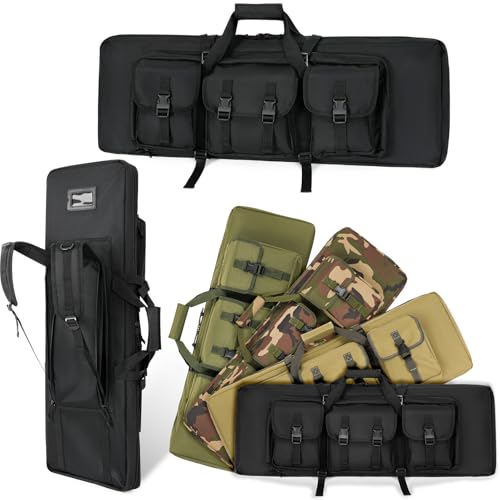
| Allen soft rifle case | Soft case | Short trips and range visits | Padded exterior, zippered closure and carry handles typical for the line | Less impact protection |
| Flambeau Safe Shot | Hard case | Budget tier hard protection | Plastic shell with lockable latches per the maker | Fewer features |
Hard Case or Soft Case?
Hard cases
Hard cases protect against crushing, drops and moisture, and most accept padlocks, which matters when you cross state lines or fly. Airlines in many countries require a locked, hard-sided container for firearms, but rules differ, so read the carrier’s policy and the Transportation Security Administration guidance before you travel. Hard cases are heavier and bulkier, but they are the standard for any real travel.
Soft cases
Soft cases are lighter, easier to carry and often include pockets for magazines, cleaning supplies and a shooting mat. They protect against scratches and light bumps rather than serious impacts, and most have simple zipper closures that may or may not accept a lock. They fit local range days and storage inside a vehicle better than airline travel.
What to Check Before You Buy
- Internal length and depth: Measure the firearm with its scope, magazine and any accessories attached. Makers list interior dimensions, and a case that is only an inch too short will not close.
- Foam type: Pick-and-pluck foam can be tailored to the gun but is less secure than custom-cut foam. Check the maker’s description.
- Lock options: Look for padlock tabs and latch designs that fit common locks. Cable lock options or tamper-resistant latches may matter depending on regulations.
- Seals: A rubber gasket and pressure relief valve help keep moisture out and make opening easier at altitude.
- Weight: Premium hard cases can weigh a fair amount empty, which counts against airline baggage limits.
- Wheels and handles: Wheeled cases help for long carries but add weight and bulk.
Top Picks by Buyer Type
Pelican Vault V730: for premium protection
Pelican has a long reputation for protective cases, and the Vault line is its firearm-focused series. The maker lists a watertight, crushproof polymer shell and a latch system that accepts padlocks. Reviewers note that the case is heavy but holds up under repeated travel. It is the right choice for frequent flyers or anyone who transports valuable rifles. Premium tier pricing is the main drawback.
SKB iSeries: for heavy use
SKB offers injection-molded cases with waterproof seals and strong latches. The maker also offers military-style variants. Reviewers consider SKB a close competitor to Pelican, and the choice often comes down to interior layout and warranty. Both are premium or upper mid-range options.
Plano All Weather: for balanced value
Plano’s All Weather series is a long-running favorite among hunters. The maker lists a gasket-sealed shell, dual latches and lock holes. It is lighter and cheaper than the premium cases and handles typical transport well. It is less likely to survive extreme abuse than a Pelican or SKB.
Flambeau Safe Shot: for budget hard protection
Flambeau cases are common in the budget tier and offer a basic plastic shell with latches that accept locks. They suit local transport and storage in a vehicle trunk. Reviewers sometimes mention thinner foam and lighter hardware, so check fit and latch quality when the case arrives.
Allen soft cases: for range days
Allen offers padded soft rifle and shotgun cases in many sizes. They are comfortable to carry, easy to stow and economical. They do not give the impact protection or lock security of a hard case, so use them for short, legal trips only.
Pistol cases
For handguns, compact hard cases from Pelican, Plano and others protect the pistol and spare magazines. Check that the interior accommodates your model, including any optic or light. A small case also fits easily into a gym bag or backpack when state law permits that kind of carrying.
Pick X If You Want…
| If you want… | Pick | Why |
|---|---|---|
| Maximum travel protection | Pelican Vault or SKB iSeries | Rugged shells with lock-ready latches |
| A balanced, mid-range hard case | Plano All Weather | Good protection for the tier |
| The cheapest hard option | Flambeau Safe Shot | Basic shell with locks |
| A lightweight range bag | Allen soft case | Padded, light and portable |
| A pistol case | Pelican V100/V200 or Plano pistol case | Compact and lockable |
Budget Tiers Explained
Budget tier: Soft cases and basic plastic hard cases. Fine for short trips, not ideal for airline travel.
Mid-range tier: Plano and similar hard cases with gaskets and solid latches. A good fit for hunters.
Premium tier: Pelican and SKB cases. These suit people who travel often or carry expensive optics.
Safety and Legal Notes
- Follow federal, state and local laws on transporting firearms; rules differ between jurisdictions and change over time.
- Transport firearms unloaded and store ammunition separately where the law or carrier requires it.
- Use a quality lock and keep keys or combinations secure; a case is not a substitute for a proper safe at home.
- Always check airline and train policies before travel, and arrive early to declare the firearm.
- Keep children from accessing the case, and follow the firearm manufacturer’s storage guidance.
- Do not store a gun in a sealed case long term without moisture control; follow the maker’s care recommendations.
Alternatives to Consider
- Gun safes and lockboxes: better for secure home storage than transport cases.
- Range backpacks: designed for handguns and gear, suitable where law permits.
- Takedown cases: compact, discreet carriers for firearms that break down, depending on your model.
Fit, Size and Accessory Notes
Case sizing is where most buyers go wrong. Rifles with long barrels, modern sporting rifles with optics, and shotguns with extended chokes all need different interior lengths. Makers publish both interior and exterior dimensions, and the interior number is the one that counts. If you plan to carry a scoped rifle with the optic mounted, leave extra depth so the scope does not press against the lid.
Think about what else goes in the case. Magazines, bore cleaning kits, hearing protection and a cleaning mat can share space with the firearm in larger cases, but regulations in some places require ammunition to be stored separately. Pick-and-pluck foam allows a custom layout, while dividers and accessory pockets help organize small items. Some owners add a desiccant pack to help control moisture, following the case maker’s advice.
If you travel often, consider case weight. A heavy premium case can use up part of an airline’s baggage allowance before you add anything. Wheels and telescoping handles add convenience but also weight. For local range trips, a lighter case or soft bag is usually enough.
Frequently Asked Questions
Can I fly with a firearm in a hard case?
In many countries you can, if the firearm is unloaded, declared to the airline and locked in a hard-sided container. Rules differ between airlines and countries, so read the carrier’s policy and official transport guidance first. When in doubt, contact the airline before you travel.
How do I choose the right case length?
Measure the firearm overall, including any scope, suppressor-ready muzzle device or bipod you leave attached. Compare that figure to the interior length the maker lists. Leave a little room for foam padding so the lid closes without pressure.
Is a soft case enough for the range?
For a short, legal trip, a padded soft case is usually adequate. It guards against scratches and light bumps but not crushing. Use a hard case if you will check the firearm on a flight or store it in a vehicle with other heavy items.
Can I use a gun case for long-term storage?
Cases are intended mainly for transport. A safe or lockbox designed for storage generally offers stronger security. If you must store a firearm in a case, follow the maker’s instructions and consider moisture-control products.
What lock should I use?
Choose a padlock that fits the case’s tabs and meets any transport requirements, such as a lock only you can open. Many travelers use a keyed or combination padlock approved by the airline. Review carrier rules for specifics.
Do pick-and-pluck foam cases hold the gun securely?
They allow some customization, but the fit is only as good as the foam you remove. Custom-cut foam or inserts usually hold a specific firearm more tightly. Check that the gun does not shift when the case is closed.





