
Key takeaways
- Hip packs and chest rigs: Good for short walks with a few essentials.
- Frame-only packs with separate bags: Kifaru and Exo offer modular systems that let you switch bags for different trips.
- Turkey vests and upland vests: Better suited to bird hunts where sitting and carrying game birds matter.
- Standard hiking packs: Usable for scouting, but without the quiet fabric or meat-hauling features hunters often want.
For deer stand and day hunts, a quiet-fabric pack in the 25 to 40 liter range such as the TIDEWE or ALPS OutdoorZ Pursuit is usually enough, while elk, backcountry and multi-day hunters who must haul meat should look at frame-based packs like the Badlands 2200, Mystery Ranch Metcalf, Stone Glacier Sky or Kifaru Absaroka.
Our top picks


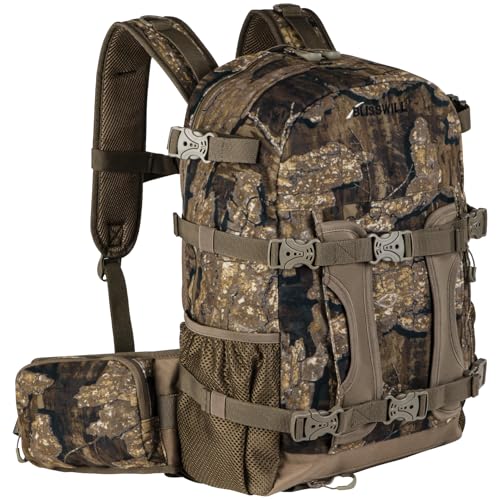

As an Amazon Associate we earn from qualifying purchases at no extra cost to you.
At a Glance: Hunting Backpacks Compared
| Pack | Best for | Key stated traits | Limits |
|---|---|---|---|
| Stone Glacier Sky 5900 | Backcountry big game, premium tier | GearJunkie names it best overall; lists weight of about 5 lb 8 oz and a volume range of roughly 5,900 to 8,000 cubic inches | Premium tier; more pack than a day hunter needs |
| Exo Mountain Gear K4 | Heavy loads, backcountry | GearJunkie lists it as runner-up | Premium tier |
| Mystery Ranch Metcalf | Durability and load carry | GearJunkie calls it the most durable; The Outside Report also includes it | Heavier than lightweight options |
| Kifaru Absaroka | Big loads with a meat shelf | GearJunkie ranks it best at hauling huge loads; bag and frame can be bought separately | Cost adds up with frame; weight |
| Badlands 2200 | All-around for deer and elk | The Outside Report calls it best all-around, with about 2,250 cubic inches, meat-hauling compression and a lifetime warranty per the maker | Less room than expedition packs |
| ALPS OutdoorZ Pursuit / Traverse EPS | Mid-range day hunts, whitetail | Huntlease picks the Pursuit as best all-day whitetail pack and the Traverse EPS as a do-it-all pack with a meat shelf | Less refined suspension than premium frames |
| TIDEWE 25/35/40L | Budget day hunts | Many roundups cite quiet fabric and a rain cover on larger sizes | Lighter-duty frame and hardware |
| Eberlestock Brute Scout; Kings Camo XKG Summit 2700 | Alternatives for versatile use | Both appear in The Outside Report’s picks | Check size and fit for your torso |
Match the Pack to the Hunt
Day Hunts and Tree Stands
If you walk a short distance, climb into a stand or sit in a blind, you need quiet fabric, room for layers, water, a hoist rope and a few essentials. Packs around 25 to 40 liters work well. Budget options such as TIDEWE and BLISSWILL are common value picks in roundups, and the ALPS OutdoorZ Pursuit is cited for all-day whitetail use. Treat affiliate-style roundups with some caution, and weigh them against specialist outlets such as GearJunkie, which concentrate on hunting packs.
Elk, Mule Deer and Backcountry Hunts
These hunts demand a load-bearing frame, a stable suspension and a way to separate meat from gear. Packs like the Stone Glacier Sky, Exo K4, Mystery Ranch Metcalf and Kifaru Absaroka are the names specialist reviewers return to. Many are modular: you buy a frame and a bag, and sometimes a separate meat shelf. That flexibility helps if you hunt different terrain, but it also increases cost and complexity.
Mixed Use Hunters
If you hunt deer in the fall and elk occasionally, a pack like the Badlands 2200 covers both, according to The Outside Report. It is large enough for a day in the mountains and can handle meat if a hunt goes well, but it may feel small on a multi-day trip.
Features That Matter
Quiet Fabric
Noise matters when a deer is within range. Brushed or soft-shell fabrics make less sound than slick nylon. Zippers and buckles can also be noisy, so look for fabric flaps, silent pullers and webbing that does not rattle.
Suspension and Fit
Fit is more important than brand. Measure your torso length from the base of your neck to the top of your hip bones, and compare it to the maker’s size chart. A hip belt should rest on top of your hip bones, not on your waist. Premium frame packs offer adjustable torso lengths and replaceable hip belts, while budget packs usually use fixed sizes.
Meat-Hauling Capability
If you hunt big game far from the road, you may need to pack meat out. Look for a dedicated meat shelf, strong compression and a bag that can carry heavy loads without tearing. Some packs include a separate meat bag, but others require one purchase. Follow your state’s rules for transporting game, including tag and evidence-of-sex requirements.
Weapon Carry
Many packs offer rifle or bow carry systems. Whatever pack you choose, never carry a loaded firearm in or on a pack, follow the manufacturer’s manual and local law, and keep muzzles pointed in a safe direction. Check that the carry system suits your weapon type, such as a bolt rifle, crossbow or compound bow.
Weather Protection
Some packs ship with a rain cover. Others are built from water-resistant fabric but are not waterproof. Use dry bags inside the pack for electronics, a first-aid kit and spare clothing if you expect rain or snow.
Hydration and Pockets
A hydration sleeve, easy-reach side pockets for a bottle or rangefinder, and a pocket for optics keep gear accessible. Look for pockets sized for the gear you actually use.
Budget Tiers
| Tier | Examples | What to expect | Trade-offs |
|---|---|---|---|
| Budget | TIDEWE, BLISSWILL, GoHimal, SPIKA | Light day packs, quiet fabrics, rain covers on some models | Limited load capacity and suspension |
| Mid-range | ALPS OutdoorZ Pursuit, Traverse EPS, Badlands 2200, Kings Camo | Better frames, meat-hauling features, more durable materials | Heavier than lightweight options |
| Premium | Stone Glacier, Exo Mountain Gear, Kifaru, Mystery Ranch | Expedition-grade frames, modular bags, strong warranties | High cost; steeper learning curve for fitting |
Pick X If… Decision Table
| If you… | Pick | Why |
|---|---|---|
| Hunt whitetail from stands | TIDEWE or ALPS OutdoorZ Pursuit | Quiet, affordable, right-sized |
| Want one pack for deer and elk | Badlands 2200 | Balanced size and meat-hauling features |
| Hunt remote backcountry | Stone Glacier Sky or Exo K4 | Specialist frames and high load capacity |
| Need extreme durability | Mystery Ranch Metcalf | Reviewers call it the most durable |
| Haul very heavy meat loads | Kifaru Absaroka | Built for large loads with a meat shelf |
| Want a do-it-all mid-range pack | ALPS OutdoorZ Traverse EPS | Meat shelf at a more modest tier |
Safety, Care and Practical Notes
Pack heavy items close to your spine and high between the shoulder blades for stability. Practice with a loaded pack before the season so you know how it rides and whether the hip belt fits. Wear blaze orange where your state requires it, and make sure the pack does not cover required orange. Store packs clean and dry, brush off mud and burs, and keep the pack away from odors that may spook game. Follow local regulations on hunter safety, game transport and weapon carry, and never put yourself in danger to retrieve gear or an animal.
Alternatives
- Hip packs and chest rigs: Good for short walks with a few essentials.
- Frame-only packs with separate bags: Kifaru and Exo offer modular systems that let you switch bags for different trips.
- Turkey vests and upland vests: Better suited to bird hunts where sitting and carrying game birds matter.
- Standard hiking packs: Usable for scouting, but without the quiet fabric or meat-hauling features hunters often want.
Reading Hunting Pack Reviews
Specialist outlets such as GearJunkie and The Outside Report tend to discuss load carry, suspension and meat hauling, while generic roundups often rank inexpensive packs by listing features. The two approaches answer different questions. For a pack you will lean on for heavy loads, weigh the specialist reviews more heavily; for a cheap pack used a few times a season, a value-focused roundup may be fine. Model generations change, so look at the maker’s site for the current version before buying.
Layering the Load
Place heavy items near your back and between the shoulder blades, with lighter bulky items at the bottom and sides. Keep frequently used items, such as a rangefinder, snacks and a headlamp, in outer pockets. Store food away from your sleeping area in backcountry areas where bears are present and follow local food storage rules.
Scent and Noise Management
Wash your pack according to the maker’s directions, air it outdoors and store it in a clean, odor-free place. Some hunters use scent-control products, though reviewers vary in how much they trust them. Taping or tying down loose straps and pulling zipper pulls into pockets can reduce noise.
Break-In and Training
Spend time walking with a loaded pack before the season. Build up weight gradually, adjust the hip belt and shoulder straps, and note any hot spots. Fitting and training reduce the chance of strain when you carry out heavy loads.
Frequently Asked Questions
What size hunting backpack do I need?
For day hunts, 25 to 40 liters is typical. For overnight or multi-day backcountry hunts, packs of roughly 2,500 cubic inches and up are common, with expedition frames going well beyond that. Choose based on how many days you carry gear and whether you will pack out meat.
Do I need a frame pack for deer hunting?
Not always. Many deer hunters use frameless day packs because they walk a short distance. A frame becomes valuable when loads exceed what soft shoulder straps can handle comfortably, such as when packing out meat.
Are cheaper hunting packs worth it?
For short trips and light loads, budget packs such as TIDEWE are often enough. For heavy hauls or long backcountry trips, reviewers favor more durable frames and suspension. Be cautious with generic roundups that look like affiliate content.
How do I carry a rifle or bow on a pack?
Many packs have scabbards, straps or bow-carry systems. Follow the maker’s instructions and your local law. Never carry a loaded firearm on a pack, and keep the muzzle in a safe direction.
What does a quiet fabric mean?
Quiet fabrics have a soft or brushed finish that makes little noise when brushed against brush or clothing. They do not make a pack silent, but they reduce scraping sounds that can alert game.
How should I fit a hunting backpack?
Measure your torso length and compare it with the maker’s size chart. The hip belt should rest on your hip bones and carry most of the load, while the shoulder straps should stay snug without pinching. Load the pack with weight in the store or at home to check comfort.





