
Our Top Picks
 Fender Frontman 10G Electric Guitar Amplifier10 Watt5.75 x 10.25 x 11 inches8.4 poundsCheck on Amazon
 CXLWZ Electric Guitar Amp 20 Watt Amplifier Portable12.01 x 4.72 x 13.78 inches6.2 poundsCheck on Amazon
 Fender Frontman 20G Electric Guitar Amplifier20 Watt16.5 x 15.25 x 10.25 Inches15.4 poundsCheck on Amazon
 Fender Champion II 50-Watt Electric Guitar AmplifierChampion II 5019.8 x 19.8 x 11.5 inches22.95 poundsCheck on Amazon


The best solid state guitar amp for most players is the Fender Mustang LT25: at 25 watts with an 8-inch speaker and a large built-in preset library, it covers bedroom practice, headphone sessions, and small gigs without weighing you down. If your budget is tight, the Fender Frontman 10G is the best entry point at 10 watts and roughly 8 pounds — light enough for a backpack and cheap enough to justify as a first amp. If you need stage volume with two footswitchable channels, the Fender Champion II 50-Watt is the best premium pick for players who gig regularly. Solid state amps win on weight, reliability, and consistent tone at any volume, and this guide compares wattage, speaker size, channel options, and portability so you can match an amp to your room, your back, and your setlist.
Top 3 Picks
Best Overall: Fender Mustang LT25
The Mustang LT25 hits the sweet spot between practice convenience and gig-capable volume. Its 25 watts into an 8-inch speaker is loud enough for a coffeehouse set or a jam with a drummer who plays with restraint, and the onboard modeling gives you clean, crunch, and high-gain tones without pedals. It also has a headphone output, which makes it the most apartment-friendly amp on this list.
Best Budget: Fender Frontman 10G
At 10 watts and around 8 pounds, the Frontman 10G is the amp you buy when you want to plug in tonight. It has a clean channel, an overdrive switch, and a headphone jack, and its small size means it can live on a shelf or under a desk. It is not a gig amp, but it is a genuinely useful practice tool.
Best Premium: Fender Champion II 50-Watt
The Champion II 50 is the pick for players who play out regularly. Two channels with footswitch control, 50 watts into a 12-inch speaker, and onboard effects mean you can go from bedroom to stage with one box. It is heavier than the small practice amps, but it replaces a pedalboard and a second amp for many players.
Quick Comparison
| Product | Best For | Key Specs | Price Tier |
|---|---|---|---|
| Fender Frontman 10G | Absolute beginners and tight budgets | 10W, 6″ speaker, 1 channel + overdrive switch, headphone out, ~8 lb | Budget |
| Fender Mustang LT25 | All-round practice and small gigs | 25W, 8″ speaker, modeling presets, headphone out, ~12 lb | Premium |
| CXLWZ 20W Portable Amp | Travel and ultra-small spaces | 20W, portable form factor, headphone input, gain and power controls | Budget |
| Fender Frontman 20G | Bedroom players who want more headroom | 20W, 8″ speaker, clean and overdrive, headphone out | Budget |
| Fender Champion II 50 | Regular gigging with two channels | 50W, 12″ speaker, 2 channels, onboard effects, footswitch capable | Premium |
| LyxPro 40W Combo | Loud practice and small stages on a budget | 40W, 8″ 4-ohm speaker, combo cabinet, studio/stage voicing | Budget |
| Orange Crush 12 | Characterful bedroom tone | 12W, 6″ speaker, analog solid state, compact cabinet | Mid-range |
| Marshall MG10G | Classic-rock practice tone on a budget | 10W, 6.5″ speaker, clean and overdrive, compact combo | Budget |
| Orange Crush 20 | Two-channel small-stage use | 20W, 8″ speaker, 2 channels, analog signal path | Premium |
| Fender Champion II 25 | Practice with USB and aux convenience | 25W, 8″ speaker, USB and aux inputs, onboard effects | Premium |
| Fender Frontman 20G Bundle | First-time buyers who need accessories | 20W, 8″ speaker, includes cable and picks, clean/overdrive | Mid-range |
| Monoprice 1×10 Combo | Clean headroom and spring reverb on a budget | 40W, 10″ 4-ohm speaker, spring reverb, high and low inputs | Mid-range |
How We Chose
We built this list by comparing published specifications, category conventions, and the practical realities of owning each amp type. The criteria were straightforward: wattage relative to the situations the amp is sold for, speaker size and its effect on low-end response and perceived volume, channel and feature count, and physical weight and footprint. An amp that sounds good but weighs 45 pounds is a poor choice for someone carrying gear on public transport, and an amp with great features but no headphone jack is a poor choice for an apartment player.
We also weighed upgrade path. A first amp should be easy to sell or keep as a backup, and a gigging amp should have the connectivity — footswitch jacks, effects loops where relevant, line outputs — that players actually use. Solid state designs were favored for their consistent tone at low volume, their resistance to tube wear, and their lighter weight at a given wattage. No claims here are based on research; they are based on specifications, brand track records, and how each category of amp is normally used. Where an exact figure was not published, we described the spec class rather than inventing a number.
1. Fender Frontman 10G – Best for Absolute Beginners
As an Amazon Associate we earn from qualifying purchases at no extra cost to you.

The Frontman 10G is the classic first amp. It suits a player who has just bought a guitar and needs something to plug into without spending much, and it suits a parent buying a starter rig for a teenager. Its 10 watts and 6-inch speaker keep the volume manageable in a bedroom, and the headphone jack means the neighbors never have to hear you practice scales at midnight.
- Power: 10 watts
- Speaker: 6-inch, single
- Channels: one clean channel with an overdrive switch
- Controls: gain, volume, treble, bass
- Extras: headphone output, aux-style input on most versions
- Weight class: around 8 pounds
The strengths here are simplicity and price. There is no menu to learn, no preset bank to scroll through, and no footswitch to lose. You turn two or three knobs and you get a usable clean tone and a serviceable crunch. The cabinet is small and light, which matters more than most beginners expect — an amp that stays in the closet because it is annoying to move is an amp you do not play.
The limitation is headroom. Ten watts into a 6-inch speaker will not keep up with a loud drummer, and the small speaker has limited bass response, so palm-muted riffs sound thinner than they do on a larger cabinet. If you plan to jam with others within a year, this amp will become a practice-only tool and you will want a second amp.
Pros
- Very affordable, making it a low-risk first purchase
- Light and small enough to store anywhere
- Headphone output supports silent practice
- Simple controls that teach you how an amp behaves
Cons
- Not loud enough for most band settings
- Small speaker limits low-end response
- No channel switching or onboard effects
- Clean headroom runs out early when you turn up
Compared with the Frontman 20G, the 10G gives up wattage, an inch of speaker, and some low-end weight in exchange for a lower price and a smaller footprint. If you are certain you will only ever play at home, the 10G is the smarter buy. If you might jam with a friend who plays drums, spend the extra on the 20G.
2. Fender Mustang LT25 – Best Overall for Practice and Small Gigs

The Mustang LT25 is the most versatile amp on this list for the money. It suits a player who wants one box that handles clean jazz chords, bluesy breakup, and high-gain riffs without buying pedals, and it suits a songwriter who records ideas at home and occasionally plays a small show. The 25 watts and 8-inch speaker put it firmly in the “loud bedroom and quiet stage” category.
- Power: 25 watts
- Speaker: 8-inch, single
- Channels: single-channel architecture with modeled presets
- Controls: gain, volume, tone stack, preset navigation
- Extras: headphone output, aux input, onboard effects and amp models
- Weight class: roughly 12 pounds
The core strength is tonal range. Where a basic practice amp gives you one clean sound and one dirty sound, the LT25 gives you a large library of amp voicings and effects, and you can save your own presets. That means you can dial in a tone at home, save it, and recall it at a gig without carrying a pedalboard. The headphone jack and aux input also make it a good late-night practice tool — you can play along to a backing track without waking anyone.
The trade-off is complexity. Menus and presets are less immediate than a single volume knob, and some players find themselves scrolling instead of playing. There is also the reality that a modeled tone is an approximation: it gets close to a given classic amp, but it is not that amp. For most players at this price point, that is entirely acceptable, and the flexibility more than compensates.
Pros
- Wide range of amp models and effects built in
- Loud enough for small gigs and rehearsals
- Headphone and aux inputs support silent practice
- Preset saving means repeatable tones night to night
- Still light enough to carry in one hand
Cons
- Menu-driven controls take time to learn
- Modeled tones are close approximations rather than exact copies
- 8-inch speaker limits the low-end punch of a larger cabinet
- No footswitchable channel switching like a dedicated two-channel amp
Against the Champion II 25, the LT25 offers more tone-shaping depth and a modeling-focused workflow. Against the Champion II 50, it gives up wattage, speaker size, and true two-channel operation but stays lighter and cheaper. If your gigs are small and your practice is mostly at home, the LT25 is the better all-rounder.
3. CXLWZ 20W Portable Amp – Best for Travel and Tiny Spaces

The CXLWZ 20-watt portable amp suits a player who moves around a lot — a dorm resident, a traveler, or someone who practices in different rooms. Its defining feature is portability: the form factor is designed to be carried easily, and the control set is kept minimal with headphone input, gain, and power controls.
- Power: 20 watts
- Speaker: compact built-in speaker
- Controls: gain, power, and basic tone shaping
- Extras: headphone input for silent practice
- Weight class: lightweight and highly portable
The strength is convenience. A 20-watt portable amp is loud enough for solo practice and quiet enough for shared living spaces, and the headphone input means you can play at any hour. It also takes up very little room when stored, which matters in dorms, small apartments, and shared houses.
The trade-off is that portability usually comes at the cost of cabinet size and speaker quality. A compact amp will not produce the same low-end body as a larger cabinet, and the feature set is basic compared to the modeling amps in this guide. It is a practice tool first and a performance amp second.
Pros
- Highly portable and easy to store
- Headphone input supports silent practice
- Simple controls with no learning curve
- Very affordable for the wattage
Cons
- Small speaker limits bass and overall fullness
- Few features compared to modeling amps
- Not intended for gigging with a full band
- Brand support and service network is less established than major brands
Compared with the Marshall MG10G, the CXLWZ offers more wattage and a more portable shape but less brand pedigree and a less familiar tonal character. Compared with the Frontman 10G, it trades some build reputation for extra watts and greater portability. If travel is your priority, it makes sense; if you want a known quantity, the Fender or Marshall options are safer.
4. Fender Frontman 20G – Best for Bedroom Players Who Want More Headroom

The Frontman 20G is the natural upgrade from the 10G. It suits a bedroom player who wants noticeably more volume and low-end than a 10-watt amp provides, and it suits a beginner who wants an amp that will still be useful after the first year. The 20 watts and 8-inch speaker are a meaningful step up in headroom.
- Power: 20 watts
- Speaker: 8-inch, single
- Channels: clean channel with overdrive capability
- Controls: gain, volume, treble, bass
- Extras: headphone output
- Weight class: light enough for one-hand carry
The extra wattage does two things. First, it gives you more clean volume before the amp starts to break up, which is useful if you play with pedals and want a clean platform. Second, it moves more air through the 8-inch speaker, so the low end feels fuller than on a 6-inch design. The control layout remains simple, so it is still an easy amp to learn on.
The limitation is that 20 watts into an 8-inch speaker still will not hang with a loud rock drummer in a rehearsal room. It is a practice and small-jam amp, not a stage amp. It also lacks channel switching and effects, so players who want variety will eventually look at a modeling amp or add pedals.
Pros
- More headroom and low end than a 10-watt practice amp
- Simple, immediate controls
- Headphone output for silent practice
- Affordable and widely available
Cons
- Still not a full-band gigging amp
- No onboard effects or channel switching
- 8-inch speaker has limited bass extension
- Overdrive is basic compared to dedicated drive pedals
Against the Frontman 10G, the 20G is simply more amp: more watts, a bigger speaker, and more usable clean volume. Against the Mustang LT25, it gives up modeling and onboard effects but stays simpler and often cheaper. If you want the simplest possible practice amp with room to grow, the 20G is the better pick; if you want tonal variety, the LT25 wins.
5. Fender Champion II 50 – Best for Regular Gigging

The Champion II 50 is the gigging amp in this roundup. It suits a player who plays bars, small clubs, and rehearsals regularly and wants two footswitchable channels plus onboard effects in one carry. Fifty watts into a 12-inch speaker is a substantial step up in authority from the practice amps here.
- Power: 50 watts
- Speaker: 12-inch, single
- Channels: two, with channel switching
- Controls: full tone stack plus effects and channel controls
- Extras: onboard effects, footswitch capability, headphone and aux options on this series
- Weight class: heavier than the practice amps, manageable for regular carrying
The key advantage is stage practicality. Two channels mean you can set a clean sound and a lead sound and switch between them mid-song with a footswitch. Onboard effects mean you can add reverb, delay, or modulation without a pedalboard. The 12-inch speaker gives you the low-end body and projection that small amps cannot match, and 50 watts of solid state power stays clean at volumes where a small tube amp would already be compressing.
The trade-offs are weight and complexity. This is a larger, heavier cabinet than the practice amps, and the control panel has more knobs than a beginner needs. It is also more power than most apartment players can use — at home you will live on the low end of the volume knob, and the amp is not giving you its best at whisper volumes. For a gigging player, none of that matters; for a bedroom-only player, it is overkill.
Pros
- Two footswitchable channels for live use
- 12-inch speaker delivers full low end and projection
- Onboard effects reduce pedalboard needs
- Solid state reliability and consistent tone at any volume
- Loud enough for most small and mid-size venues with PA support
Cons
- Heavier and bulkier than practice amps
- More amp than most home players need
- More controls to learn
- Requires a footswitch for full channel-switching convenience, which may be sold separately
Compared with the Champion II 25, the 50-watt version doubles the power, adds a larger speaker, and gives you true two-channel operation — a meaningful difference for gigging. Compared with the Mustang LT25, it trades modeling depth for stage-ready channel switching and bigger sound. If you gig, the Champion II 50 is the pick; if you mostly practice, the 25-watt amps are the better value.
6. LyxPro 40W Combo – Best for Loud Practice and Small Stages on a Budget
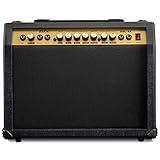
The LyxPro 40-watt combo suits a player who wants gig-level volume without paying premium prices. With 40 watts into an 8-inch 4-ohm speaker, it sits between the practice amps and the 50-watt Champion II in output, and it is voiced for both studio and stage use.
- Power: 40 watts
- Speaker: 8-inch, 4-ohm
- Channels: single-channel combo design
- Controls: gain, volume, and tone shaping
- Use case: studio and stage, per the manufacturer’s description
- Weight class: heavier than the 10-20 watt practice amps
The appeal here is watts per dollar. Forty watts of solid state power gives you enough clean headroom for small stages and enough volume for loud rehearsals, and the 4-ohm speaker load is efficient, meaning the amp makes the most of its power. It is a straightforward combo with no menus, which suits players who want to plug in and turn up.
The trade-off is that a single-channel design limits live flexibility. Without channel switching, you either set the amp for one sound and use your guitar’s volume knob to clean up, or you add pedals for dirt. The 8-inch speaker also gives up some low-end authority compared to the 12-inch speaker in the Champion II 50. It is a value pick, not a premium one.
Pros
- High wattage for the price tier
- 4-ohm speaker makes efficient use of power
- Simple controls with no menu diving
- Loud enough for small stages and rehearsals
Cons
- Single channel limits live tonal switching
- 8-inch speaker has less low-end than a 12-inch design
- Fewer features than similarly priced modeling amps
- Brand support is less widespread than the major guitar brands
Against the Monoprice 1×10, the LyxPro offers similar wattage but a smaller speaker and no spring reverb, while the Monoprice gives you a 10-inch speaker and reverb for a comparable tier. Against the Champion II 50, the LyxPro saves money but gives up channel switching, speaker size, and onboard effects. If raw volume on a budget is the goal, it delivers; if you need live flexibility, look higher.
7. Orange Crush 12 – Best for Characterful Bedroom Tone
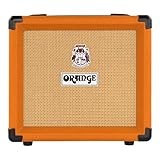
The Orange Crush 12 suits a player who wants a distinctive, warm practice tone in a small cabinet. Twelve watts into a 6-inch speaker keeps it firmly in bedroom territory, and the analog solid state circuit gives it a voicing that many players describe as richer and more characterful than typical budget practice amps.
- Power: 12 watts
- Speaker: 6-inch, single
- Channels: single, with gain and tone controls
- Circuit: analog solid state
- Weight class: small and light
The strength is tone. Orange has a recognizable voicing — mid-forward, slightly gritty, and well suited to rock and blues — and the Crush series carries that character into a small, affordable package. The analog circuit also means the amp responds in a way that feels immediate, without the latency or menu navigation of digital modeling. It is a great amp for learning how gain and volume interact.
The trade-off is that 12 watts and a 6-inch speaker is not loud. It is a practice amp, full stop. It also has fewer features than the modeling amps — no preset library, no USB, and limited tonal range compared to a digital amp with dozens of voicings. You buy it for the sound and the simplicity, not the spec sheet.
Pros
- Distinctive, warm analog tone
- Compact and easy to store
- Simple controls that encourage playing
- Strong brand reputation in rock and blues
Cons
- Only 12 watts and a 6-inch speaker, so limited volume
- No modeling, effects, or USB
- Not suitable for band rehearsals
- Single channel limits versatility
Compared with the Orange Crush 20, the Crush 12 gives up 8 watts, an extra channel, and a larger speaker in exchange for a smaller footprint and a lower price. Compared with the Mustang LT25, it offers a more distinctive analog voice but far less flexibility. If you love the Orange sound and practice at home, the Crush 12 is a satisfying choice; if you need versatility, the modeling amps do more.
8. Marshall MG10G – Best for Classic Practice Tone on a Budget

The Marshall MG10G suits a player who wants that familiar British-rock flavor in a tiny, affordable package. Ten watts into a 6.5-inch speaker keeps it bedroom-friendly, and the clean and overdrive modes give you the two sounds most beginners actually use.
- Power: 10 watts
- Speaker: 6.5-inch, single
- Channels: clean and overdrive modes
- Controls: gain, volume, treble, bass
- Weight class: very light and compact
The appeal is the brand voice and the simplicity. Marshall’s overdrive character is one of the most recognizable sounds in rock, and the MG10G gives you a taste of it at a very low price. It is small enough to sit on a desk or a shelf, and the control layout is simple enough that a first-time player can understand it in minutes.
The limits are the same as any 10-watt practice amp: not enough volume for a band, and a small speaker with modest bass response. It also lacks the effects and modeling depth of amps in the next price tier. It is a starter amp, and it should be bought as one.
Pros
- Recognizable Marshall overdrive character
- Very affordable and widely available
- Compact and light
- Simple controls for beginners
Cons
- Only 10 watts, so not a gigging amp
- 6.5-inch speaker gives limited low end
- No effects, USB, or modeling
- Overdrive mode is basic compared to a dedicated pedal
Compared with the Frontman 10G, the MG10G offers a different tonal flavor and a slightly larger speaker, but a similar feature set and power level. Compared with the Orange Crush 12, it is cheaper but gives up a little wattage and the Orange’s distinctive character. If the Marshall sound is what motivates you to practice, this is a good first amp.
9. Orange Crush 20 – Best for Two-Channel Small-Stage Use
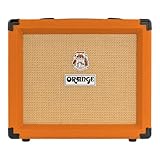
The Orange Crush 20 suits a player who wants Orange character with enough output for small stages and a second channel for tonal switching. Twenty watts into an 8-inch speaker and a two-channel analog design make it the most gig-capable of the small Orange amps here.
- Power: 20 watts
- Speaker: 8-inch, single
- Channels: two
- Circuit: analog solid state
- Weight class: compact but heavier than the 10-12 watt models
The strength is the combination of tone and flexibility. The analog circuit keeps the Orange voicing intact, while the second channel gives you a clean and a dirty sound without pedals. The 8-inch speaker provides noticeably more body than the 6-inch speaker in the Crush 12, and 20 watts is enough for a quiet rehearsal or a small gig with a restrained drummer.
The trade-off is that it still sits below the 40-50 watt amps for stage volume, and it lacks the modeling and effects of the Fender options. It is also priced above the budget tier, so you are paying for tone and channel switching rather than raw features. If you need maximum volume or maximum flexibility, other amps here do more for the money.
Pros
- Two channels for clean and dirty sounds
- Characterful analog Orange tone
- More low end than 6-inch speaker amps
- Compact enough for home use
Cons
- Not loud enough for a full band
- No effects or modeling
- Priced above the budget tier without matching feature count
- Requires a footswitch for hands-free channel changes, which may be sold separately
Against the Orange Crush 12, the Crush 20 adds wattage, a larger speaker, and a second channel — a clear upgrade for players who want to play out. Against the Champion II 50, it gives up half the power and a 12-inch speaker but keeps the analog character and the smaller footprint. If you want Orange tone with gig potential, this is the pick.
10. Fender Champion II 25 – Best for Practice with Recording Convenience

The Champion II 25 suits a player who wants a versatile home amp with modern connectivity. Twenty-five watts into an 8-inch speaker gives it practice and small-gig volume, and the USB and aux inputs make it easy to record ideas or play along with backing tracks.
- Power: 25 watts
- Speaker: 8-inch, single
- Channels: single-channel architecture with effects
- Controls: full tone stack plus effects controls
- Extras: USB and aux inputs, onboard effects
- Weight class: light enough for easy transport
The strength is the connectivity. USB output means you can send your guitar signal to a computer for recording without an interface, and the aux input lets you play along with tracks from a phone or player. Combined with onboard effects, that makes the Champion II 25 a compact home studio tool as well as a practice amp.
The trade-off compared to the Champion II 50 is power and speaker size: the 25-watt version will not project like the 50, and it lacks the same low-end authority. Compared to the Mustang LT25, it offers a simpler, more traditional control layout but a less extensive modeling library. It is a middle path between simplicity and features.
Pros
- USB and aux inputs for recording and play-along
- Onboard effects reduce pedal needs
- Manageable weight for carrying to rehearsals
- Simple enough for newer players
Cons
- 8-inch speaker limits low-end punch
- Not as loud as the 50-watt version
- Single channel limits live switching
- Modeling depth is less than the Mustang series
Against the Mustang LT25, the Champion II 25 offers a more straightforward control set and easier recording connectivity, while the Mustang gives you more tones. Against the Champion II 50, it is lighter and cheaper but less capable on stage. If home recording matters as much as practice, it is a strong choice.
11. Fender Frontman 20G Bundle – Best for First-Time Buyers Who Need Accessories

The Frontman 20G bundle suits a shopper who wants an amp and the accessories to start playing in one purchase. It pairs the 20-watt, 8-inch Frontman 20G with a cable and a pack of picks, which removes the extra trip that trips up many first-time buyers.
- Power: 20 watts
- Speaker: 8-inch, single
- Channels: clean with overdrive
- Controls: gain, volume, treble, bass
- Extras: instrument cable and picks included
- Weight class: light enough for one-hand carry
The strength is convenience. A cable and picks are the two things beginners most often forget, and bundling them means you can plug in the moment the box arrives. The amp itself is the same well-known 20-watt practice platform described above, with a headphone output for silent practice and enough volume for solo playing and quiet jams.
The trade-off is that you are paying for convenience, and the bundle tier is higher than the standalone amp. If you already own a cable and picks, buying the amp alone is more economical. The amp’s limits are unchanged: it is not a gigging amp, it has no channel switching, and the 8-inch speaker has modest bass.
Pros
- Everything needed to start playing in one purchase
- Proven 20-watt practice platform
- Headphone output for silent practice
- Simple controls for beginners
Cons
- Higher price tier than the standalone amp
- Included accessories are basic
- No channel switching or effects
- Not suitable for full-band volume
Compared with the standalone Frontman 20G, the bundle costs more but saves you an extra purchase. Compared with the Mustang LT25, it gives up modeling and effects but stays simpler. If you are buying a first rig for yourself or a gift for someone else, the bundle removes friction; if you already have cables and picks, buy the amp alone.
12. Monoprice 1×10 Combo – Best for Clean Headroom and Spring Reverb on a Budget

The Monoprice 1×10 combo suits a player who wants a 10-inch speaker, spring reverb, and high-and-low inputs at a mid-range price. Forty watts into a 10-inch 4-ohm speaker gives it more low-end body and clean headroom than the 8-inch practice amps, making it a solid choice for rehearsals and small stages.
- Power: 40 watts
- Speaker: 10-inch, 4-ohm
- Channels: single-channel design
- Controls: tone shaping plus spring reverb
- Extras: high and low inputs for different pickup output levels
- Weight class: heavier than practice amps, still carryable
The standout feature is spring reverb, which is uncommon at this price. Reverb makes a practice amp sound much larger than its cabinet, and spring reverb has a character that digital reverb often struggles to match. The 10-inch speaker also delivers more bass than the 8-inch designs, so chords have more weight, and the high and low inputs let you match the amp to single-coil or humbucker output without touching a knob.
The trade-off is that it is a single-channel amp without onboard effects beyond reverb, so live players will need pedals for dirt and modulation. It is also a less common brand in guitar retail, so resale and service are less predictable than for the major names. It is a value amp for a player who values tone and simplicity.
Pros
- Spring reverb at a price where it is rare
- 10-inch speaker provides fuller low end
- High and low inputs add flexibility
- 40 watts is enough for small stages
Cons
- Single channel limits live tonal switching
- No onboard effects beyond reverb
- Less brand recognition and resale support
- Heavier than the small practice amps
Against the LyxPro 40W, the Monoprice offers a larger speaker and spring reverb for a slightly higher tier, making it the better-sounding option for most players. Against the Champion II 50, it gives up channel switching and effects but keeps a classic, simple feature set. If you want warm reverb and a bigger speaker without paying premium prices, it is a strong pick.
How to Choose
Choosing a solid state amp comes down to matching four numbers — watts, speaker size, channel count, and weight — to where and how often you play. The mistake most buyers make is optimizing for the wrong one. A player who never leaves a bedroom buys 50 watts they cannot use, while a player who joins a band buys 10 watts that gets buried. Start with the situation, then let the specs follow.
Start with the playing situation, not the specs
Divide your playing into four situations. Solo bedroom practice means an amp that sounds good at low volume, which favors smaller speakers and lower wattage; a 10-20 watt amp with a 6-8 inch speaker is ideal. Playing along with recordings at home adds a need for an aux input or a headphone jack. Rehearsing with a drummer is the first real volume threshold — this is where 8-inch speakers start to struggle, and where 40-50 watts with a 10 or 12-inch speaker becomes necessary. Gigging in small venues usually means a mic’d amp or a line out, so 25-50 watts with a footswitchable channel is the practical range. Write down which of these is your primary use, and treat the others as bonuses.
How wattage actually scales
Watts do not scale linearly in perceived loudness. Doubling wattage from 10 to 20 adds roughly 3 decibels of output, which is audible but not dramatic. Going from 10 to 50 watts is roughly a 7-decibel increase, which is a significant jump — enough to move from bedroom to small stage. The practical tiers are: 10-15 watts for bedroom only; 20-25 watts for home plus quiet jams; 40-50 watts for rehearsals and small gigs; 100 watts and up for large stages or loud drummers. Solid state amps are also more honest about their wattage than tube amps, which are often rated conservatively and sound louder than the number suggests. If you are comparing a 15-watt tube amp to a 15-watt solid state amp, the tube amp will typically be louder in practice.
Speaker size and what it changes
Speaker diameter is the single biggest factor in how an amp feels and sounds. A 6-inch speaker moves less air, so it produces less bass and sounds thinner, but it also stays tight at low volume and keeps the cabinet small. An 8-inch speaker is the standard for practice and small amps — it has more low end and more projection than a 6-inch, without adding much weight. A 10-inch speaker is the sweet spot for players who want body without a large cabinet, and a 12-inch speaker gives the fullest low end and the most stage projection at the cost of size and weight. Speaker efficiency also matters: a 4-ohm load draws more power from the amp than an 8-ohm load, so a 4-ohm speaker can make a modest amp sound louder. Likewise, a high-sensitivity speaker produces more volume per watt than a low-sensitivity one, which is why two 40-watt amps can differ noticeably in loudness.
Channels, effects, and switching
Single-channel amps are simple and often sound purer, but they require you to change tone with your guitar’s volume knob or with pedals. Two-channel amps let you switch between a clean and a dirty sound, which is convenient for live sets. If you plan to gig, look for an amp with a footswitch jack, and confirm whether the footswitch is included — it is often sold separately. Onboard effects, especially reverb, add a lot of perceived size to a small amp and can replace a pedal or two. Modeling amps go further, offering many amp voicings and effects, but they trade immediacy for flexibility. Decide whether you want to turn knobs or scroll menus.
Weight, footprint, and the honesty test
Weight is the spec that determines whether you actually use the amp. A 45-pound combo is fine if it lives in a rehearsal room, but it is a burden if you carry it to a bus or up three flights of stairs. As a rule, a small solid state practice amp weighs around 8-15 pounds, a 25-watt combo with an 8-inch speaker lands around 12-20 pounds, and a 50-watt amp with a 12-inch speaker is typically 25-40 pounds. Always check the weight in the listing, and think about the shape as well as the number — a wide cabinet with a top handle is easier to carry than a deep, heavy box. A practical test: if you cannot carry the amp with one hand for a block, you will not take it anywhere.
Solid state versus tube in 2026
Solid state amps have two real advantages: they are lighter at a given power level, and they sound the same at any volume, from whisper to full output. Tube amps compress and sweeten as they are pushed, which many players love, but that characteristic is hard to access at bedroom volume and the tubes wear out and need replacing. Solid state amps also run cooler and usually cost less to maintain. For a first amp, a practice amp, or a gigging amp that lives on a pedalboard, solid state is the practical choice. For a player chasing a specific tube feel at volume, a tube amp may still be worth the weight and maintenance.
Connectivity checklist
Before buying, confirm the connections you need. A headphone jack is essential for apartment practice. An aux input is valuable for playing along with tracks. A line out or USB output matters if you want to record. An effects loop is useful if you plan to use time-based pedals, though many small amps omit it. A footswitch jack matters for live channel switching. If you plan to add a cabinet later, check the speaker output impedance and whether the amp has an external speaker jack. These features are what separate an amp that grows with you from one you outgrow in a year.
A worked example: cost per hour of ownership
Suppose a practice amp costs roughly the price of a mid-range pedal, and you practice five hours a week for two years. That is about 520 hours of use. Even a modest amp works out to a very small cost per hour — far less than a single lesson. The calculation changes the decision: instead of choosing the absolute cheapest amp, choose the one you will actually want to turn on. A slightly more expensive amp with a tone you enjoy and a headphone jack you use every night is a better buy than a cheaper amp that sits in a closet. Run the same math for a gigging amp and the logic holds: the cost per hour of a 50-watt combo used twice a month for three years is still very low, and the amp that makes you sound the way you want is worth the extra weight.
A decision matrix by situation
| Your Situation | Wattage | Speaker | Channels | Priority Features | Suggested Pick |
|---|---|---|---|---|---|
| Absolute beginner, tight budget | 10W | 6″ | 1 | Headphone out, simple controls | Fender Frontman 10G |
| Bedroom practice, wants tone | 12-20W | 6-8″ | 1-2 | Analog character, headphone out | Orange Crush 12 or Crush 20 |
| Home practice with backing tracks | 25W | 8″ | 1 | Aux input, effects, USB | Fender Champion II 25 |
| All-rounder for home and small gigs | 25W | 8″ | 1 (modeled) | Preset library, headphone, aux | Fender Mustang LT25 |
| Budget volume for rehearsal | 40W | 8-10″ | 1 | Speaker size, reverb | LyxPro 40W or Monoprice 1×10 |
| Regular gigging with channel switching | 50W | 12″ | 2 | Footswitch, effects, projection | Fender Champion II 50 |
Frequently Asked Questions
Is a solid state amp good enough for gigging?
Yes. Solid state amps are used on stages of every size, and their consistent tone at any volume is an advantage in venues where you cannot turn up. A 40-50 watt solid state amp with a 10 or 12-inch speaker is loud enough for most small and mid-size rooms, especially if it is mic’d or run through the PA. What matters more than the technology is the wattage, speaker size, and whether the amp gives you the switching and connectivity your set requires.
What wattage do I need for bedroom practice?
For bedroom practice, 10-25 watts is plenty. Even a 10-watt amp can be too loud at full volume in an apartment, which is why a headphone jack matters more than raw wattage. If you want clean tones at moderate volume and room to grow, 20-25 watts with an 8-inch speaker is a comfortable range. Anything above 50 watts is usually wasted at home, because you will never turn it past a fraction of its output.
How much does speaker size really matter?
Speaker size has a larger effect on perceived tone than most players expect. A 6-inch speaker sounds tight and bright but thin in the low end, while a 12-inch speaker moves more air and produces a fuller, warmer sound with more projection. For practice, 6-8 inches is fine and keeps the amp light. For rehearsals and gigs, a 10 or 12-inch speaker is worth the extra weight because it holds together when you turn up.
Do I need two channels?
Two channels are convenient if you perform, because they let you switch between a clean and a dirty sound without touching your guitar’s volume or stepping on a pedal. If you mostly practice at home or play one style, a single-channel amp is simpler and often cheaper. Many players get by with one channel plus a drive pedal, which costs less than upgrading to a two-channel amp and gives you more tonal options.
Are solid state amps reliable?
Solid state amps are generally very reliable because they have no tubes to wear out and run cooler than tube amps. The parts most likely to fail over time are the speaker, the input jacks, and the power supply, and all three are usually repairable. Practical maintenance is simple: keep the amp dry, avoid blocking ventilation, use a speaker cable rather than an instrument cable if you connect an external cabinet, and avoid leaving it powered on for long periods unattended. With basic care, a solid state amp can last many years.
What should I check first when buying a used solid state amp?
Check the speaker cone for tears or rubbing, listen for crackle when you turn the knobs, and test every input and the headphone jack. Bring a cable and, if possible, your own guitar so you can judge the clean tone at low volume. Ask whether the amp has been used at high volume for long periods and whether it has ever been dropped. Cosmetic wear is normal; noisy pots, a blown speaker, or a hum that changes with the volume knob are reasons to walk away.
Can I use pedals with a solid state amp?
Yes, and solid state amps often take pedals very well because they stay clean at high volume. Overdrive and distortion pedals work especially well into a clean solid state platform, since the amp is not adding its own coloration. If you plan to use time-based effects like delay and reverb, an effects loop is helpful but not essential — placing them in front of the amp works fine for many players. Just be aware that a small 8-inch speaker can sound congested with heavy distortion, so match your pedal gain to the amp’s size.
Should I buy the bundle or the standalone amp?
Buy the bundle if you are starting from nothing, because it includes the cable and picks you need on day one and saves a separate purchase. Buy the standalone amp if you already own those items, since the bundle usually costs more than the amp alone. Either way, the amp itself is the same, so the decision is purely about convenience versus price.
How loud is 20 watts compared to 50 watts?
Going from 20 to 50 watts adds roughly 4 decibels of maximum output, which is an audible but not enormous difference. The bigger change comes from the speaker: a 50-watt amp with a 12-inch speaker will sound substantially fuller and project further than a 20-watt amp with an 8-inch speaker, even though the wattage gap suggests only a modest loudness increase. If you need stage volume, upgrade the speaker and cabinet size along with the wattage.
Do I need an amp with USB or an audio interface?
Not strictly, but it helps if you want to record. An amp with USB output lets you send your guitar to a computer without buying a separate interface, which is convenient for capturing ideas. If you already own an audio interface, a standard amp with a line out or a mic’d speaker will do the job. For practice alone, USB is a nice extra rather than a requirement.
The Bottom Line by Situation
If you are a complete beginner on a tight budget, start with the Fender Frontman 10G or the Marshall MG10G — both are light, simple, and cheap enough that upgrading later is painless. If you want one amp that handles home practice, headphone sessions, and small gigs, the Fender Mustang LT25 is the best overall pick in this list. If you want a distinctive analog tone for bedroom playing, the Orange Crush 12 is the character choice, and the Orange Crush 20 is its gig-capable sibling. If you play with a drummer or gig regularly, choose the Fender Champion II 50 for its two channels, 12-inch speaker, and onboard effects, or the LyxPro 40W and Monoprice 1×10 if you want that volume for less. If home recording matters, the Champion II 25 is the most convenient of the small amps. And if you are buying a first rig and want everything in one box, the Frontman 20G bundle removes the extra shopping trip. Match the wattage and speaker size to where you actually play, keep the weight honest, and you will end up with an amp you use every day rather than one that sits in the corner.





