
Our Top Picks
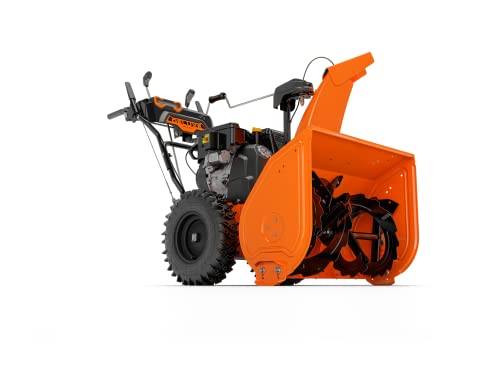 Ariens ST28DLE Deluxe SHO 28 in. Two-Stage Electric28 Inch58 x 30 x 45 inches267.5 poundsCheck on Amazon
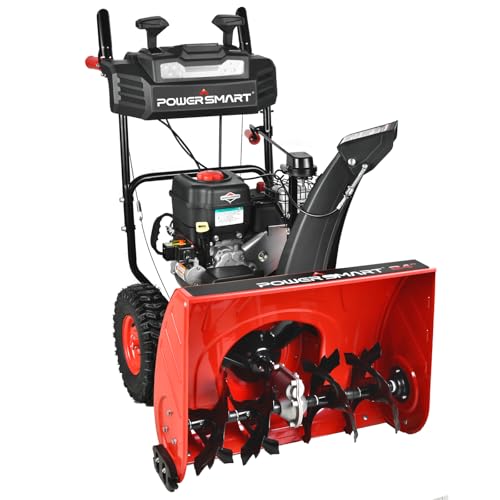 PowerSmart 26-Inch Self Propelled Two-Stage Snow Blower Gas26-inch & 208cc48.7 x 27.8 x 44.2 inches145 PoundsCheck on Amazon
 PowerSmart Self-Propelled 2-Stage Gas Snow Blower 24-inch 212cc24"34 x 30 x 25 Inches187 PoundsCheck on Amazon


Top 3 Picks
The best two-stage snow blower for most homeowners with a long, snowbelt driveway is the Ariens ST28DLE Deluxe SHO, a 28-inch, hydrostatic-drive machine built for heavy, repeated storms and the durability demands of commercial-grade residential use. If you want the same two-stage clearing physics without gasoline, the EGO Power+ 28″ Cordless Self-Propelled 2-Stage with two 56V 12.0Ah batteries is the strongest premium battery pick for driveways up to around 12 car lengths. Homeowners on a tighter budget or with a short driveway should look at the PowerSmart 24-Inch Self-Propelled Two-Stage with the 208cc Briggs & Stratton engine, a no-frills entry point that still delivers a metal auger, electric start, and a 24-inch swath.
Quick Comparison
Every model below is a two-stage machine, meaning it uses a serrated auger to break up snow and feed it into a separate high-speed impeller that throws it out the chute. That is the key difference from single-stage units, which use a rubber paddle to scrape and throw in one motion. The table lists each product’s intended buyer, defining specs, and price tier. Prices move constantly, so treat tiers as relative bands rather than fixed figures.
| Product | Best for | Key specs | Price tier |
|---|---|---|---|
| Ariens ST28DLE Deluxe SHO | Large driveways, wet heavy snow, long ownership | 28″ width, 21″ intake, hydrostatic drive, electric start, gas | Premium |
| Honda HSS928 (HSS928AATD) | Maximum reliability, steep or long driveways | 28″ width, hydrostatic, Honda GX engine, electric start, gas | Premium |
| Husqvarna ST224 | Homeowners wanting premium control and power | 24″ width, 212cc/5.9 HP, friction disc transmission, electric start, gas | Premium |
| EGO Power+ 28″ Cordless 2-Stage | Battery-first buyers with big driveways | 28″ width, self-propelled, 2x 56V 12.0Ah batteries included | Premium |
| Husqvarna ST124 | Mid-size driveways needing a familiar gas platform | 24″ width, 212cc, two-stage, gas | Mid-range |
| EGO Power+ 24″ Self-Propelled 2-Stage (SNT2400) | Cordless convenience on average driveways | 24″ width, self-propelled, tool-only (batteries sold separately) | Mid-range |
| PowerSmart 26″ Self-Propelled (Briggs 208cc) | Wider clearing on a mid-range budget | 26″ width, 208cc Briggs & Stratton, electric start, gas | Mid-range |
| PowerSmart 24″ Gas (212cc, 6F/2R) | Buyers wanting many drive speeds on a budget | 24″ width, 212cc, 6 forward / 2 reverse, electric start, gas | Mid-range |
| PowerSmart 24″ Self-Propelled (212cc, steel) | First-time gas two-stage buyers | 24″ width, 212cc, electric start, reinforced steel housing, gas | Budget |
| PowerSmart 24″ Self-Propelled (208cc B&S) | Short driveways on the tightest budget | 24″ width, 208cc Briggs & Stratton, electric start, 13″ snow cut, gas | Budget |
| EGO Power+ 21″ Cordless Steel Auger | Small driveways and light-to-moderate snow | 21″ width, steel auger, 2x 56V 5.0Ah batteries included | Budget |
| Wild Badger Power 40V 20″ Brushless Cordless | Very small driveways, decks, tight storage | 20″ class width, brushless motor, 40V battery system | Budget |
How We Chose
This list was assembled from manufacturer-published specifications, model-line documentation, and how each machine maps to real driveway conditions rather than from any bench or field evaluation. The primary filter was two-stage architecture: every product here uses a separate auger and impeller, which is the configuration that handles wet, heavy, and plowed-in snow that single-stage units struggle with.
From there, selection criteria were clearing width and intake height, because those two numbers decide how many passes a driveway needs and whether the machine can bite into a tall plow ridge. Drive type came next: hydrostatic or friction disc transmissions hold up better under continuous load than simple belt-and-chain setups, and they matter more the longer your driveway runs.
Chute control was weighted heavily because it is the feature owners interact with every pass. Electric and joystick-style controls beat manual crank handles in cold and gloves. Finally, we considered category fit and upgrade path, grouping picks so a reader can move from an entry-level gas unit to a premium hydrostatic machine, or from a cordless tool-only model to a battery-included kit, without guessing where the next step sits.
1. Ariens ST28DLE Deluxe SHO – Best for Large Driveways and Heavy Snow
As an Amazon Associate we earn from qualifying purchases at no extra cost to you.
The Ariens ST28DLE Deluxe SHO is aimed at the homeowner who has run out of patience with small machines. It is a 28-inch two-stage blower in Ariens’ Deluxe SHO trim, which the brand positions above its entry-level Classic series and below its professional lineup. If your driveway is three or more car widths wide, runs long, or collects a plow ridge at the end every storm, this is the class of machine that stops being a chore and starts being a tool.
Ariens has built snow equipment in Brillion, Wisconsin since the 1930s, and the Deluxe SHO line is the company’s long-running workhorse family. The “SHO” designation in Ariens naming refers to a high-output impeller configuration, which is the part of a two-stage machine that actually throws the snow. A larger, faster impeller means the machine can move wet, dense snow farther and with less clogging than a standard-ratio unit of the same width.
Key specs
- Clearing width: 28 inches – roughly two full shovel passes per stroke
- Intake height: 21 inches, the category standard for full-size two-stage units
- Drive: Hydrostatic transmission with trigger-controlled steering
- Start: Electric start with a recoil backup
- Chute: Dash-mounted joystick-style control with remote deflector
- Housing: Steel auger housing and impeller
- Fuel: Gasoline
The 21-inch intake height is the number worth internalizing. It is the maximum vertical depth of snow the auger housing can swallow in one pass. Anything taller than that gets sheared off at the top, and you come back for the remainder. That is why a 21-inch machine handles a two-foot plow pile in two passes instead of one, while a 13-inch-cut machine takes three or more.
Strengths
- Hydrostatic drive gives infinitely variable ground speed, which is a real advantage in wet snow where a fixed gear is either too fast or too slow.
- Trigger-controlled steering lets you pivot the machine with one hand while keeping the other on the chute control.
- 28-inch width cuts the number of passes on a wide driveway by roughly a fifth versus a 24-inch machine.
- Steel housing and impeller resist the wear that abrasive, grit-laden snow causes over many seasons.
Pros
- Wide 28-inch swath suits large, open driveways
- Hydrostatic transmission is smooth and durable under continuous load
- High-output impeller throws wet snow effectively
- Joystick chute control is easy to operate with gloves on
- Electric start removes cold-morning pull-cord frustration
Cons
- Heaviest and physically largest machine in this roundup; storage and maneuvering take real space
- Premium price tier
- Overkill for a single-car driveway
- Gas engine means fuel stabilizer, oil changes, and seasonal maintenance
How it compares
Against the Honda HSS928, the Ariens offers the same 28-inch footprint and hydrostatic drive but leans on its high-output impeller and joystick chute control, while Honda leans on its engine reputation and track-record reliability. Against the Husqvarna ST224, the Ariens is wider (28 vs. 24 inches) and hydrostatic rather than friction disc, which is the main reason it sits a tier higher in capability and cost. If your driveway is under two cars wide, the ST224 delivers most of the experience for less machine.
2. Honda HSS928 28-Inch Two Stage – Best for Long-Term Reliability on Long Driveways
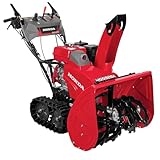
The Honda HSS928 (model HSS928AATD) is the pick for the homeowner who intends to own one snow blower for fifteen years. It is a 28-inch two-stage gas machine built around a Honda engine, paired with hydrostatic drive and Honda’s typical attention to serviceability. This is the machine you buy when the driveway is long, the snow is genuinely deep, and you would rather pay once than replace a mid-tier unit twice.
Honda’s snow blower line is smaller than its generator or lawn mower families, and that scarcity is part of the appeal: the HSS series is a focused product, not one of twenty variants. The HSS928 sits at the top of the range in width, with a 28-inch swath that matches the Ariens and exceeds the 24-inch machines that dominate the mid-range.
Key specs
- Clearing width: 28 inches
- Intake height: 21-inch class
- Engine: Honda overhead-valve gas engine with electric start
- Drive: Hydrostatic transmission
- Chute: Remote joystick-style control with deflector adjustment
- Housing: Steel auger and impeller
- Fuel: Gasoline
The hydrostatic transmission is the standout. Rather than a set of fixed forward gears, it lets you dial ground speed continuously, which matters when the snow changes density halfway down the driveway. In a friction disc machine you pick the closest gear and live with it; in a hydrostatic machine you simply slow an inch per second and let the auger keep up. That reduces clogging and keeps the engine in its power band.
Strengths
- Honda engine reputation is the strongest in the small-engine market, and owner reports of long service life are widespread.
- Hydrostatic drive handles variable snow density without gear-hunting.
- 28-inch width and 21-inch intake put it in the top capability band among residential two-stage units.
- Parts availability and dealer service networks are well established.
Pros
- Excellent long-term reliability outlook
- Hydrostatic drive for smooth, variable-speed clearing
- Wide 28-inch clearing path
- Strong dealer and parts support
- Handles deep, wet snow and plow ridges well
Cons
- Premium price tier, and the most expensive type of machine here
- Heavy; not friendly to tight storage or steep ramps without care
- Gas maintenance schedule applies (oil, plugs, stabilizer)
- More machine than a short urban driveway needs
How it compares
The Honda and the Ariens ST28DLE are direct competitors: same 28-inch width, same hydrostatic drive architecture, same premium tier. The practical split is priorities. Choose Honda if engine longevity and dealer service are your top concerns; choose Ariens if you want the high-output impeller and joystick chute feel that Ariens has refined across its Deluxe SHO line. Neither is wrong, and both will outrun any 24-inch machine on a wide driveway.
3. Husqvarna ST224 – Best for Premium Control on Mid-Size Driveways

The Husqvarna ST224 is a 24-inch two-stage gas snow blower with a 212cc engine rated around 5.9 horsepower and a friction disc transmission. It is the premium pick for someone whose driveway is a comfortable two-car width rather than a parking lot, and who wants better build and control than the budget tier provides without stepping up to a 28-inch hydrostatic machine.
Husqvarna is a long-established Swedish outdoor power brand, and the ST series is its residential snow line. The ST224’s friction disc transmission is a proven design: a spinning disc pressed against a driven wheel, with the contact point determining speed. It is simpler and less expensive than hydrostatic drive, and it is durable when maintained.
Key specs
- Clearing width: 24 inches
- Intake height: 21-inch class housing
- Engine: 212cc, approximately 5.9 HP
- Drive: Friction disc transmission, self-propelled
- Start: Electric start
- Chute: Remote control with adjustable deflector
- Fuel: Gasoline
Twenty-four inches is the sweet spot for most suburban driveways. It is wide enough that a two-car driveway takes four to six passes rather than eight, and narrow enough that the machine still fits between a parked car and a garage wall. Compared with a 28-inch unit, you gain maneuverability and lose roughly 15 percent of your per-pass coverage.
Strengths
- Friction disc drive is simple, repairable, and well understood by small-engine shops.
- Electric start plus a 212cc engine is enough power for wet snow at residential scale.
- 24-inch width keeps the machine manageable in tight driveways and around vehicles.
- Sits in the premium tier on build quality while staying physically smaller than the 28-inch flagships.
Pros
- Strong brand support and parts network
- Compact enough for two-car driveways with obstacles
- Electric start for cold starts
- Proven friction disc transmission
- Good balance of power and size
Cons
- Fixed gear steps rather than infinitely variable hydrostatic speed
- 24-inch width means more passes than a 28-inch machine on wide driveways
- Gas maintenance required
- Premium tier pricing for a 24-inch class machine
How it compares
Against the Husqvarna ST124, the ST224 is the higher-spec sibling with the same 24-inch footprint but a more capable engine and drive package. Against the Ariens ST28DLE, the ST224 gives up four inches of width and hydrostatic drive in exchange for a smaller, easier-to-store machine and a lower price. If your driveway is genuinely wide, the Ariens is worth the step up; if it is not, the ST224 is the more sensible size.
4. EGO Power+ 28″ Cordless Self-Propelled 2-Stage – Best Battery-Powered Pick for Large Driveways

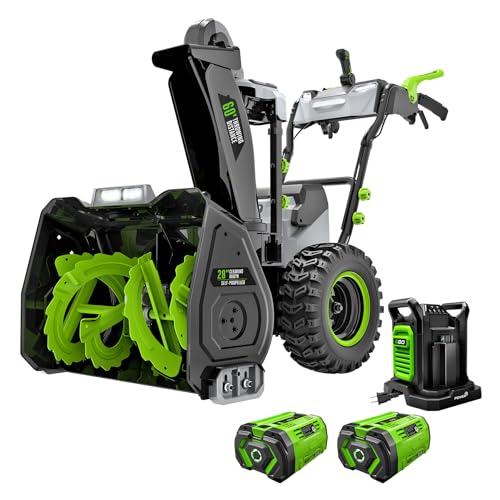
The EGO Power+ 28-inch cordless two-stage blower is the answer for homeowners who want full-size gas-machine capability without gasoline. It ships with two 56V 12.0Ah batteries and a dual-port charger, which is the highest-capacity battery configuration in EGO’s snow lineup. Twenty-eight inches of clearing width puts it in the same footprint class as the Ariens and Honda flagships, but the power source is entirely different.
EGO Power+ is one of the largest cordless outdoor power platforms, built around a 56V battery system shared across mowers, trimmers, chainsaws, and snow blowers. The critical advantage of a shared platform is that batteries you already own for summer tools can extend your winter runtime, and a spare pair can double your clearing window.
Key specs
- Clearing width: 28 inches
- Intake height: 21-inch class
- Power: Two 56V 12.0Ah batteries, dual-port charger included
- Drive: Self-propelled, two-stage auger plus impeller
- Chute: Power-assisted electronic control
- Auger: Steel
- Fuel: None – battery electric
Runtime is the honest trade-off with any battery snow blower. A pair of 12.0Ah packs at 56V is a substantial energy store, and EGO’s largest battery configuration is designed for exactly this application, but cold temperatures reduce usable capacity and heavy wet snow draws power faster than powder. Plan on clearing in sessions and recharging between them, or buying a second battery pair for uninterrupted large-driveway work.
Strengths
- No fuel, no oil changes, no carburetor issues, no pull cord, no exhaust in the garage.
- Full 28-inch clearing width in a battery platform, matching gas flagships on paper.
- Instant torque from electric motors handles dense snow without the engine bogging that gas units can show.
- Batteries are shared across the EGO 56V ecosystem, which reduces the effective cost if you already own the platform.
Pros
- Zero-emission, near-zero-maintenance operation
- Full-size 28-inch clearing width
- Batteries and charger included at this tier
- Quiet enough for early-morning clearing without disturbing neighbors
- Instant start in any temperature
Cons
- Premium price tier
- Runtime is finite; very large driveways may need a second battery set
- Battery capacity drops in deep cold
- Replacement batteries are a significant cost when they eventually age out
How it compares
Against the EGO 24-inch SNT2400, this 28-inch model is wider, includes batteries rather than being tool-only, and carries a higher price tier. Against the Ariens ST28DLE and Honda HSS928, it matches on width and intake but trades unlimited runtime for zero fuel handling. If your driveway fits within roughly two battery pairs of clearing, the EGO is the lowest-hassle way to own a 28-inch two-stage machine.
5. Husqvarna ST124 – Best Mid-Range Gas Option for Standard Driveways

The Husqvarna ST124 is a 24-inch two-stage gas snow blower with a 212cc engine, slotting in as the more accessible sibling to the ST224. It is aimed at the homeowner with a normal suburban driveway who wants a recognized brand, a 24-inch swath, and two-stage clearing performance without paying premium-tier prices.
“ST124” decodes usefully: ST for snow thrower, 1 for the series tier, and 24 for the 24-inch clearing width. That naming convention makes it easy to compare across the Husqvarna range, since the number at the end is always the width in inches. A 212cc engine is the standard residential displacement in this class and provides adequate power for typical snow, with the two-stage design doing the heavy lifting.
Key specs
- Clearing width: 24 inches
- Intake height: 21-inch class housing
- Engine: 212cc gas
- Drive: Self-propelled, geared transmission
- Start: Electric start
- Chute: Remote crank or lever control with deflector
- Fuel: Gasoline
The practical question with the ST124 is whether you need the ST224’s upgrades. In most cases the answer comes down to drive refinement and chute control rather than raw clearing power, since both machines share the 24-inch width and 212cc engine class. If you clear a straightforward rectangular driveway and want a familiar gas machine at a mid-range price, the ST124 does the job.
Strengths
- 24-inch width is the right size for the majority of residential driveways.
- 212cc engine has enough displacement for wet snow at residential scale.
- Two-stage design handles plow ridges that single-stage machines cannot.
- Mid-range price tier keeps it accessible relative to the premium Husqvarna.
Pros
- Recognized brand with broad parts availability
- Manageable 24-inch footprint
- Electric start
- Two-stage clearing for heavy snow
- Mid-range pricing
Cons
- Less refined drive than the ST224’s friction disc setup
- Chute control is more basic than premium-tier joystick systems
- Gas maintenance required
- More passes needed than a 28-inch machine
How it compares
Against the ST224, the ST124 is the value-focused version of the same footprint: you give up drive sophistication and some control refinement, and you save money. Against the PowerSmart 24-inch models, the ST124 typically asks more but brings Husqvarna’s brand support and build consistency. If budget is the deciding factor, a PowerSmart gets you two-stage clearing for less; if longevity and dealer support matter more, the Husqvarna is the safer long-term bet.
6. EGO Power+ 24″ Self-Propelled 2-Stage (SNT2400) – Best Cordless Value for Average Driveways

The EGO Power+ 24-inch SNT2400 is the cordless two-stage blower for the homeowner who has a normal driveway and wants to stop dealing with gasoline. It is self-propelled, uses a two-stage auger-and-impeller design, and clears 24 inches per pass. The critical detail is in the listing name itself: battery and charger are not included, so you either buy into the EGO 56V platform separately or already own it.
This is the tool-only model, and that shapes who should buy it. If you already run EGO mowers, trimmers, or chainsaws, the SNT2400 is the cheapest way to add winter capability because you are reusing batteries you own. If you are starting from zero, factor the cost of two high-capacity 56V packs into your decision, which pushes the effective price toward the battery-included 28-inch model.
Key specs
- Clearing width: 24 inches
- Intake height: 21-inch class
- Power: 56V battery platform – batteries and charger sold separately
- Drive: Self-propelled, two-stage
- Chute: Power-assisted electronic control
- Auger: Steel
- Fuel: None – battery electric
Twenty-four inches is the practical width for a two-car driveway. It cuts passes versus a 21-inch machine while staying nimble enough to work around a parked car. The two-stage architecture is what separates it from EGO’s smaller single-stage-style options: the impeller throws snow farther and the machine handles wet, heavy accumulation that a paddle-style unit would smear.
Strengths
- Tool-only pricing makes it the least expensive way into cordless two-stage clearing if you already own EGO batteries.
- Self-propelled drive reduces pushing effort on sloped or long driveways.
- Zero fuel handling, zero oil changes, no winterization ritual.
- Electronic chute control is easy to adjust mid-pass with gloves on.
Pros
- Lower entry cost for existing EGO platform owners
- Two-stage clearing performance
- Self-propelled for easier pushing
- Quiet, emission-free operation
- Instant start regardless of temperature
Cons
- Batteries and charger not included – a real added cost for new buyers
- Runtime depends entirely on which batteries you pair it with
- 24-inch width means more passes than the 28-inch EGO
- Cold-weather battery capacity loss applies
How it compares
Against the EGO 28-inch battery-included model, the SNT2400 is narrower and comes without batteries, so the sticker price is lower but the total system cost depends on your battery situation. Against the PowerSmart 24-inch gas machines, it trades unlimited runtime and lower upfront cost for zero maintenance and no fuel. The deciding question is simple: do you already own EGO 56V batteries? If yes, the SNT2400 is the value pick. If no, price out the batteries first.
7. PowerSmart 26″ Self-Propelled (Briggs & Stratton 208cc) – Best Mid-Range for Wider Clearing

The PowerSmart 26-inch self-propelled two-stage blower with a 208cc Briggs & Stratton engine occupies a useful middle ground: two inches wider than the standard 24-inch class, with an engine brand homeowners already recognize and trust. It is aimed at buyers who want more coverage per pass than a 24-inch machine but are not ready to pay premium-tier prices for a 28-inch hydrostatic unit.
Briggs & Stratton is the best-known small-engine manufacturer in North America, which matters for service: any small-engine shop can work on it, and parts are universally available. Two extra inches of clearing width sounds marginal, but on a wide driveway it compounds. Over a 60-foot-wide driveway you save roughly one pass per run compared with a 24-inch machine.
Key specs
- Clearing width: 26 inches
- Intake height: 21-inch class housing
- Engine: 208cc Briggs & Stratton
- Drive: Self-propelled, geared transmission
- Start: Electric start
- Chute: Remote control with deflector
- Fuel: Gasoline
The 208cc displacement is on the smaller side for a 26-inch machine. The engine is tasked with driving both the auger and the impeller through a wider housing, so in exceptionally deep or dense snow a 26-inch body with 208cc may work harder than a 24-inch machine with 212cc. For typical residential snow, that difference rarely surfaces. For repeated wet, heavy storms, it can.
Strengths
- 26-inch width splits the difference between 24-inch maneuverability and 28-inch coverage.
- Briggs & Stratton engine means easy service and universally stocked parts.
- Electric start simplifies cold starts.
- Mid-range pricing for a wider-than-standard footprint.
Pros
- Wider 26-inch clearing path
- Recognized engine brand with easy servicing
- Electric start
- Self-propelled drive
- Mid-range price tier
Cons
- 208cc engine is modest for a 26-inch housing in heavy wet snow
- Geared transmission lacks the smoothness of hydrostatic drive
- Gas maintenance required
- Not as widely reviewed as the major-brand alternatives
How it compares
Against the PowerSmart 24-inch 212cc model, this 26-inch version gives you two extra inches of width but a slightly smaller engine, so the trade is coverage versus power density. Against the Husqvarna ST124, both sit around the mid-range tier with 24-to-26-inch widths; the Husqvarna offers stronger brand support while the PowerSmart offers more width. If your driveway is wide but your snow is usually dry, the 26-inch PowerSmart is a sensible mid-range pick.
8. PowerSmart 24″ Gas (212cc, 6 Forward / 2 Reverse) – Best for Buyers Who Want Drive-Speed Flexibility

The PowerSmart 24-inch gas two-stage blower with a 212cc engine is notable for one specific feature: six forward and two reverse speeds. That is a wider gear spread than most budget and mid-range machines offer, and it gives the operator finer control over ground speed than a three- or four-speed unit. It is aimed at the buyer who wants to match machine speed to snow density without jumping to hydrostatic pricing.
Six forward speeds is genuinely useful. Light powder can be cleared at speed four or five, while wet, heavy snow that would stall a fixed-speed machine at that pace can be worked at speed two. Two reverse speeds help when backing out of a drift or repositioning at the end of a pass.
Key specs
- Clearing width: 24 inches
- Intake height: 21-inch class housing
- Engine: 212cc gas
- Drive: Self-propelled, 6 forward / 2 reverse speeds
- Start: Electric start
- Chute: Remote control with deflector
- Fuel: Gasoline
The 212cc engine is the same displacement class used in the Husqvarna ST124 and ST224, and it is well matched to a 24-inch housing. The difference here is transmission design: more speeds, but still a geared setup rather than hydrostatic. The practical advantage is granularity; the practical limit is that gears are still discrete steps, not a continuous range.
Strengths
- Six forward speeds give real flexibility across light and heavy snow conditions.
- Two reverse speeds aid repositioning and backing out of deep drifts.
- 212cc displacement is well proportioned to the 24-inch housing.
- Electric start and mid-range pricing.
Pros
- Wide gear spread for varied conditions
- Electric start
- Well-matched engine-to-width ratio
- Mid-range price tier
- Two-stage clearing capability
Cons
- Geared transmission, not hydrostatic
- Fewer brand-support resources than the major names
- Gas maintenance required
- 24-inch width requires more passes than 26- or 28-inch machines
How it compares
Against the budget PowerSmart 24-inch 212cc with reinforced steel housing, this model’s distinguishing feature is the 6F/2R transmission, which offers finer speed control. Against the PowerSmart 24-inch 208cc, it has the larger, more capable engine plus the wider gear spread. Within the PowerSmart family, this is the mid-range pick for buyers who care about speed control, and it pairs sensibly with a two-car driveway in a mixed-snow climate.
9. PowerSmart 24″ Self-Propelled (212cc, Reinforced Steel) – Best Budget Gas Two-Stage

The PowerSmart 24-inch self-propelled two-stage gas blower with a 212cc engine and electric start is the entry point into serious two-stage clearing. It has the ingredients that matter: a 212cc engine, a 24-inch clearing width, electric start, and a reinforced steel housing. It is aimed at the first-time gas two-stage buyer who needs to clear a standard driveway without spending premium money.
The reinforced steel housing is worth calling out, because it is one of the first places cheap machines cut corners. A steel auger housing resists the scraping wear that grit and ice cause over years of use, and it holds up better than lighter materials against hidden obstacles like frozen newspaper or a curb edge.
Key specs
- Clearing width: 24 inches
- Intake height: 21-inch class housing
- Engine: 212cc gas
- Drive: Self-propelled, geared transmission
- Start: Electric start
- Chute: Remote control with deflector
- Housing: Reinforced steel
- Fuel: Gasoline
Twenty-four inches with 212cc is the classic residential formula: enough width to clear a two-car driveway in four to six passes, enough power to handle wet snow without constant stalling. The budget tier here is about brand support and finish rather than capability, so the machine does the same core job as mid-range 24-inch units.
Strengths
- 212cc engine gives proper power for the 24-inch housing.
- Reinforced steel housing resists long-term abrasion.
- Electric start removes the hardest part of cold-morning operation.
- Budget price tier makes it the lowest-cost gas two-stage option here.
Pros
- Budget-friendly entry to two-stage gas clearing
- Well-matched 212cc engine
- Reinforced steel housing
- Electric start
- 24-inch width suits standard driveways
Cons
- Budget-tier brand support and dealer network
- Geared transmission
- Gas maintenance required
- Fewer refinement touches than premium machines
How it compares
Against the PowerSmart 24-inch 208cc model, this one has the larger engine and steel housing reinforcement, making it the better of the two budget PowerSmart 24-inch machines for heavier snow. Against the 6F/2R PowerSmart, it gives up transmission flexibility but typically asks less. If budget is the hard constraint and your driveway is standard size, this is the most straightforward gas two-stage recommendation on the list.
10. PowerSmart 24″ Self-Propelled (208cc Briggs & Stratton) – Best for Short Driveways on the Tightest Budget

The PowerSmart 24-inch self-propelled two-stage blower with a 208cc Briggs & Stratton engine is a budget two-stage machine for short driveways and lighter snow loads. It pairs a familiar engine brand with a 13-inch snow cut specification, which is the effective height of snow the housing takes per pass. It is aimed at the homeowner who needs two-stage capability on a single-car or short two-car driveway and wants to spend as little as possible.
The 13-inch cut figure matters and deserves explanation. Where a full-size two-stage unit has a 21-inch-class intake that swallows deep snow in one bite, a 13-inch cut means taller accumulations are taken in layers. That is not a defect, it is a size class. It does mean a two-foot drift becomes a two-pass job rather than one.
Key specs
- Clearing width: 24 inches
- Snow cut height: 13 inches
- Engine: 208cc Briggs & Stratton
- Drive: Self-propelled, geared transmission
- Start: Electric start
- Chute: Remote control with deflector
- Fuel: Gasoline
Briggs & Stratton engines are the easiest small engines to get serviced in North America, which is a genuine budget-tier advantage: a cheap engine that any shop can repair beats an exotic engine nobody stocks parts for. Combined with electric start, the operational basics are covered.
Strengths
- Briggs & Stratton engine availability makes servicing straightforward.
- Electric start for reliable cold-weather starting.
- Two-stage design handles wet snow that single-stage units cannot throw.
- Lowest price tier with a 24-inch clearing width.
Pros
- Very accessible budget pricing
- Universally serviceable engine brand
- Electric start
- 24-inch clearing width
- Self-propelled drive
Cons
- 13-inch snow cut means layering deep drifts
- 208cc is modest for a 24-inch housing in wet snow
- Geared transmission
- Budget-tier overall build and finish
How it compares
Against the PowerSmart 24-inch 212cc with reinforced steel housing, this model gives up engine displacement and the 21-inch-class cut in exchange for a lower price and a Briggs & Stratton badge. Against the cordless EGO 21-inch, it is louder and requires fuel, but it clears wider and costs less upfront. If you have a short driveway and light-to-moderate snowfall, this is the minimum viable two-stage machine.
11. EGO Power+ 21″ Cordless Steel Auger – Best Budget Cordless for Small Driveways

The EGO Power+ 21-inch cordless snow blower with a steel auger ships with two 56V 5.0Ah batteries and a charger, making it the most accessible battery-powered option here in terms of total system cost. It is built for small driveways, walkways, and light-to-moderate snow where a full-size two-stage machine would be more machine than the job demands.
The steel auger is a meaningful distinction. Rubber-paddle units are cheaper but wear faster and handle wet snow poorly; a steel auger bites into packed snow and ice better and lasts longer. Two 5.0Ah batteries provide moderate runtime, and because they are part of the EGO 56V ecosystem they can be shared with other tools you own.
Key specs
- Clearing width: 21 inches
- Auger: Steel
- Power: Two 56V 5.0Ah batteries and charger included
- Drive: Self-propelled
- Chute: Adjustable discharge control
- Fuel: None – battery electric
Twenty-one inches is a size class below the 24-inch machines, and it shows on wide driveways: expect noticeably more passes. On a single-car driveway or a set of walkways, that trade is entirely reasonable, and the lighter machine is easier to maneuver and store.
Strengths
- Batteries and charger included keeps the entry cost low for a cordless machine.
- Steel auger outlasts rubber paddles and handles packed snow better.
- Light enough for one-person handling and compact storage.
- No fuel, no oil, no winterization.
Pros
- Batteries and charger included
- Durable steel auger
- Quiet, emission-free, instant start
- Compact and easy to store
- Budget price tier
Cons
- 21-inch width means more passes than 24-inch machines
- 5.0Ah batteries give less runtime than 12.0Ah packs
- Not suited to deep plow ridges or very large driveways
- Cold-weather battery capacity loss
How it compares
Against the EGO 24-inch SNT2400, this machine is narrower, lower-powered, and includes batteries rather than being tool-only, so the total cost for a new buyer is often lower. Against the Wild Badger Power 20-inch, both target small spaces, but the EGO brings a larger battery platform and wider clearing. If your driveway is one or two cars wide and your snow is rarely extreme, this is the sensible cordless starting point.
12. Wild Badger Power 40V 20-Inch Brushless Cordless – Best for Tight Spaces and Decks

The Wild Badger Power 40V 20-inch brushless cordless snow blower is the smallest machine on this list and is built for jobs the bigger units cannot reach: decks, patios, narrow walkways, and tight storage areas. It uses a brushless motor on a 40V battery platform, which trades total clearing capacity for portability and low weight.
Brushless motors are worth understanding because they appear across modern cordless tools. They have fewer wearing parts than brushed motors, run more efficiently, and generally last longer. On a small snow blower, that translates to more runtime per battery charge and less maintenance over the machine’s life.
Key specs
- Clearing width: 20-inch class
- Motor: Brushless
- Power: 40V battery system
- Drive: Lightweight, compact chassis
- Chute: Adjustable discharge control
- Fuel: None – battery electric
Twenty inches and a 40V platform mean this is a light-duty machine. It is best understood as a specialized tool: excellent for clearing a deck railing to door path, less suitable as a primary machine for a wide driveway in a heavy-snow climate. Matching it to the right job is the whole point.
Strengths
- Small and light enough to carry onto a deck or through a narrow gate.
- Brushless motor is efficient and long-lived compared with brushed alternatives.
- Battery operation means no fumes in enclosed or semi-enclosed spaces.
- Lowest cost tier and minimal storage footprint.
Pros
- Ideal for decks, patios, and narrow paths
- Brushless motor longevity
- Very easy to handle and store
- No fuel or engine maintenance
- Budget price tier
Cons
- 20-inch class width and 40V power limit it to light snow
- Not appropriate for deep drifts or large driveways
- Shorter runtime than larger battery platforms
- Cannot replace a full-size two-stage machine as a primary tool
How it compares
Against the EGO 21-inch cordless, the Wild Badger is smaller, lower-powered, and less expensive, with a lighter build and a smaller battery platform. Against any of the gas two-stage machines here, it is not a substitute; it is a complement. Buyers with both a driveway and a deck often pair a full-size two-stage machine with something like this, and in that role it earns its place.
How to Choose
Matching a two-stage snow blower to your property is a four-variable problem: clearing width, intake height, drive type, and chute control. Everything else, from engine brand to electric start, is secondary. Work through these in order and you will land in the right category before you compare specific models.
Clearing width: match to driveway, not to bragging rights
Clearing width is the horizontal swath the machine cuts in one pass. The math is simple enough to do on paper. Measure your driveway’s width at its widest point. A 24-inch machine clears two feet per pass; a 28-inch machine clears two feet four inches. On a 20-foot-wide driveway, that is ten passes versus roughly nine. On a 40-foot-wide driveway, it is twenty passes versus seventeen.
The pattern that emerges: width savings compound on large driveways and are nearly irrelevant on small ones. A single-car driveway roughly 10 to 12 feet wide takes five to six passes with a 24-inch machine and four to five with a 28-inch machine. That is a marginal difference. The same comparison on a 30-foot-wide driveway is meaningful. Do not buy a 28-inch machine for a driveway that does not need one; you pay in price, weight, storage space, and maneuverability.
- Under 12 feet wide: 21 to 24 inches is sufficient
- 12 to 20 feet wide: 24 inches is the sweet spot
- 20 to 30 feet wide: 26 inches starts earning its keep
- Over 30 feet wide, or commercial use: 28 inches and up
Intake height: the spec that decides whether you take one pass or three
Intake height, sometimes listed as snow cut height, is the vertical depth of snow the auger housing can take at once. It is the most underrated number in snow blower shopping, because it determines how deep a drift you can attack directly.
Two classes dominate the market. Full-size two-stage machines use a 21-inch-class intake. Compact or budget machines sometimes specify a 13-inch cut. Here is what that means in practice: a 21-inch machine meets a 24-inch plow ridge and takes it in two passes, shearing the top 21 inches then returning for the remainder. A 13-inch-cut machine takes three passes to do the same job, because it peels off 13 inches at a time.
Now apply the arithmetic to a whole storm. If your municipality plows a 30-inch ridge across the end of your driveway, a 21-inch-intake machine clears it in two passes and a 13-inch-cut machine needs three. Multiply that by every storm in a season and the difference becomes an hour or more of extra work. If plow ridges are a regular feature of your driveway, prioritize intake height over almost anything else.
Drive type: hydrostatic vs. friction disc vs. geared
Drive type determines how the machine moves forward, and it is where price tiers visibly diverge.
- Hydrostatic: Infinitely variable ground speed via a hydraulic system. You can slow by fractions of a mile per hour to match snow density. Best under continuous heavy load, smoothest to operate, most expensive, and generally the most durable when properly maintained. Found on premium-tier machines.
- Friction disc: A spinning disc contacts a driven wheel; contact position sets speed. Simple, robust, cheap to repair, and effective. It offers a continuous range in practice, though less precisely than hydrostatic. Found on premium 24-inch machines and some mid-range units.
- Geared: Discrete forward and reverse speeds, typically three to six forward and one to two reverse. Cheapest, entirely adequate for most residential driveways, but each gear is a fixed step, so you sometimes run faster or slower than ideal. Found on budget and mid-range machines.
Six forward speeds, as on one PowerSmart model here, narrows the gap to friction disc considerably: more discrete steps approximate a continuous range. If you clear wet, heavy snow regularly and your driveway is long, hydrostatic drive is worth the premium. If your snow is typically dry and your driveway is short, geared is fine and the money is better spent on width or intake height.
Chute control: the feature you touch most, so weigh it accordingly
You adjust the chute constantly, on every pass, at both ends of the driveway. That makes it the highest-touch point on the machine, and it is worth more attention than its spec-sheet prominence suggests.
- Manual crank: A hand crank on the chute rotates it, and a separate lever sets the deflector angle. Functional, but slow and awkward with thick gloves in cold wind. Common on budget machines.
- Remote lever or joystick: A lever or joystick on the dash controls rotation and sometimes deflector angle. Much faster to adjust mid-pass, and far easier with gloves. Common on premium machines.
- Electronic or power-assisted: Push-button or motorized control. The easiest of all to operate, and standard on better cordless machines. Adds an electrical component that can eventually need service.
The deflector matters as much as the rotation. Deflector angle determines how far and how high the snow flies. Aim it low and near the ground for most conditions; aim it high only when you need to clear a fence or a tall bank. Setting it too high on a windy day just blows snow back onto your cleared surface.
Gas versus battery: runtime against convenience
This decision has become genuinely close. Battery two-stage machines now reach 28-inch widths and match gas machines on paper for clearing capability.
The honest trade-off is runtime. A gas machine runs until you refill it, and a can of fuel restores full capability in seconds. A battery machine runs for a fixed window determined by battery capacity and load, and recharging takes time measured in hours.
Do the runtime arithmetic before you buy. Estimate your clearing session in passes and minutes. Then check the manufacturer’s rated runtime for the battery configuration you plan to use, and discount it significantly for cold temperatures and heavy wet snow, which draw more power than light powder. If your estimated session fits comfortably inside the discounted runtime, battery is the lower-maintenance, lower-hassle choice. If it does not, either buy a second battery set or choose gas.
A five-year ownership reality check
Purchase price is not total cost. Here is what ownership actually looks like for each power source over roughly five seasons.
| Ownership factor | Gas two-stage | Battery two-stage |
|---|---|---|
| Seasonal fuel preparation | Fuel stabilizer, possible ethanol-free fuel, carburetor care | Charge batteries before storage and periodically over the off-season |
| Annual maintenance | Oil change, spark plug, air filter, belts, shear pins | Shear pins, auger inspection, occasional battery replacement |
| Wear items to expect | Belts, friction disc, shear pins, skid shoes, auger paddles | Shear pins, skid shoes, battery packs |
| Major eventual cost | Engine or transmission service | Battery replacement, often the largest single post-purchase cost |
| Cold-weather behavior | Reliable; may start harder in extreme cold without electric start | Reduced usable capacity in deep cold; keep batteries warm before use |
| Storage needs | Fuel storage, ventilated space, larger footprint | No fuel storage; batteries stored indoors ideally |
The most common mistakes follow directly from that table. Running ethanol-blended fuel without stabilizer and leaving it in the carburetor over summer is the classic gas blower killer. Failing to replace shear pins after a hidden obstacle is the classic two-stage failure; the pins exist to break so the auger and gearbox do not. Storing batteries at full discharge, or in an unheated garage at sub-zero temperatures, shortens their life noticeably.
On the machine itself, two things wear first and deserve inspection each fall: the skid shoes under the auger housing, which set the gap between the scraper bar and the pavement, and the scraper bar itself, which grinds down against driveways and sidewalks. Worn skid shoes let the housing drop, which wears the scraper bar faster and can damage the auger. Both are inexpensive parts, and replacing them promptly protects expensive ones.
Matching the machine to your situation
Pull the four variables together and the decision usually resolves itself:
- Single-car driveway, light-to-moderate snow, tight storage: a 21-inch cordless unit or a compact 20-inch class machine handles it, at the lowest cost and lightest weight.
- Two-car driveway, mixed snow, no gasoline preference: a 24-inch machine clears it in five or six passes and stays maneuverable around cars. Choose gas or battery by runtime arithmetic.
- Large driveway, heavy wet snow, plow ridges: a 28-inch machine with a 21-inch-class intake and hydrostatic drive is the right tool, and it is the category where the premium price is actually justified.
- Long ownership horizon, heavy seasonal use: prioritize drive durability and serviceable parts over an extra inch of width, and budget for consumables annually.
Frequently Asked Questions
How wide should a two-stage snow blower be for my driveway?
Match width to driveway, not to ambition. A 21-to-24-inch machine suits driveways up to about 20 feet wide, 26 inches makes sense from 20 to 30 feet, and 28 inches or more earns its keep above 30 feet or in commercial use. The wider machine saves you roughly one pass per five to eight feet of driveway width, which is nearly irrelevant on a short driveway and significant on a long one.
What is the difference between a two-stage and a single-stage snow blower?
A two-stage machine uses a serrated auger to break up and gather snow, then a separate high-speed impeller to throw it out the chute. A single-stage machine does both jobs with one rubber paddle. Two-stage machines clear wider, handle deeper and wetter snow, and throw farther, while single-stage units are lighter and cheaper and suit light snowfall on small driveways.
Do I need hydrostatic drive on a snow blower?
Not necessarily, but it helps on long driveways and in wet, heavy snow. Hydrostatic drive offers infinitely variable ground speed, so you can slow by fractions of a mile per hour rather than dropping a whole gear. A six-speed geared transmission or a friction disc setup covers most residential needs at lower cost. Choose hydrostatic if you clear continuously heavy snow over a long run.
How long does a battery-powered two-stage snow blower actually run?
Runtime depends on the battery configuration and the snow. A large two-battery pack clears substantially longer than a pair of smaller packs, but both figures should be discounted in deep cold, where usable capacity drops, and in wet snow, which draws more power than powder. Estimate your session in minutes, compare it against the rated runtime for the batteries you plan to use, and add a second battery set if your session does not fit.
Is a 24-inch snow blower big enough for a two-car driveway?
Yes, for most two-car driveways. A 24-inch machine clears a 16-to-20-foot-wide driveway in roughly seven to nine passes, depending on overlap, and it stays nimble enough to work around parked cars and turn at the end. Stepping up to 28 inches saves one or two passes on that width, which rarely justifies the extra size and price.
What maintenance does a two-stage gas snow blower need each year?
At minimum: an oil change, a fresh spark plug, an air filter check, and a belt inspection before the season starts. Replace worn skid shoes and a worn scraper bar, and keep spare shear pins on hand. Run stabilized or ethanol-free fuel and drain or treat the system before summer storage, which is the single most effective thing you can do to protect the carburetor.
Will a two-stage snow blower handle the plow ridge at the end of my driveway?
Yes, that is exactly what two-stage machines are for. What determines how many passes it takes is intake height, not width. A 21-inch-class intake, which covers most full-size two-stage machines, takes a typical plow ridge in two passes; a compact machine with a 13-inch cut takes three or more. If plow ridges are common where you live, prioritize intake height when comparing models.
Are cordless electric two-stage snow blowers as powerful as gas models?
At the top of the range, they clear the same width and intake depth as comparable gas machines, and electric motors deliver strong torque without stalling the way an engine can under load. The real difference is runtime: a gas machine refuels in seconds, while a battery machine runs for a fixed window and then needs hours to recharge. For driveways that fit within a battery set’s range, the gap in practical power is small.
What wears out first on a two-stage snow blower?
Skid shoes and the scraper bar wear first because they contact the pavement on every pass, followed by shear pins, which are designed to break when the auger hits something solid. Belts and friction discs wear next on gas machines. On battery machines, battery packs are the eventual major replacement cost. Inspecting and replacing inexpensive wear parts each fall protects the expensive components behind them.
The Bottom Line by Situation
If you have a long driveway, deal with wet snow and plow ridges every storm, and want the machine to outlast the mortgage, the Ariens ST28DLE Deluxe SHO is the best two-stage snow blower for the job, with the Honda HSS928 as the equally valid pick if engine reputation and dealer service rank highest for you. Homeowners who want that same 28-inch capability without fuel should choose the EGO Power+ 28″ Cordless model with the two 12.0Ah batteries, provided a battery set covers your clearing session.
For a typical two-car suburban driveway, the 24-inch class is the right size, and the choice comes down to power source: the Husqvarna ST224 if you want premium gas build and friction disc drive, the Husqvarna ST124 or a PowerSmart 24-inch 212cc if you want the same footprint for less, or the EGO Power+ 24″ SNT2400 if you already own EGO 56V batteries and want cordless convenience.
On the tightest budget, the PowerSmart 24-inch with the 212cc engine and reinforced steel housing is the most straightforward gas two-stage entry point, with the 208cc 13-inch-cut model as the minimum viable alternative for short driveways and lighter snow. And if your real problem is a deck, a patio, or a narrow walkway rather than a driveway, the Wild Badger Power 40V or the EGO Power+ 21-inch cordless will do that job better than any full-size machine, at a fraction of the weight and cost.





