
Our Top Picks
 AKASO EK7000 4K30FPS 20MP WiFi Action Camera withcompact0.9 x 2 x 1.5 inches0.1 PoundsCheck on Amazon
Choosing the best action camera starts with one decision that matters more than any spec: do you want a classic single-lens camera that you point at the action, or a 360-degree camera that records everything and lets you pick the framing afterward? This guide sorts ten listings, from budget-friendly AKASO models to flagship-tier DJI and Insta360 cameras, using only what each product title says. If you want a rugged all-rounder, the DJI Osmo Action family is the centre of this set. If you want a cheap first camera, look at the AKASO listings. If you never want to miss a moment, the two Insta360 listings are the 360 route. Two listings, the Osmo Pocket 3 and the mini body camera, belong to adjacent categories, and we flag them where they appear.
Top picks at a glance
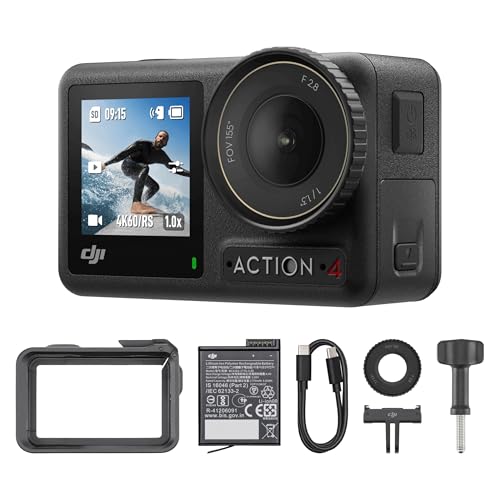
DJI Osmo Action 4 Essential Combo, Waterproof Action Camera Vlogging Camera | 1/1.3" Sensor, 4K/120fps Video, Stunning Low-Light Imaging, 10-bit & D-Log M Color Performance, Long-Lasting 160 Mins


As an Amazon Associate we earn from qualifying purchases. Product prices and availability are accurate as of the date/time indicated.
AKASO EK7000 4K30FPS 20MP WiFi Action Camera with EIS Ultra HD 131FT Waterproof Underwater Camera Remote Control 4X Zoom Support External Microphone Black


As an Amazon Associate we earn from qualifying purchases. Product prices and availability are accurate as of the date/time indicated.
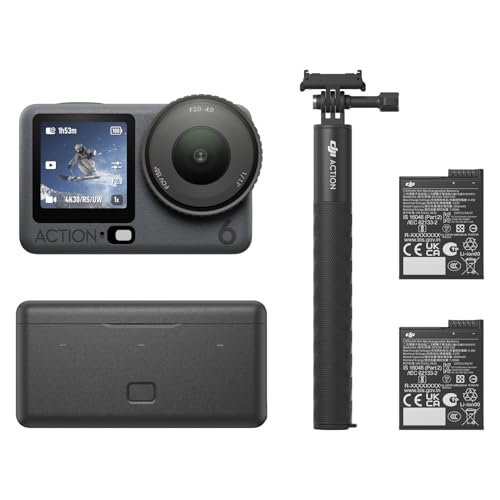
DJI Osmo Action 6 Enhanced Combo, 8K Waterproof Action Camera | 1/1.1" Square Sensor, Variable Aperture f/2.0–f/4.0, Extended Battery Life with 2 Batteries, 1.5m Extension Rod, Battery Case




As an Amazon Associate we earn from qualifying purchases. Product prices and availability are accurate as of the date/time indicated.

DJI Osmo Action 5 Pro Essential Combo, Waterproof Action Camera | 1/1.3" Sensor, 4K/120fps Video, Subject Tracking, Stabilization, Dual OLED Touchscreens, 47GB Storage, Vlogging Camera


As an Amazon Associate we earn from qualifying purchases. Product prices and availability are accurate as of the date/time indicated.

AKASO Brave 4 Action Camera 4K30 Ultra Hd Waterproof Underwater Camera | 20MP EIS WiFi Remote Control 170° FOV 5X Zoom Sport Camera for Snorkel Travel with Bicycle Helmet Motorcycle Accessories Kit


As an Amazon Associate we earn from qualifying purchases. Product prices and availability are accurate as of the date/time indicated.

DJI Osmo Action 6 Essential Combo, 8K Waterproof Action Camera | 1/1.1" Square Sensor, Variable Aperture of f/2.0–f/4.0, Rocksteady 3.0, Cold-Resistant, 4hrs Battery, 50GB Storage


As an Amazon Associate we earn from qualifying purchases. Product prices and availability are accurate as of the date/time indicated.

Insta360 X3, 360 Action Camera with 5.7K 360 Active HDR Video, 4K Single-Lens Camera, Waterproof, FlowState Stabilization, 2.29" Touchscreen, AI Editing, for Motorcycle, Wintersports and Vlogging


As an Amazon Associate we earn from qualifying purchases. Product prices and availability are accurate as of the date/time indicated.

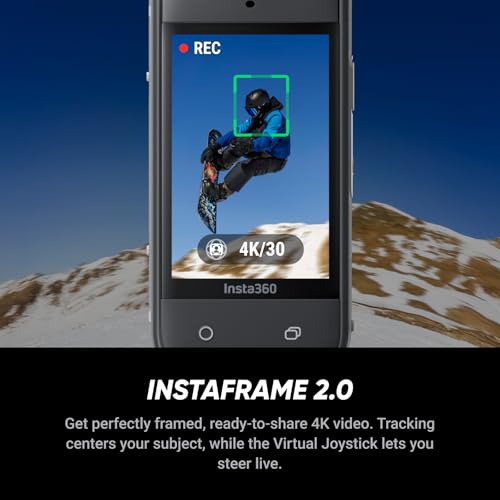
Insta360 X5 - Waterproof 8K 360° Action Camera, Leading Low Light, Invisible Selfie Stick Effect, Rugged and Replaceable Lens, 3-Hour Battery, Built-in Wind Guard, Stabilization, Triple AI Chip Design




As an Amazon Associate we earn from qualifying purchases. Product prices and availability are accurate as of the date/time indicated.

DJI Osmo Pocket 3 Vlogging Camera with 1'' CMOS & 4K/120fps Video | 3-Axis Stabilization, Fast Focusing, Spotlight Follow, 2" Rotatable Touchscreen, Video Camera Camcorder for Photography


As an Amazon Associate we earn from qualifying purchases. Product prices and availability are accurate as of the date/time indicated.

4K Mini Body Camera With EIS 6-Axis Stabilization,POV Action Camera | With 1.5'' HD screen Audio and Video Recording,WiFi Bluetooth, clip Magnetic hands-free Body Cam for cycling, motorcycle


As an Amazon Associate we earn from qualifying purchases. Product prices and availability are accurate as of the date/time indicated.
| Model | Key point from the title | Price tier | Best for |
|---|---|---|---|
| DJI Osmo Action 6 Enhanced Combo | 8K, 1/1.1″ square sensor, variable aperture, two batteries, extension rod | Premium | Long trips, buyers who want extras in the box |
| DJI Osmo Action 6 Essential Combo | 8K, 1/1.1″ square sensor, cold-resistant, 4hrs battery | Premium | Cold-weather and all-round rugged use |
| DJI Osmo Action 5 Pro Essential Combo | 4K/120fps, dual OLED touchscreens, subject tracking | Mid-range | Vloggers who film themselves |
| DJI Osmo Action 4 Essential Combo | 1/1.3″ sensor, 4K/120fps, 10-bit and D-Log M, 160 mins | Mid-range | Color-conscious shooters who want a proven class |
| Insta360 X5 | 8K 360, replaceable lens, 3-hour battery, wind guard | Premium | Reframe-later 360 shooting |
| Insta360 X3 | 5.7K 360, FlowState, 2.29″ touchscreen | Mid-range | Motorcycle, snow and vlogging with 360 flexibility |
| DJI Osmo Pocket 3 | 1″ CMOS, 4K/120fps, 3-axis stabilization, rotatable screen | Premium | Walking vlogs and travel (not a rugged mount camera) |
| AKASO Brave 4 | 4K30, EIS, 170-degree FOV, accessories kit | Budget | First camera with mounts included |
| AKASO EK7000 | 4K30, 20MP, EIS, remote, external mic support | Budget | Entry-level 4K with a remote |
| acgiewo 4K Mini Body Camera | 6-axis EIS, 1.5″ screen, clip and magnetic mount | Budget | Hands-free wearable POV (different category) |
What is changing in this category
Action cameras have split into three lanes, and this set shows all of them. The first is the rugged single-lens camera: small, mountable, waterproof, and increasingly stocked with larger sensors than the tiny chips of a few generations ago. Titles in this set talk about 1/1.3-inch and 1/1.1-inch sensors, which suggests manufacturers are chasing better low-light footage rather than just higher resolution numbers.
The second lane is the 360-degree camera. Instead of aiming, you record a sphere and choose the view later, and some listings advertise an “invisible selfie stick” effect that edits the pole out of the final clip. The appeal is obvious for bikes, skis and vehicles, where aiming is awkward. The cost is a post-production step and larger files.
The third lane is the compact vlogging camera, represented here by the Osmo Pocket 3 and the mini body camera. These trade ruggedness and mounting flexibility for stabilization, comfort and screens that suit talking to the lens.
Alongside that split, resolution headlines keep climbing, with 8K appearing in several titles. In general, bigger numbers are likely to matter less to everyday users than battery life, storage, heat handling and stabilization, though that is a hedged generalization, not a measured result. Expect the category to keep moving toward AI-assisted editing, subject tracking and cold-weather endurance, so older listings often become good-value options once newer models arrive.
How these ten were picked
We built this list from published specifications, manufacturer documentation and buyer reviews, then compared what each Amazon title states. We looked for a spread of price tiers, a mix of single-lens and 360 designs, and at least one listing that serves a different need, such as wearable footage. Nobody on the team used or measured these units. That means everything below about a camera comes from its title, and anything not in the title is marked “check the listing” so you know to confirm it before you buy. Seller claims, such as depth ratings or battery minutes, are reported as claims, not verified results.
The ten listings, one by one
DJI Osmo Action 6 Enhanced Combo
This is the most extras-heavy listing in the set. The title names an 8K waterproof camera with a 1/1.1-inch square sensor, a variable aperture of f/2.0 to f/4.0, two batteries, a 1.5m extension rod and a battery case. The combination of a bigger sensor and an adjustable aperture suggests a camera aimed at changing light, from bright snow to dusk. The second battery and the case are the practical selling points, since a spare is the cheapest way to double recording time on a long day.
Who it suits: riders, hikers and travelers who want one bundle and do not want to shop for extras. Use-scenario: a full day on a mountain bike, swapping batteries at lunch and using the extension rod for wider selfie shots.
- Pro: two batteries and an extension rod in the bundle, per the title.
- Pro: large sensor and variable aperture are named in the title.
- Con: premium tier, so the cost is highest in the group.
- Con: 8K files are large, and the title does not state frame rates.
Check the listing for: the depth rating, whether a mounting kit is included, supported microSD cards and the exact frame rates at each resolution. Question to ask before buying: will you actually use 8K, or would the Essential Combo plus an extra battery cover your needs?
DJI Osmo Action 6 Essential Combo
The Essential Combo shares its core with the Enhanced one: 8K, the 1/1.1-inch square sensor, variable aperture and Rocksteady 3.0 stabilization. The title adds that it is cold-resistant, quotes four hours of battery and lists 50GB of storage. Those last three details are the interesting ones. Cold hurts batteries in general, so a camera marketed as cold-resistant is aimed at winter sports, and built-in storage is a convenient fallback if a card fills up or fails.
Who it suits: skiers, snowboarders and anyone filming in chilly or changeable weather. Use-scenario: a morning of lift runs, where you want to press record and forget it for hours.
- Pro: cold-resistant and four hours of battery are claimed in the title.
- Pro: built-in storage is mentioned, which is useful as a backup.
- Con: the title lists fewer accessories than the Enhanced bundle.
- Con: premium tier, and 8K may be more than you need.
Check the listing for: the temperature range the manufacturer actually states, battery life at the resolution you plan to shoot, and what is in the box. Question to ask: is the cold-weather claim valid for the settings I will use, and does it apply to the battery as well as the body?
DJI Osmo Action 5 Pro Essential Combo
This listing sits one step below the Action 6 models. The title highlights a 1/1.3-inch sensor, 4K/120fps video, subject tracking, stabilization, dual OLED touchscreens and 47GB of storage. The two screens are the headline feature: a front display lets you frame yourself while filming, which matters for vlogging and for mounting the camera in awkward spots.
Who it suits: people who film themselves, such as vloggers, instructors and solo travelers, and who value a flexible screen setup. Use-scenario: filming a hiking vlog where you want to check your framing without turning the camera around, or mounting it low on a bike and still seeing what the lens sees. The 47GB figure is worth a note: built-in storage can rescue a day when a card fails, but it is not a substitute for a good card.
- Pro: dual touchscreens and subject tracking are named in the title.
- Pro: 4K/120fps allows slow-motion at a sharp resolution, per the claim.
- Con: no 8K, which only matters if you specifically want it.
- Con: the Essential Combo likely includes fewer extras than larger bundles, so check.
Check the listing for: battery capacity or runtime, the waterproof depth rating, and whether mounts are included. Question to ask: do I need the second screen, or would a cheaper Osmo Action 4 listing be enough?
DJI Osmo Action 4 Essential Combo
The title packs a lot of useful detail: a 1/1.3-inch sensor, 4K/120fps, “stunning low-light imaging,” 10-bit and D-Log M color, and 160 minutes of battery. The 10-bit and D-Log M mention is aimed at people who plan to color grade, since flatter profiles retain more tonal range for editing. The 160-minute claim is a manufacturer-style figure, so treat it as a best-case number.
Who it suits: shooters who edit their footage and want a larger sensor without the premium price of the newer models. Use-scenario: a sunset coastal ride, where low-light handling and color flexibility matter.
- Pro: 10-bit and D-Log M are named, useful for editing.
- Pro: mid-range tier, with the same 4K/120fps headline as the Action 5 Pro.
- Con: older than the Action 5 Pro and Action 6 listings, so newer features such as dual screens are absent per the titles.
- Con: 160 minutes will not cover a full day without a spare.
Check the listing for: whether the Essential Combo includes an extra battery, mounts or a case, and the waterproof depth. Question to ask: is the price difference to the Action 5 Pro worth the second screen and extra storage?
Insta360 X5
The X5 is the most advanced 360 camera here. The title lists 8K 360-degree video, “leading low light,” an invisible selfie stick effect, a rugged and replaceable lens, a three-hour battery, a built-in wind guard, stabilization and a triple AI chip design. The replaceable lens is a practical point: a scratched lens on a 360 camera ruins every angle, so being able to swap it is a meaningful durability feature, if the listing’s claim holds.
Who it suits: cyclists, motorcyclists and creators who like to choose angles in editing. Use-scenario: a road ride where you capture everything and later cut a “chase” view, a rear view and a look-around clip from one recording.
- Pro: replaceable lens and wind guard are named, both practical.
- Pro: 360 capture means you cannot mis-aim.
- Con: highest listed price in the set, and editing 8K 360 footage takes a capable phone or computer.
- Con: 360 workflows take longer than point-and-shoot.
Check the listing for: the depth rating and whether a dive case is needed, supported mounts, app and editing requirements, and replacement lens availability. Question to ask: will I actually reframe my clips, or would I rather just post what I recorded?
Insta360 X3
The X3 is an older 360 listing at a lower tier than the X5. The title states 5.7K 360 active HDR video, a 4K single-lens mode, waterproofing, FlowState stabilization, a 2.29-inch touchscreen and AI editing. The single-lens option is the clever part: it lets the camera behave like a regular action camera when you do not need the full sphere.
Who it suits: buyers who want to try 360 without paying for the newest flagship. Use-scenario: winter sports filming, where you can record in 360 and then pull a flat 4K view. Because it is an earlier model than the X5, it is also the natural pick for someone who is unsure they will enjoy the reframing workflow and wants to find out at a lower tier.
- Pro: touchscreen, AI editing and a single-lens mode are named in the title.
- Pro: mid-range tier, cheaper than the X5.
- Con: lower resolution than the X5 and Osmo Action 6 headline numbers.
- Con: older model, so check the app support and accessory availability.
Check the listing for: the waterproof depth and housing requirements, battery runtime and the included accessories. Question to ask: is a lower resolution acceptable if it saves me a meaningful amount over the X5?
DJI Osmo Pocket 3
This is not a traditional action camera, and the title shows why. It lists a 1-inch CMOS sensor, 4K/120fps, 3-axis stabilization, fast focusing, Spotlight Follow and a 2-inch rotatable touchscreen. The gimbal is built in, so footage while walking tends to be smooth, but the title does not call it waterproof or rugged. Treat it as a vlogging and travel camera, not something to bolt to a helmet.
Who it suits: travelers, vloggers and families who want smooth handheld video. Use-scenario: walking through a market and filming clips while talking to the lens, then handing it to a friend for a quick family clip. The rotatable screen suggests both portrait and landscape framing without extra gear, which suits short-form social video.
- Pro: a 1-inch sensor and 3-axis stabilization are named.
- Pro: rotatable screen suits vertical and horizontal framing.
- Con: no waterproof claim in the title, which is a different class from action cameras.
- Con: not designed to be a crash camera for sports mounts, so check.
Check the listing for: any waterproof case option, microphone support, battery runtime and what is included. Question to ask: do I need rugged mounting, or is smooth walking footage my real goal?
AKASO Brave 4
The Brave 4 is a budget-tier kit camera. The title lists 4K30, 20MP, EIS, WiFi, a remote, a 170-degree field of view, 5X zoom and a bundle of accessories for bicycle helmets and motorcycles. At this price tier, the included mounting kit is arguably the most valuable part, because it means you can go out and record the first day.
Who it suits: beginners, teens and families who want an inexpensive way to try action filming. Use-scenario: a snorkeling trip or a bike ride, where mounts and a waterproof setup matter more than premium image quality.
- Pro: accessory kit and remote are named.
- Pro: budget tier lowers the stakes of a first purchase.
- Con: 4K30 with a much smaller sensor class than the DJI listings is likely to look weaker in low light, as a general expectation.
- Con: the title does not state the waterproof depth or whether a case is needed.
Check the listing for: the depth rating, the battery count, microSD requirements and what the accessory kit actually contains. Question to ask: will the included mounts fit my helmet or handlebar?
AKASO EK7000
The EK7000 is the other budget AKASO. The title says 4K30FPS, 20MP, WiFi, EIS, 131FT waterproof, a remote, 4X zoom and external microphone support. That last item is unusual at this price and matters if you want clearer voice audio. The 131FT waterproof claim probably depends on a supplied housing, though the title does not say so; read the listing to confirm.
Who it suits: entry-level shooters who may want to improve audio later. Use-scenario: a kayaking trip with the camera on a mount and a wired microphone for narration, or a backyard skate session where you want your voice clearly on the clip. Wind and splash noise will still be a problem for any exposed microphone, so plan for a windscreen if the listing offers one.
- Pro: external microphone support is named in the title.
- Pro: the title lists remote control, so shutter operation without touching the camera is part of the pitch.
- Con: spec sheet aims low on sensor and low-light detail.
- Con: very similar to the Brave 4, so decide on bundle contents.
Check the listing for: the waterproof case, adapter needed for the microphone, battery count and mount list. Question to ask: is the EK7000 or the Brave 4 bundle a better match for my actual mounts?
acgiewo 4K Mini Body Camera
This is the clear outlier. The title calls it a mini body camera and a POV action camera, with 6-axis EIS, a 1.5-inch screen, audio and video recording, WiFi, Bluetooth and a clip and magnetic mount for cycling and motorcycle riding. It is a wearable POV device, closer to a body camera than a rugged action camera. The title does not state a waterproof rating, so do not assume it will survive rain or a splash.
Who it suits: people who want a tiny clip-on camera for commuting or hands-free recording. Use-scenario: a cycling commute with the camera clipped to a jacket strap.
- Pro: very small and wearable per the title, with a magnetic mount.
- Pro: budget tier.
- Con: a different category from the rugged cameras above, and the title does not say much about warranty or support, so check the seller’s policy.
- Con: no waterproof or sensor details in the title.
Check the listing for: the waterproof rating, battery life, storage and the legal rules for recording audio where you live. Question to ask: do I need an action camera, or just a wearable recorder?
Buying guide: how to choose an action camera
Start with the format: single-lens or 360
Single-lens cameras are straightforward. You aim, record and share, and the footage is ready to post. A 360 camera records everything, so it is forgiving when you cannot aim and it creates creative options afterward, but you have to spend time in an app or editor choosing the view. If your priority is speed, choose single-lens. If your priority is never missing the angle, consider 360. Neither is better in the abstract.
Sensor size and low light
Sensor size is a useful clue to low-light behavior, which is why DJI titles quote 1/1.3-inch and 1/1.1-inch sensors. Larger sensors generally gather more light, but lens design and processing also matter, and the title cannot tell you how a camera looks at dusk. Treat sensor size as a hint and read buyer reviews for the conditions you shoot in.
Resolution and frame rate
4K at 30 frames per second is the baseline in this set, and it looks sharp on phones and most monitors. 4K/120fps gives slow-motion. 8K is mostly about cropping flexibility and bragging rights for most buyers. Always look for frame rates at each resolution, because many cameras limit the fastest frame rates to lower resolutions.
Stabilization
Electronic stabilization (EIS) crops into the image and smooths motion by software. Gimbal-style stabilization, as on the Pocket 3, uses a mechanical stabilizer. Brand names such as Rocksteady and FlowState refer to each company’s approach. Stabilization claims are hard to compare on paper, so look for sample clips at a similar activity.
Battery, storage and heat
Quoted battery minutes are best-case numbers. Cold weather, high frame rates, WiFi and a bright screen shorten them. Spare batteries are the cheapest upgrade. For storage, use a card at least as fast as the camera requires, and leave room for large files. Heat can cause a camera to stop recording in warm weather, so check buyer reviews for overheating reports.
Waterproofing and care
Read the exact words: waterproof “to a depth” with or without a case are different claims. After saltwater or chlorine use, follow the manufacturer’s rinse and drying steps. Seals and door gaskets are the common weak point, so inspect them before every dive or splash session.
Worked example: a weekend trip estimate
Here is a simple, labeled estimate with assumptions. Suppose you plan three outings in a weekend, each recording about 90 minutes of 4K footage in total. Assume 4K30 video averages roughly 100 Mbps, which is an assumption, not a spec of any listing here. That is about 45 GB per hour, so 90 minutes comes to roughly 67 GB per outing and about 200 GB for the weekend. A 256 GB card would be tight, a 512 GB card would be comfortable, and you would offload footage between days. For battery, assume an advertised 160 minutes shrinks by about a third in cold or high-frame-rate use, to roughly 105 minutes. Three 90-minute outings then need a spare battery or a charging break each day. Storage and batteries, not resolution, usually decide the trip.
| Spec concept | What to look for | Why it matters |
|---|---|---|
| Sensor size | 1/1.3-inch or larger for low light | Larger sensors tend to help dusk and indoor footage |
| Frame rates by resolution | 4K/60 or 4K/120 if you want slow-motion | Top frame rates are often limited to lower resolutions |
| Stabilization type | EIS, gimbal or manufacturer system | Determines smoothness for biking and running |
| Battery claim | Minutes at the resolution you shoot, plus spare availability | Cold and high frame rates shorten runtime |
| Waterproof wording | Depth rating and whether a case is required | Prevents buying a camera that fails on first dive |
| Mounts and accessories | Included mount list, tripod thread, microphone support | Extras can add real cost for budget kits |
Stills and other camera types
If you mostly photograph rather than film, an action camera is rarely the best choice. A beginner-friendly camera is a better fit, and our guide to cameras for beginner photographers covers that route. If image quality is the priority and size is not, APS-C mirrorless cameras are the next step up.
Mistakes buyers make
Buying on resolution alone is the most common error. An 8K label does not make a camera better at night, in rain or on a bumpy trail. Check sensor size, stabilization and battery as well.
Ignoring the accessories is another. A budget kit with ten mounts can beat a more capable camera if you cannot attach it to your helmet. Match the mounting system to your sport before you buy.
Assuming waterproof means dive-proof is risky. Read the depth, whether a case is needed and the care instructions, and replace worn seals as the manufacturer advises.
Skipping the memory card is a quiet mistake. A slow or counterfeit card can cause dropped frames or recording errors. Buy a reputable card at the speed class the camera asks for.
Buying the wrong category happens with listings like the Pocket 3 and the body camera. They are good at their jobs, but not at being bolted to a crash-prone mount. Decide your use first.
Forgetting editing time hits 360 buyers hardest. If you will not spend time reframing, the benefit disappears.
Verdict by use case
Best all-round rugged pick: the DJI Osmo Action 6 Essential Combo, if the premium tier fits. The cold-resistance and battery claims make it a good fit for varied conditions.
Best bundle for long trips: the Osmo Action 6 Enhanced Combo, thanks to the second battery and extension rod.
Best value among DJI listings: the Osmo Action 4 Essential Combo for editors who want 10-bit footage, or the Action 5 Pro for vloggers who want two screens.
Best for never missing the shot: the Insta360 X5 for the latest features, the X3 for a lower tier.
Best for beginners on a budget: the AKASO Brave 4, thanks to the accessory kit, or the EK7000 if external audio matters.
Best for walking vlogs: the Osmo Pocket 3, remembering it is not a rugged action camera.
Related guides
Frequently asked questions
What is the best action camera for beginners?
For a first camera, the two AKASO listings in this set are the lowest-priced route into 4K30 recording, stabilization and a waterproof setup. If you can stretch the budget, an older DJI Osmo Action listing adds a larger sensor and 4K/120fps according to its title. Beginners usually benefit more from simple mounts, a decent microSD card and a camera that is easy to operate than from the longest spec sheet, so check the listing for included accessories before choosing.
Do I need a 360 action camera instead of a regular one?
Not necessarily. A 360 camera records every direction and lets you choose the framing afterward, which suits cycling, skiing and vlogging where you cannot always aim. The trade-off is an editing step, larger files and, per the listing titles, a different workflow from a single-lens camera. If you want to press record and share a clip quickly, a standard action camera is usually simpler. If missing the shot worries you, a 360 camera is worth considering.
Are action cameras really waterproof without a case?
It varies by listing and you should read the exact wording. Several titles here say waterproof, but they do not all state a depth or whether a separate housing is required, and a figure such as 131FT may depend on an included case. Check the listing and the manufacturer documentation for the depth rating, any case requirement and the care steps after saltwater or chlorine exposure, and follow the manufacturer’s instructions.
Is 8K worth paying for in an action camera?
For most people, probably not as a first priority. Two Osmo Action 6 listings and the Insta360 X5 mention 8K, but a large share of viewers watch on phones and laptops where 4K is already sharp. Sensor size, low-light behavior, stabilization, battery life and storage often affect everyday results more. Higher resolution also means bigger files and more heat and battery draw, so check the listing for the frame rates offered at each resolution.
How much storage and how many batteries should I plan for?
Plan around your longest outing, not your average clip. High-bitrate 4K or 8K video fills a card quickly, so a high-capacity microSD card that meets the camera’s stated speed requirement is a sensible purchase, and a spare battery matters more in cold weather or on all-day trips. Some listings mention built-in storage or a second battery, but the details differ, so confirm card compatibility and battery inclusions on the product page before buying.
Where does a body camera or gimbal camera fit in?
They solve different problems. A small clip-on body camera, like the acgiewo listing, favors hands-free wearing and light weight over mounting versatility and a rugged waterproof design. A pocket gimbal camera, like the Osmo Pocket 3, favors smooth walking footage and vlogging over crash resilience and mounting on a helmet or handlebar. If you need a camera that can be bolted to gear and shrugged off in the rain, a true action camera is the safer category.





