
Best Electric Fiddles for Practice and Performance
The best electric fiddles depend on where you’ll play: choose the Yamaha YEV-104 for a polished stage-ready instrument, the Yamaha SV-250 if you need flexible headphone and output options, or a basic solid-body electric violin if low-cost, quiet practice is the priority. Before buying, check the pickup and preamp setup, how the instrument balances under your chin, and whether it includes the shoulder rest, bow, case, and cables you’ll actually need.
Quick comparison
Yamaha’s YEV-104 and SV-250 are established four-string electric violins suited to different setups. The figures below use published manufacturer specifications; weights and included accessories can vary by market or package. The budget category is a type, not a single model, so its figures are typical ranges rather than specifications for one instrument.
Our top picks
 Ceciliec Electric Violin
- 4/4 silent electric violin has a hand—carved solid…
- This electric violin features a hollow body design…
- The electric violin comes with headphones, allowing you…
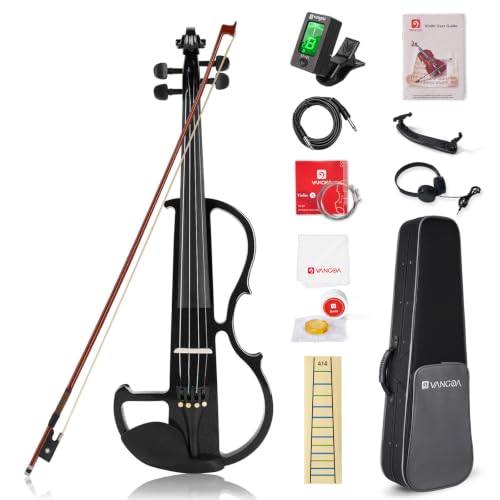 Vangoa Electric Violin 4/4 Full Size Silent
- [Practice Freely, Without Disturbing Anyone] - Traditional acoustic…
- ✔️ [Premium Materials, Surprisingly Rich Tone] - Even…
- ✔️ [Plug Into an Amp
 Premium Carbon Fiber Electric Violin Full Size
- Premium electric violin: Premium Carbon fiber violin,Perfect for…
- Satisfying Practice & Thrilling Perform: professional silent electric…
- Technology Upgrade: mechanical pegs are notaffected by changes…
As an Amazon Associate we earn from qualifying purchases at no extra cost to you.
| Instrument | Strings and body | Sound and connection character | Practice and stage fit | Typical price range |
|---|---|---|---|---|
| Yamaha YEV-104 | 4 strings; 4/4 size; sculpted wood frame | Passive piezo pickup; 1/4-inch output; no onboard headphone preamp | Light, open-frame feel; pair with an amp or external headphone preamp | About $700–$1,000 |
| Yamaha SV-250 | 4 strings; 4/4 size; solid-body design | Dual-pickup system with separate control unit; headphone and line outputs | Strong option for silent practice and controlled stage output | About $1,800–$2,500 |
| Entry-level solid-body electric violin | Usually 4 strings; commonly 4/4; wood or composite body | Typically piezo pickup and 1/4-inch output; preamp features vary | Affordable practice choice, but setup and accessory quality are inconsistent | About $150–$500 |
Price ranges are broad retail-market estimates, not fixed quotes. Confirm the current package contents and output requirements before ordering, especially for less expensive instruments.
Which electric fiddle suits your situation?
| Your situation | Best fit | Why—and what to check |
|---|---|---|
| Apartment practice several times a week | SV-250, or an electric with a built-in headphone output | Direct headphone connection avoids needing an amp. Check whether headphones are included and whether the instrument needs batteries. |
| First electric instrument, limited budget | Entry-level solid-body electric violin | Leaves money for a professional setup, which may matter more than extra onboard controls. Avoid assuming every bundle is performance-ready. |
| Regular amplified gigs | YEV-104 with a suitable preamp, or SV-250 | Prioritize a reliable output, controllable stage volume, and a tested cable-and-amp chain. A passive pickup is simple but may need impedance matching. |
| Mostly acoustic playing, occasional amplification | YEV-104 | Its frame is less like a conventional hollow violin than an acoustic instrument, but its resonant structure can feel less block-like than many solid-body designs. |
What matters in real playing
Pickup character: natural is not the same as acoustic
Most electric violins use piezo pickups, which sense vibration through the bridge. They produce a clear, immediate signal, but can emphasize scratch, attack, and uneven bow pressure. A pickup does not automatically recreate the air and resonance of an acoustic fiddle. On stage, an amp, preamp, equalizer, and reverb can shape the sound; at home, try headphones before deciding that a bright or thin tone is the instrument’s unchangeable character.
The YEV-104 uses a passive pickup and sends its signal through a standard instrument output. That keeps the instrument simple, but a compatible preamp or acoustic-instrument amplifier can help control level and tone. The SV-250’s pickup and separate control unit offer more built-in signal management. On a low-cost instrument, ask whether the pickup is passive or active and whether the controls introduce hiss when turned up.
Acoustic feel, balance, and neck comfort
Electric fiddles can be quieter acoustically than a conventional violin, but they still make bow and string noise. Solid bodies also change how weight sits between the shoulder, jaw, and left hand. An unusual frame can feel roomy or awkward depending on your posture, shoulder rest, and chin rest. If possible, try the instrument standing and seated, and test first position as well as shifting. A comfortable neck profile and sensible balance matter more than a long list of onboard effects.
Headphones, amps, and feedback
A 1/4-inch output is not a headphone socket: headphones need a headphone amplifier or a dedicated headphone output. A 3.5 mm headphone jack, where provided, is convenient for practice, while a line output may connect to a mixer or recording interface. Check whether headphone use mutes the speaker output and whether the control unit takes batteries or a power adapter.
Electric fiddles generally resist acoustic feedback better than a miked acoustic violin, but a piezo-equipped instrument can still howl when its pickup, instrument, and loudspeaker interact. Keep the amp in front of you rather than behind the instrument, start at low volume, and reduce the offending frequency with EQ before increasing gain. For loud stages, ask the sound engineer for a monitor mix that does not point directly at the fiddle.
Budget for the setup, not just the instrument
A useful comparison is the cost of a ready-to-play setup. If a $250 bundle needs a $100 setup, $50 headphones, and a $25 cable, its practical starting cost is about $425—not $250. An instrument with a headphone output may cost more upfront but save the cost and hassle of a separate preamp for quiet practice. Treat this as a planning example: actual setup and accessory costs depend on the instrument and local rates.
Before buying, verify whether the package includes a shoulder rest, chin rest, bow, case, rosin, headphones, power supply, and instrument cable. Bundled bows and cases can be serviceable, but they are not proof that the instrument has been adjusted correctly. Check bridge position, string clearance, tuning-peg operation, and whether all four strings produce a clean signal. A local violin shop or qualified repairer can assess setup; not every general guitar shop works on violin bridges.
Ownership: the parts most likely to need attention
Strings and bow hair are routine consumables. Replace strings when they lose response, develop tuning problems, or show wear; rehair a bow when it no longer grips reliably despite clean rosin and appropriate tension. Wipe rosin dust from the strings and instrument after playing with a soft, dry cloth. Avoid household cleaners, and do not leave the fiddle in a hot car or damp case.
On electric models, also protect the output jack and cable: a loose jack can create intermittent sound, and a cable tug can damage the socket. Turn down the amp before plugging in or unplugging to avoid pops. If an active preamp sounds weak or distorted, check its battery before assuming the pickup has failed. These small habits help prevent avoidable repairs, particularly on inexpensive instruments with less robust hardware.
Bottom line
For an electric fiddle with a refined frame and straightforward stage output, shortlist the Yamaha YEV-104 and budget for a preamp if you want headphones. Choose the Yamaha SV-250 when built-in practice connectivity and more control justify the higher price. For occasional practice on a tight budget, an entry-level solid-body model can work, but reserve money for setup and confirm exactly what its electronics and accessory bundle include. In every case, comfort and a quiet, clean signal chain are better buying tests than appearance alone.





